1 June 2026 MOVIE MARTIAL ARTS
Emerging Trends in Martial Arts Films
How Modern Action Cinema Is Transforming Fight Choreography
Martial arts cinema has evolved dramatically over the past few decades. From the classic kung fu films of the 1970s to the highly choreographed action spectacles of today, filmmakers continually experiment with new techniques to make fight scenes more dynamic and immersive.
Modern audiences expect realism, intensity, and visual storytelling in action sequences. As a result, directors, stunt coordinators, and martial artists are constantly pushing the boundaries of choreography, cinematography, and performance.
Today’s martial arts films reflect a blend of traditional martial arts techniques, modern stunt work, and advanced filmmaking technology, creating action sequences that feel both authentic and cinematic.
The Rise of Realistic Fight Choreography
One of the most noticeable trends in modern martial arts films is a shift toward realistic combat movement.
Earlier martial arts films often featured stylized techniques and exaggerated choreography. While these sequences were entertaining, modern audiences increasingly appreciate fights that feel grounded and believable.
Actors such as Keanu Reeves helped popularize this trend through films that emphasize disciplined training and precise choreography.
These films often feature:
• longer fight takes
• practical stunt work
• real martial arts techniques
• minimal wire work
The result is action that feels more intense and immersive.
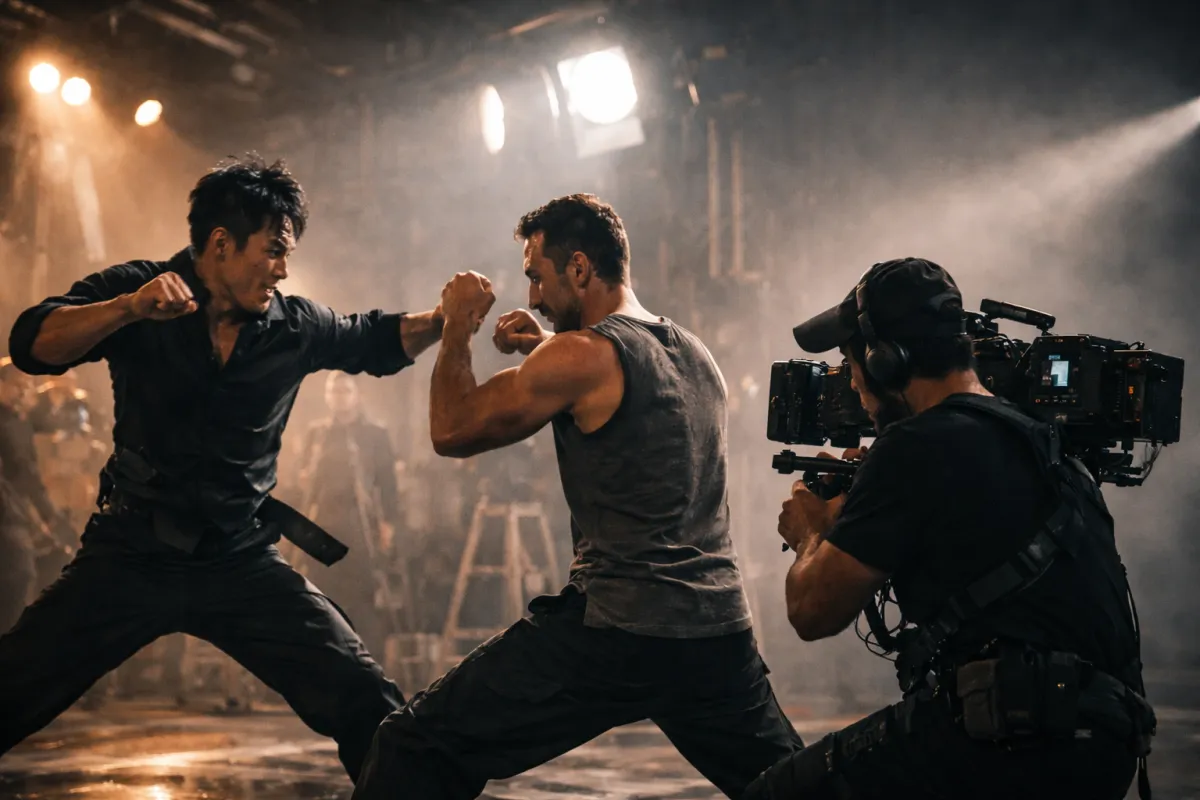
Martial artists performing realistic fight choreography for a modern action film scene.
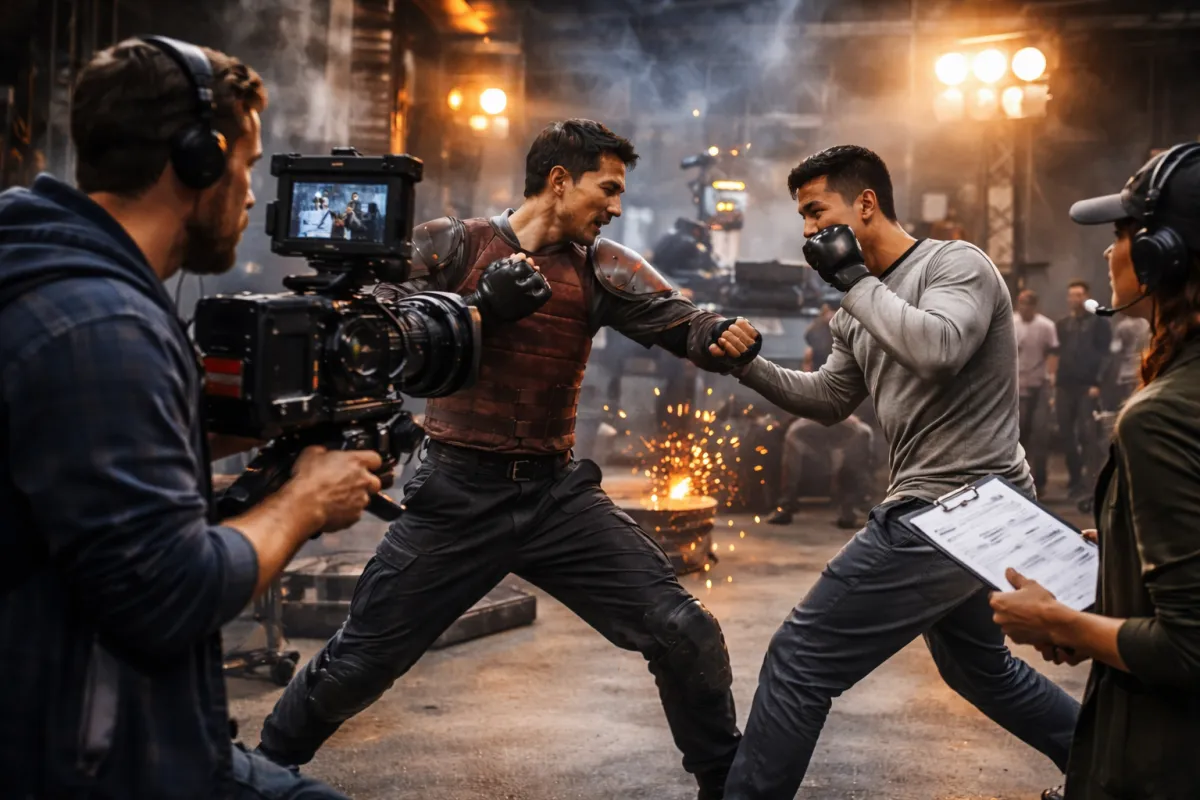
Action movie fighters performing mixed martial arts grappling during a cinematic fight sequence.
The Influence of Mixed Martial Arts
The rise of Ultimate Fighting Championship and global MMA competitions has strongly influenced modern action choreography.
Filmmakers increasingly incorporate:
• grappling techniques
• ground fighting
• submission holds
• realistic striking combinations
This influence creates fight scenes that reflect modern combat sports rather than purely traditional martial arts.
Actors such as Scott Adkins have become known for blending multiple martial arts styles into their screen performances.
Long-Take Fight Scenes
Another major trend is the use of extended fight sequences filmed in long takes.
Instead of rapid editing, directors allow action to unfold in continuous shots that showcase the performers’ athletic ability and choreography skills.
These sequences:
• highlight martial arts skill
• increase realism
• build tension and immersion
Long-take action scenes have become a signature style in many modern martial arts films.
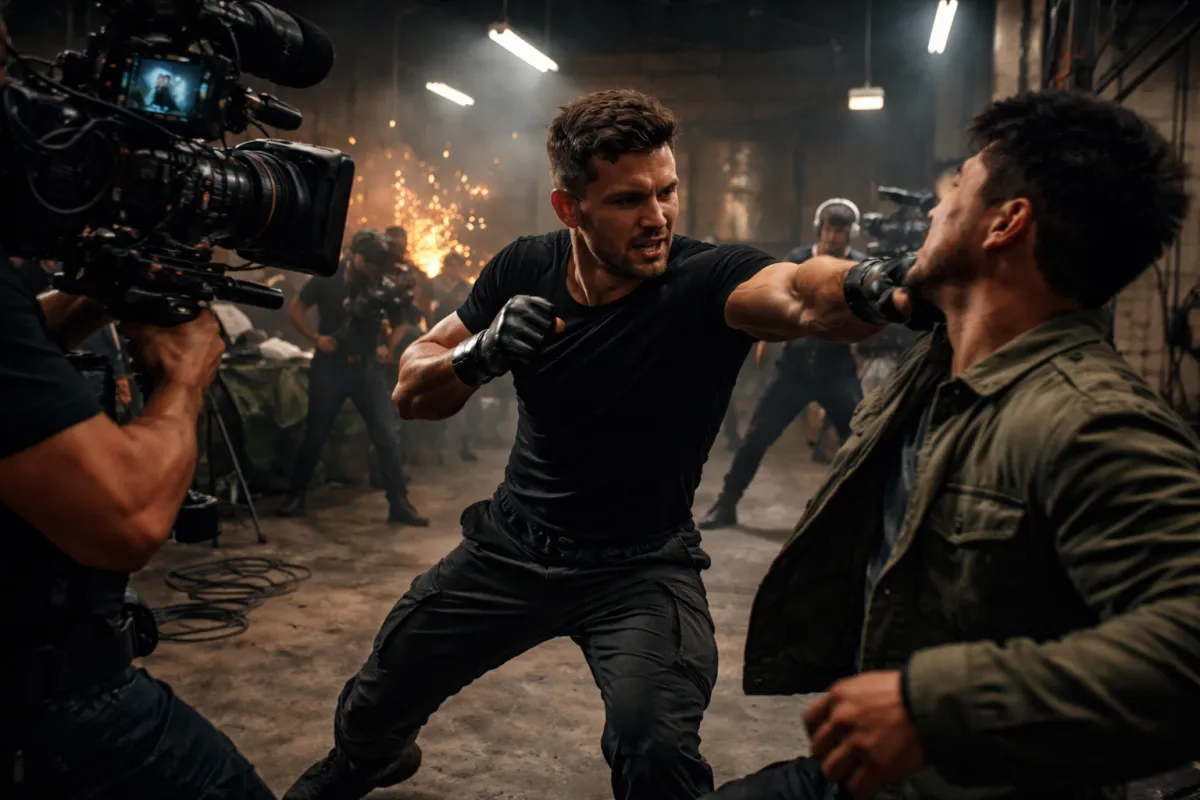
Action film fight choreography performed in a continuous long-take sequence.
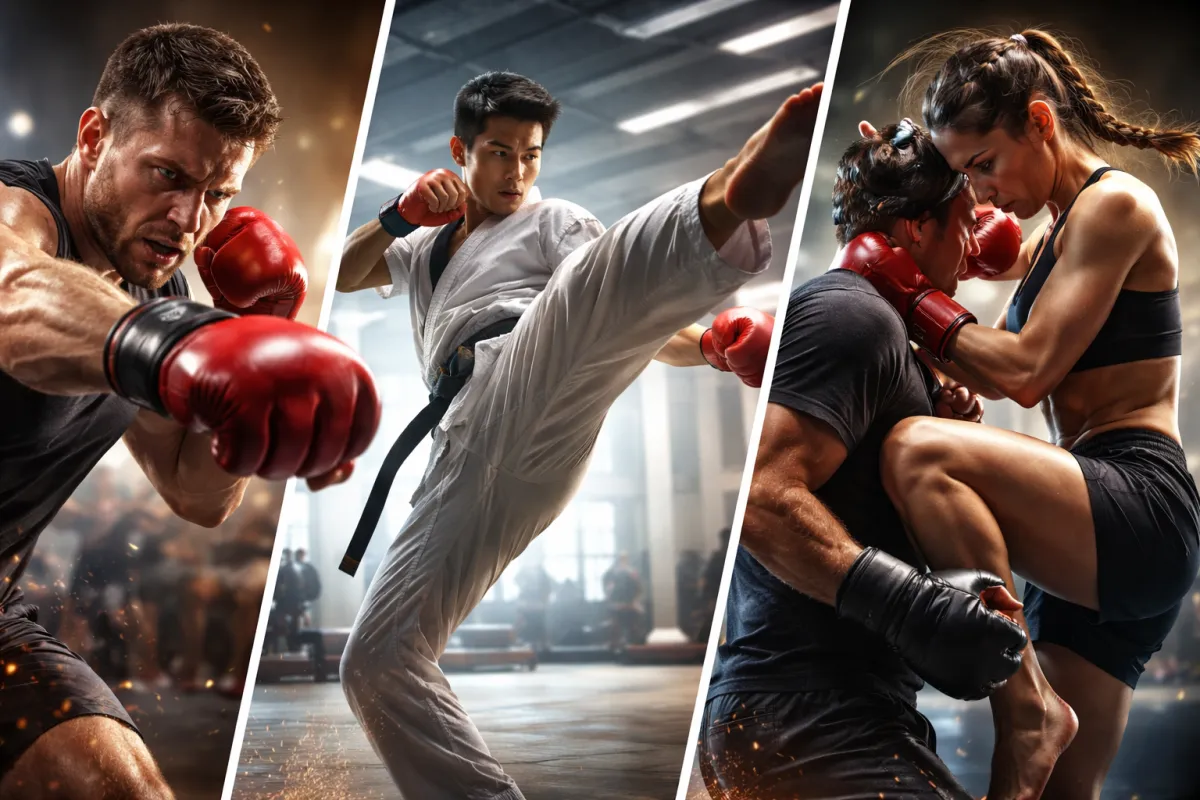
International martial artists performing diverse combat styles during an action film fight scene.
Global Martial Arts Influences
Modern martial arts films draw inspiration from combat traditions around the world.
Filmmakers increasingly combine techniques from multiple disciplines, including:
• Muay Thai
• Taekwondo
• Brazilian Jiu-Jitsu
• Kung Fu
• Karate
International stars such as Tony Jaa introduced audiences to the explosive power of Muay Thai techniques, while performers like Donnie Yen blend traditional martial arts with modern choreography styles.
This fusion creates fight scenes that feel both innovative and culturally diverse.
Advanced Stunt Technology
Technological innovation is also shaping modern martial arts filmmaking.
Stunt teams now use advanced tools such as:
• motion capture
• wire rigging systems
• digital stunt enhancement
• virtual production environments
These technologies allow filmmakers to design action sequences that would have been impossible in earlier eras.
Despite these innovations, many directors still prioritize practical stunt work to preserve authenticity.
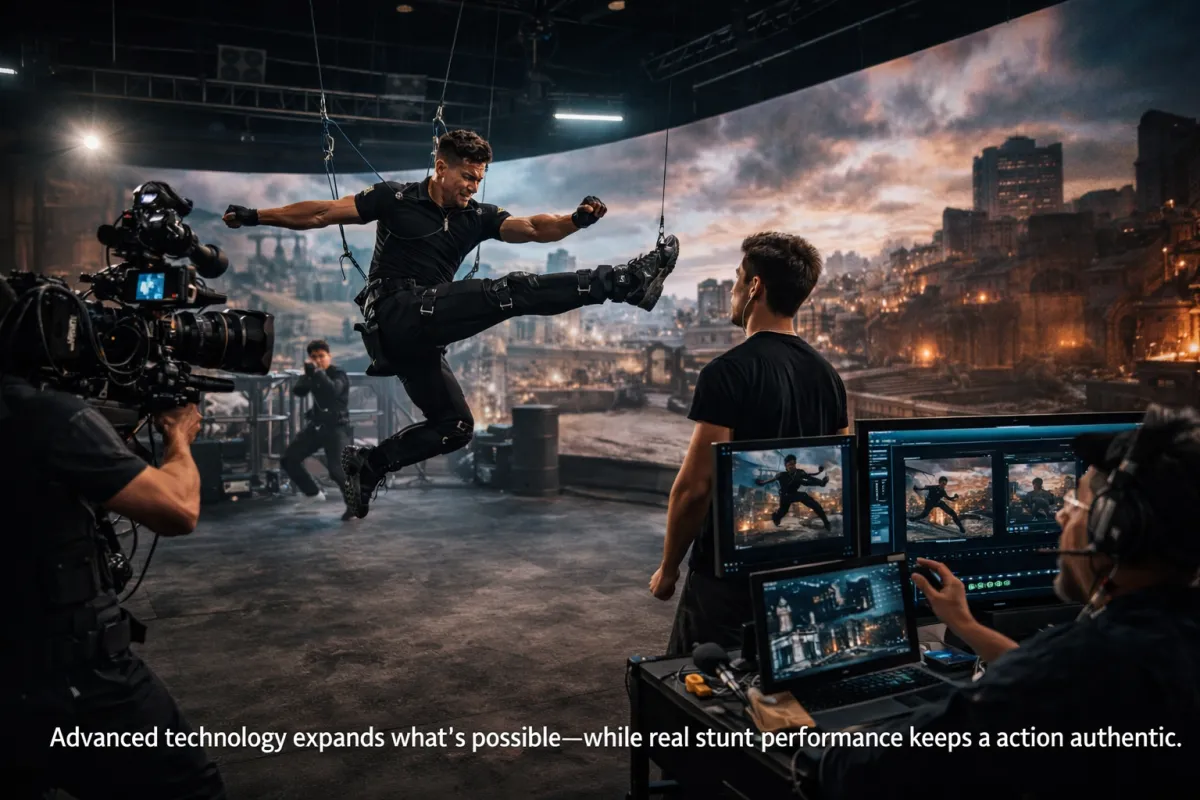
Film stunt team rehearsing action choreography using modern filmmaking equipment.
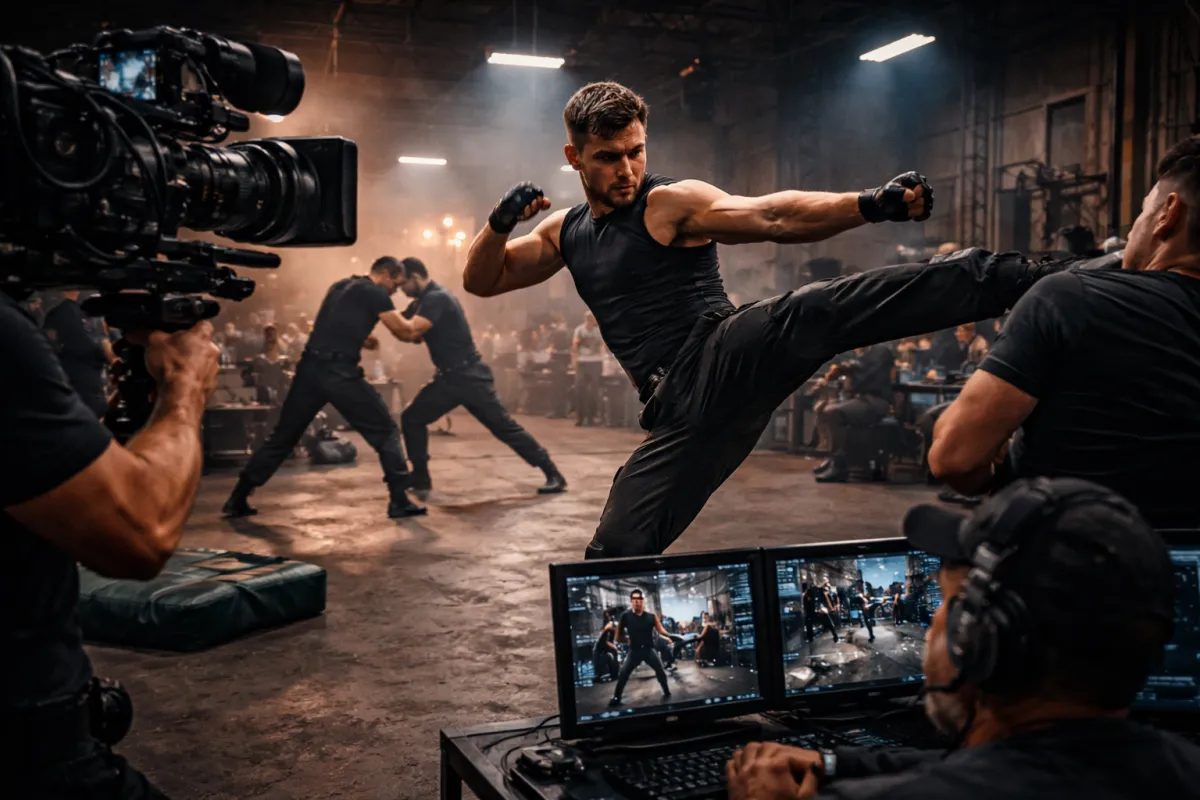
Martial Artists Becoming Action Stars
Another emerging trend is the growing popularity of professional martial artists transitioning into film careers.
Actors with genuine martial arts backgrounds bring authenticity and athleticism to action roles.
Notable performers include:
Scott Adkins
Michael Jai White
Tony Jaa
Their ability to perform complex choreography with minimal stunt doubles has helped elevate the realism of modern martial arts films.
The Future of Martial Arts Cinema
As technology advances and global audiences continue to embrace action cinema, martial arts films are likely to evolve even further.
Future trends may include:
• more immersive camera techniques
• virtual production environments
• cross-cultural martial arts collaborations
• greater integration of real combat sports
At the same time, the core appeal of martial arts cinema will remain unchanged - skilled performers delivering powerful, visually compelling fight choreography.
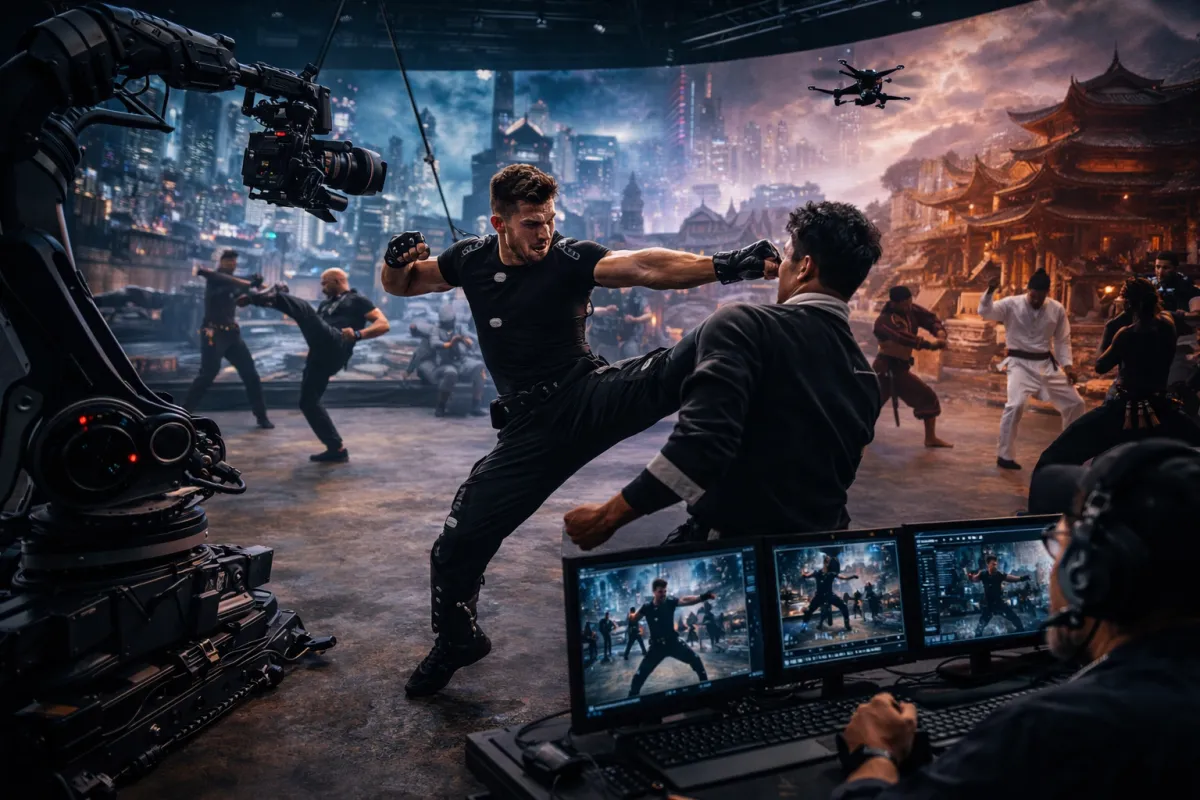
Streaming Platforms Are Reviving Martial Arts Films
The global rise of streaming platforms has created new opportunities for martial arts storytelling. Online platforms are investing heavily in action content that appeals to international audiences.
Streaming services now regularly produce films and series featuring martial arts performers, stunt teams, and action choreography specialists.
Platforms such as Netflix and Amazon Prime Video have helped introduce martial arts films to viewers around the world, expanding the audience beyond traditional cinema markets.
This shift has created new opportunities for martial artists, stunt performers, and action filmmakers, while also encouraging more diverse martial arts styles to appear on screen.
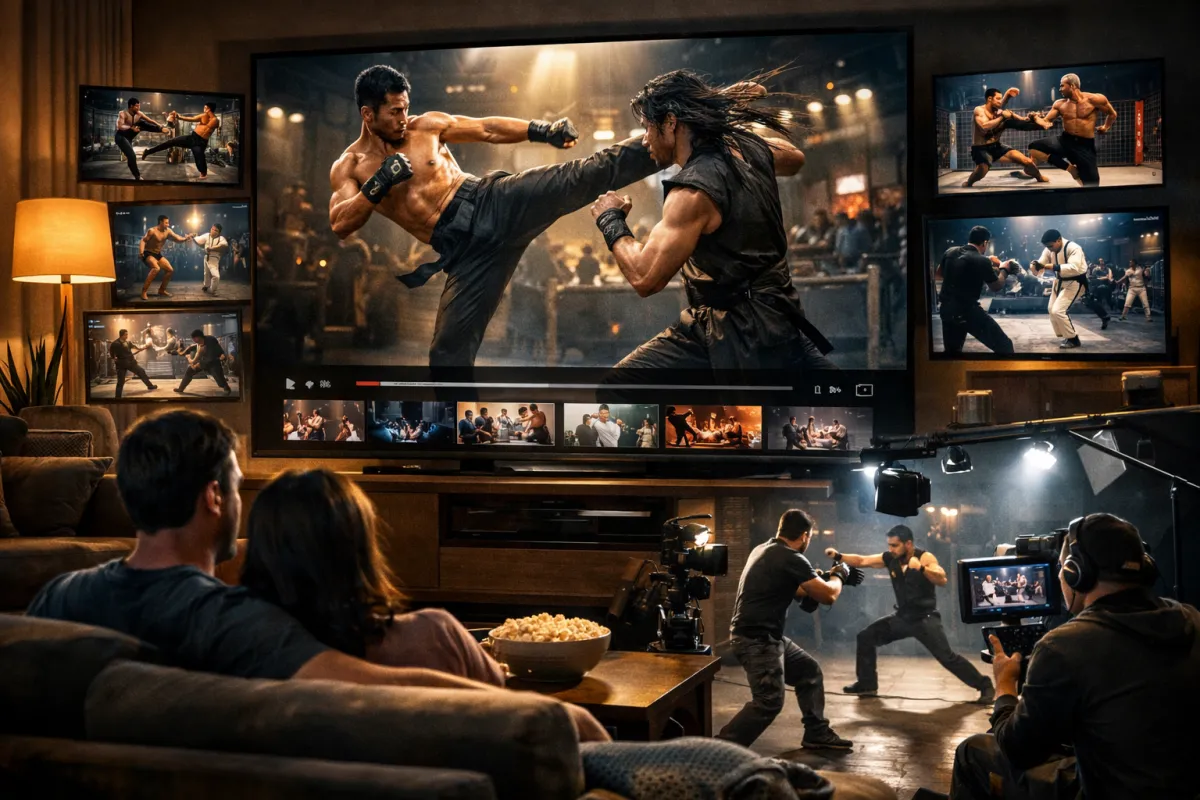
Martial artists filming an action scene for a modern streaming platform production.
The Rise of Martial Arts Training for Actors
Another important trend is the increasing expectation that actors perform their own action choreography whenever possible.
Rather than relying heavily on stunt doubles, many actors now undergo extensive martial arts training to deliver more convincing fight scenes.
Actors such as Keanu Reeves are well known for dedicating months to martial arts preparation before filming major action roles.
This approach improves:
• realism in fight scenes
• physical performance authenticity
• camera continuity during action sequences
As a result, martial arts instructors and stunt coordinators are playing a larger role in modern film production.
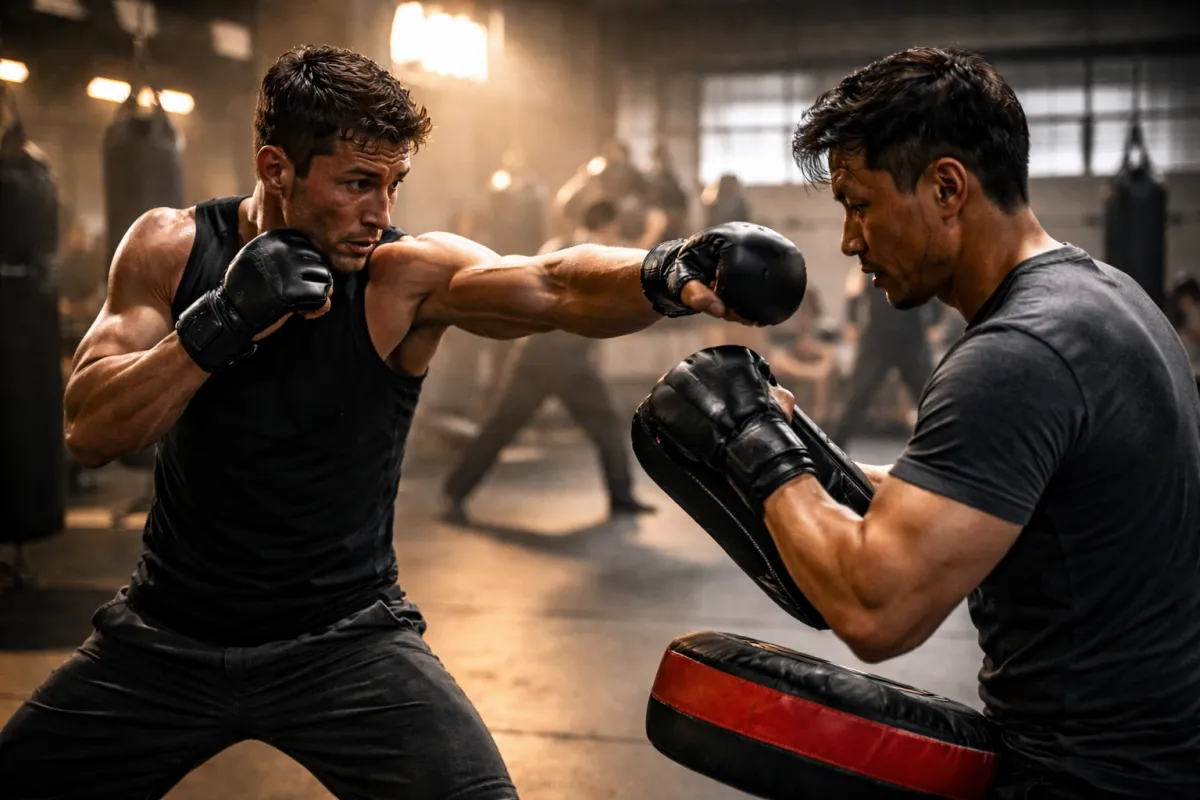
Action film actor training martial arts techniques with stunt coordinator before filming.
The Globalization of Martial Arts Cinema
Martial arts films are no longer limited to a single region or style. Today’s action cinema draws from a wide range of global influences.
Filmmakers regularly combine martial arts traditions from multiple countries, creating hybrid choreography styles that appeal to international audiences.
Stars such as:
Donnie Yen
Tony Jaa
Scott Adkins
have helped introduce audiences to diverse martial arts techniques and fighting philosophies.
This globalization continues to shape the future of martial arts cinema by encouraging creative collaboration between performers and filmmakers from different cultures.
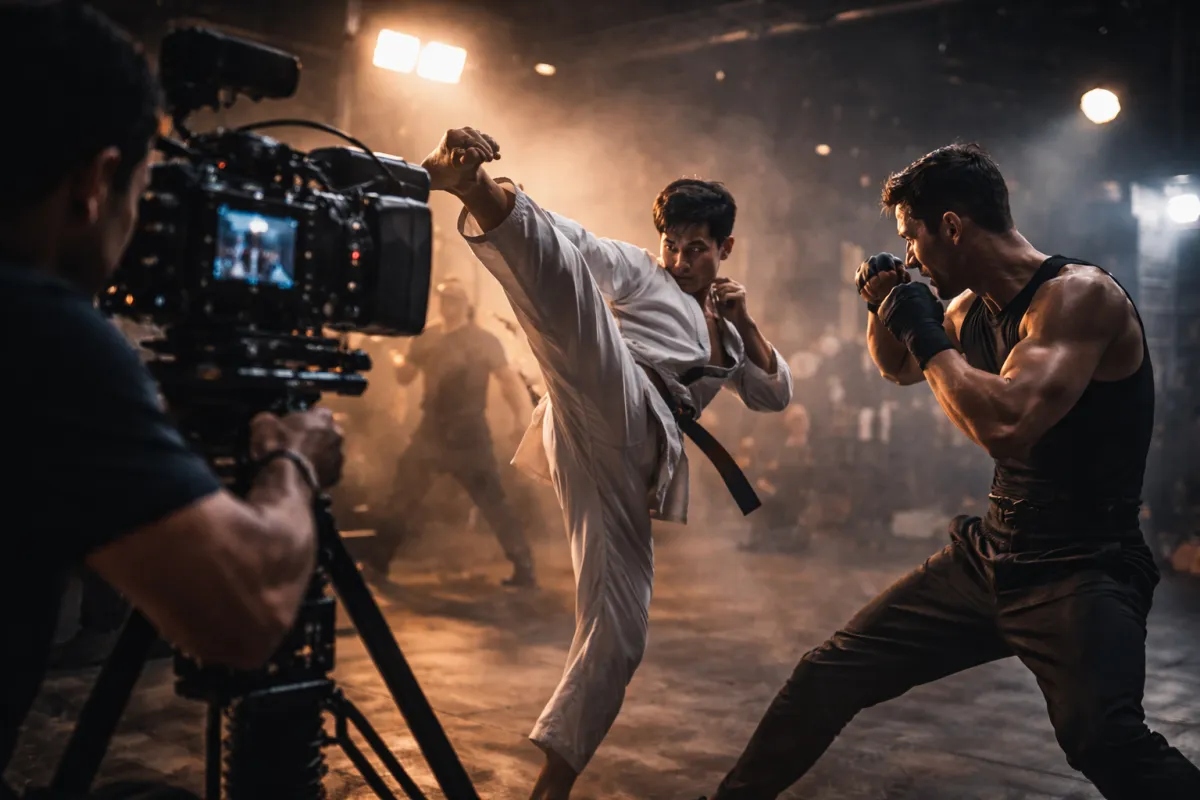
International martial artists demonstrating different fighting styles during cinematic action choreography.
Final Thoughts
Martial arts films continue to evolve alongside advances in filmmaking and the global popularity of combat sports.
By combining traditional martial arts techniques with modern choreography, technology, and cinematic storytelling, filmmakers are creating action sequences that are more immersive and exciting than ever before.
For martial artists interested in film performance, understanding these emerging trends offers valuable insight into how the future of action cinema is being shaped today.
Are You Ready to Take Your Career to the Next Level?
Join Movie Martial Arts
Get access to exclusive training, tutorials, and resources that will transform your career.
CONTINUE LEARNING
For a deeper look at the martial arts film industry, explore these related INSIGHTS articles:
Inside the Stunt Coordinator’s Mind: Casting & Safety – Gain valuable insights into the decision-making process of stunt coordinators.
Emerging Trends in Martial Arts Films – Discover the latest trends shaping martial arts cinema and the future of the genre.
The 10 Greatest Martial Arts Fight Scenes in Movie History – Take a journey through the most iconic fight scenes that changed the film industry.
The Ultimate Guide to Martial Arts Movies: History, Styles, and Legendary Fight Scenes – Learn about the history, evolution, and iconic styles that define martial arts films.
Legendary Martial Arts Movie Stars: The Icons Who Shaped Action Cinema – Dive into the lives and legacies of martial arts legends who revolutionized action movies.
How to Become a Stunt Performer in Film and Television – Learn how to get started in the stunt performing industry and build a career in film and TV.