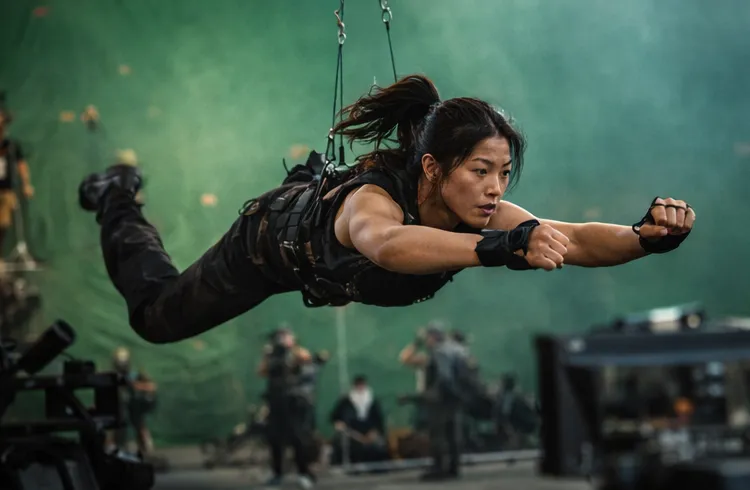
1 June 2026 MOVIE MARTIAL ARTS
The Evolution of Martial Arts: From Ancient Combat to Modern Cinema
Martial arts have evolved over thousands of years, shaped by warfare, cultural traditions, philosophy, and modern sport. What began as systems of survival and battlefield combat eventually developed into structured disciplines practiced for self-defense, competition, physical fitness, and personal development.
Today, martial arts influence not only sports and self-defense training but also film, television, and action choreography. Many stunt performers and action actors rely on martial arts skills to create realistic and exciting fight scenes on screen.
Understanding the evolution of martial arts helps explain how these systems developed, why they differ from one another, and how they continue to shape modern action entertainment.
Ancient Origins of Martial Arts
The earliest martial arts systems were created for one purpose: survival in combat.
Long before organized sports or training schools existed, warriors developed techniques to fight with weapons and empty hands.
Many historians trace early martial traditions to ancient civilizations such as China, India, Greece, and Egypt.
These early systems included:
weapon combat
wrestling and grappling
striking techniques
battlefield strategy
Ancient Greek combat sports such as Pankration combined boxing and wrestling techniques and were part of the early Olympic Games.
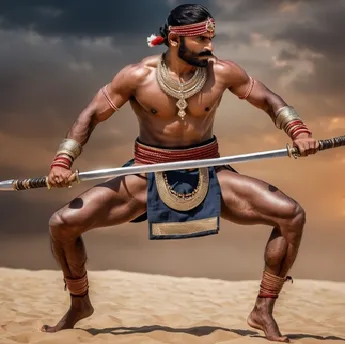
Meanwhile, Indian martial traditions such as Kalaripayattu developed complex systems of strikes, weapons training, and movement that influenced later Asian martial arts.
Martial Arts Skills That Translate to Film
Many of the martial arts practiced today trace their roots to systems that developed across East Asia.
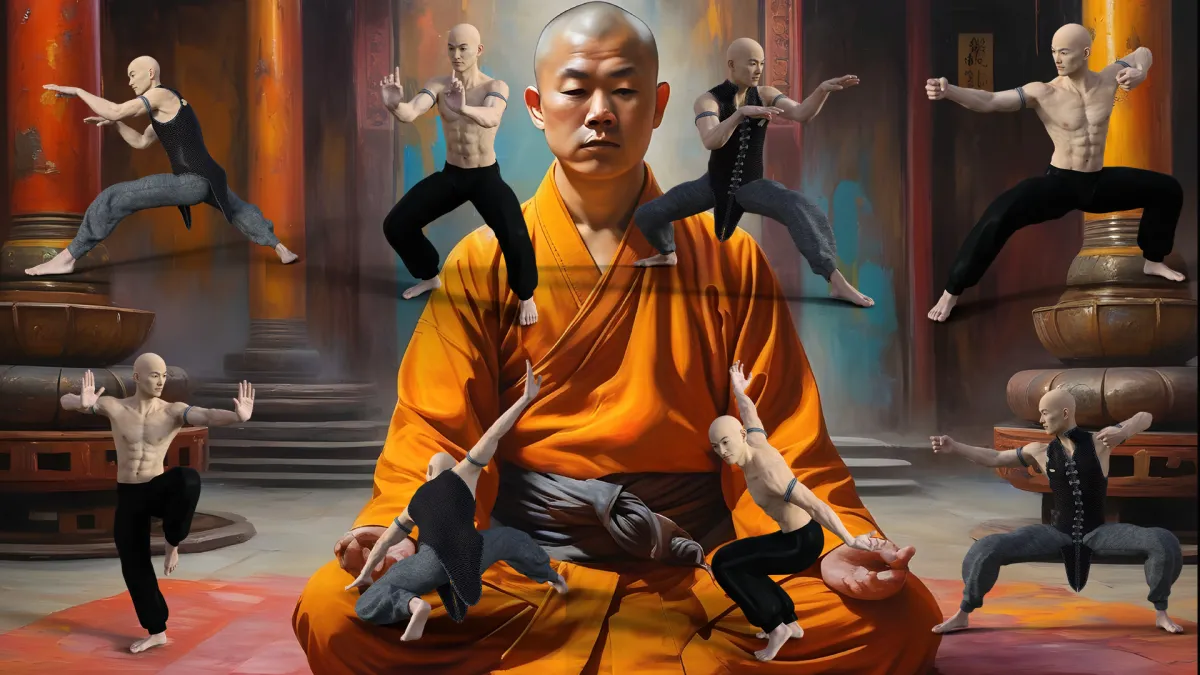
In China, martial arts evolved into a wide range of styles collectively known as Kung Fu. These systems combined fighting techniques with philosophical ideas drawn from Taoism and Buddhism.
According to popular tradition, the monk Bodhidharma helped inspire martial training methods at the Shaolin Temple, which became closely associated with Chinese martial arts.
Over time, Chinese martial arts spread throughout Asia and influenced the development of other systems.
The Development of Japanese Martial Arts
In Japan, martial arts evolved from the combat techniques of the samurai warrior class.
Systems such as:
Jujutsu
Kenjutsu
Kyudo
were designed for battlefield effectiveness.
During the late 19th century, many traditional combat systems were adapted into modern martial arts focused on training and education.
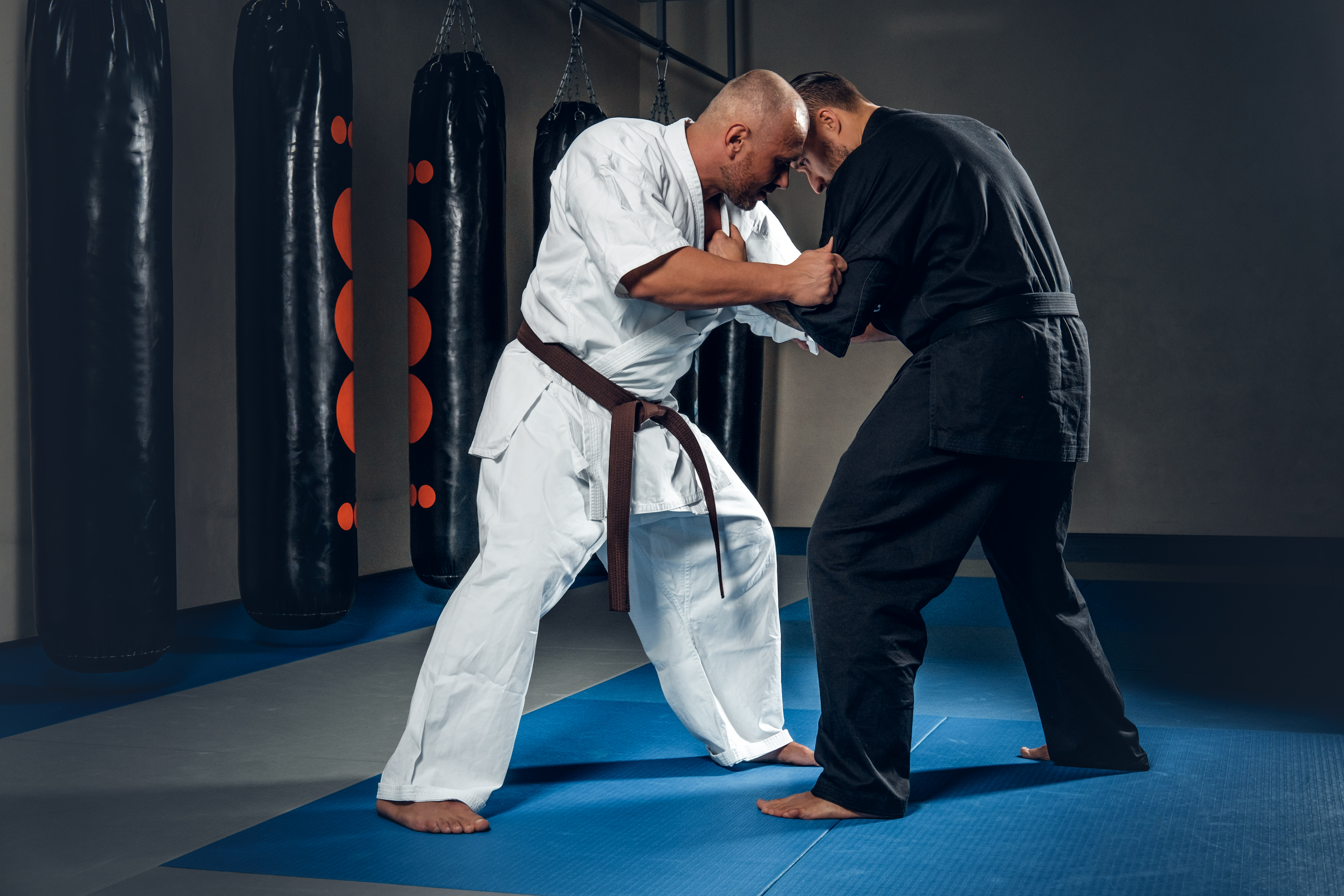
For example, Jigoro Kano transformed traditional jujutsu techniques into Judo, emphasizing physical development, discipline, and competition.
Similarly, Karate evolved from the fighting systems of Okinawa, blending Chinese and local techniques.
Korean Martial Arts and Global Expansion
Following the Second World War, martial arts spread rapidly across the world.
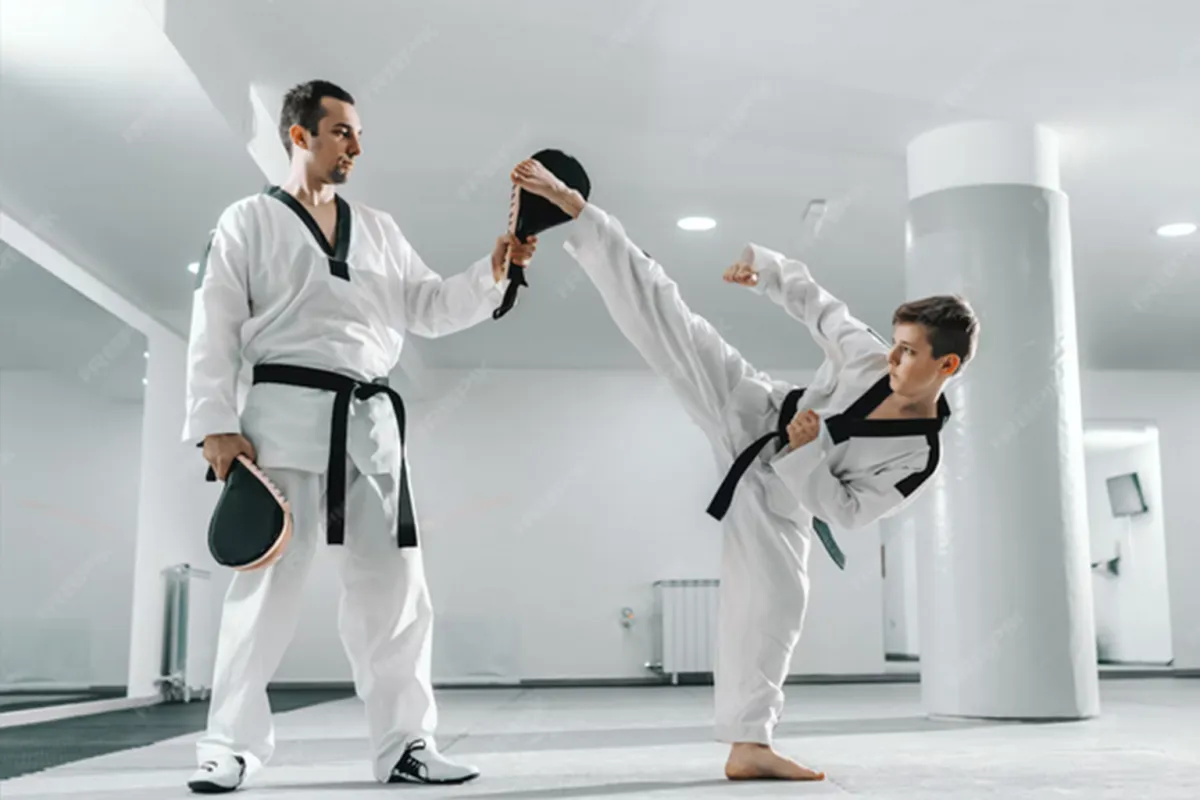
In South Korea, martial artists developed modern systems such as Taekwondo, which combined traditional Korean techniques with influences from karate and other styles.
Taekwondo became one of the most widely practiced martial arts globally and was eventually included in the Olympic Games.
At the same time, martial arts schools began appearing throughout Europe and North America, introducing millions of students to Asian combat disciplines.
Martial Arts in Film and Popular Culture
Martial arts achieved worldwide fame through cinema.
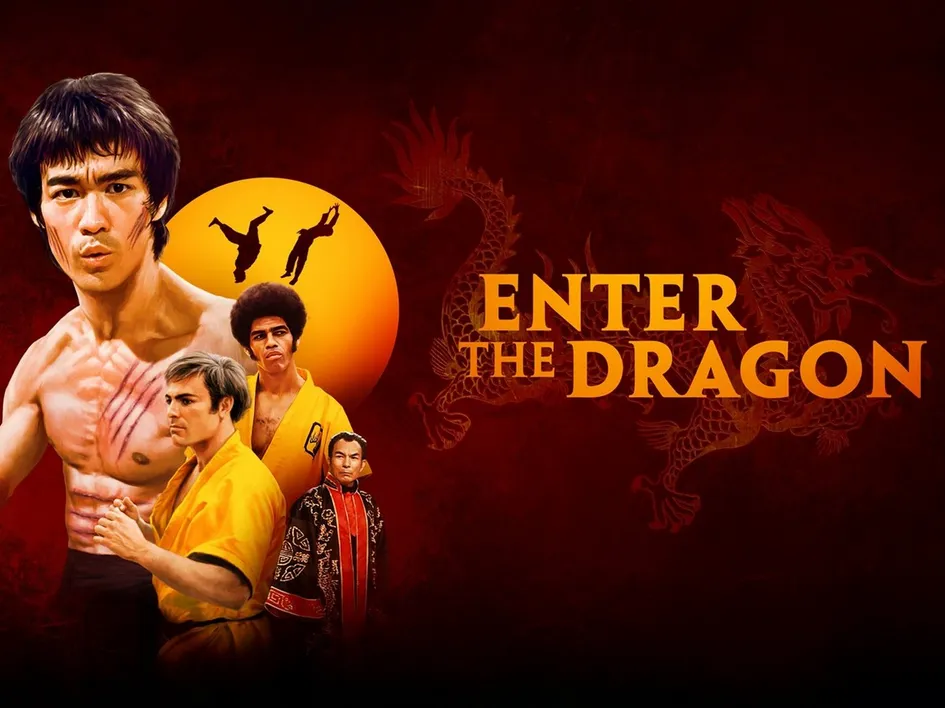
One of the most influential figures in martial arts film history was Bruce Lee, whose movies revolutionized action choreography and inspired generations of martial artists.
Films such as Enter the Dragon showcased fast, dynamic fight sequences that brought martial arts into mainstream Western audiences.
Other actors later helped expand the popularity of martial arts cinema, including:
Jackie Chan
Jet Li
Donnie Yen
Their films combined martial arts techniques with stunt performance and cinematic storytelling.
Today, martial arts remain a central element in many action films and television productions.
The Rise of Mixed Martial Arts
Modern combat sports have also influenced the evolution of martial arts.
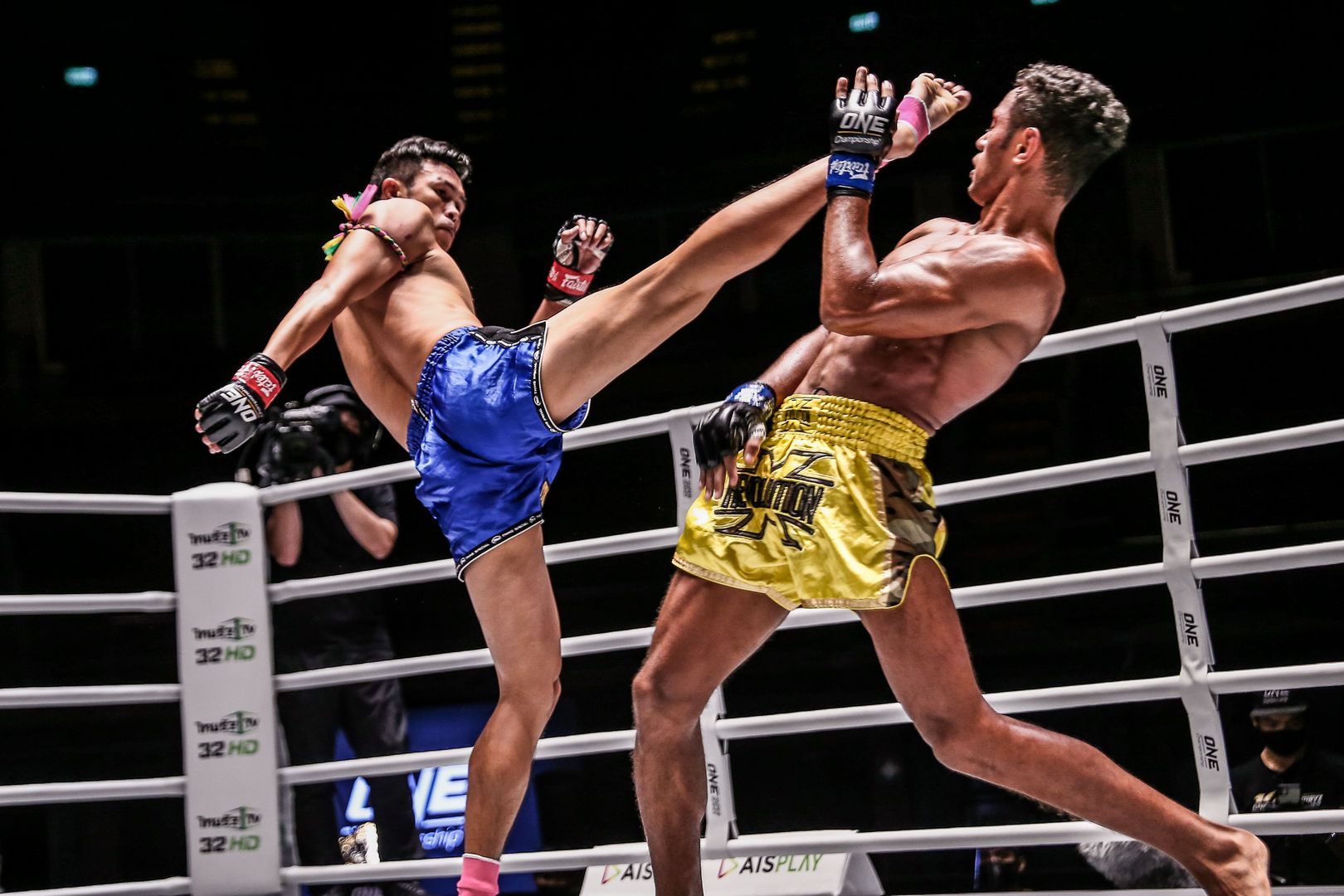
The emergence of Ultimate Fighting Championship introduced audiences to Mixed Martial Arts, a sport that combines techniques from multiple fighting systems.
MMA fighters train in striking, grappling, wrestling, and submission techniques drawn from disciplines such as:
Brazilian Jiu‑Jitsu
Muay Thai
Wrestling
This blending of styles reflects the continuing evolution of martial arts as practitioners adapt techniques from different systems.
Martial Arts and the Film Industry
Martial arts play an important role in modern action filmmaking.
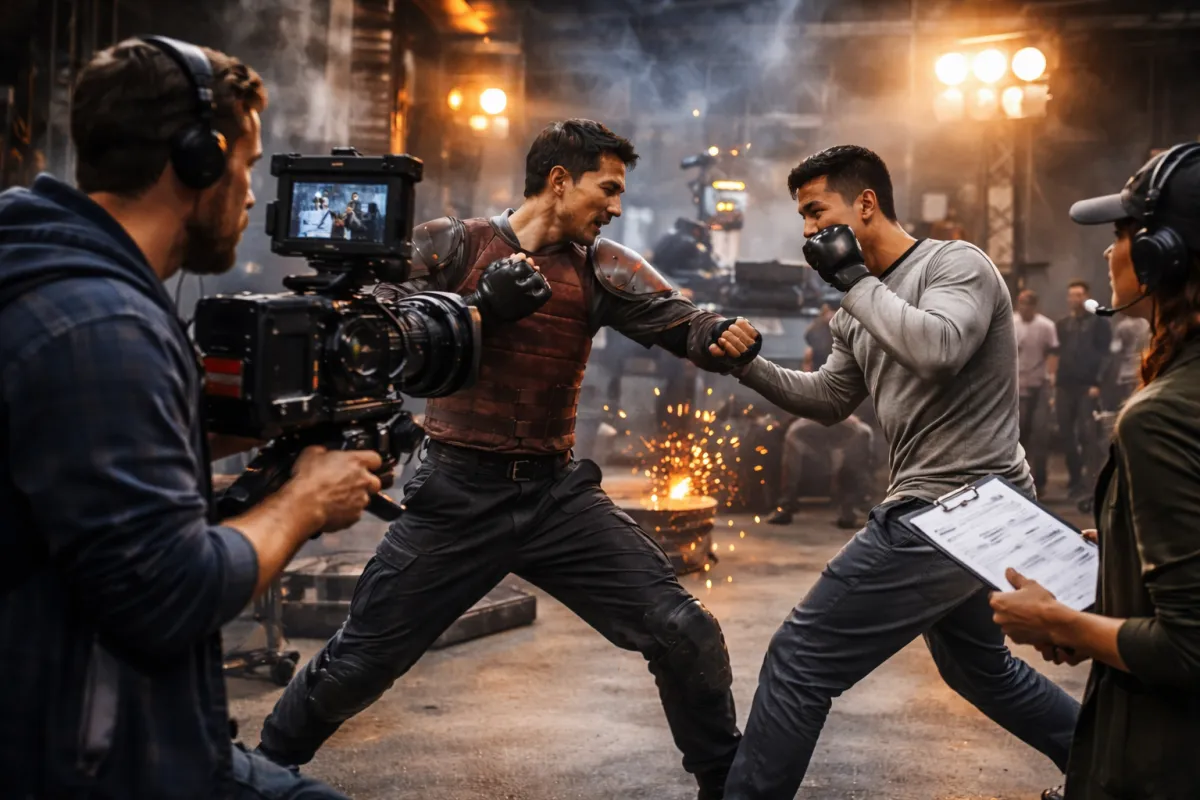
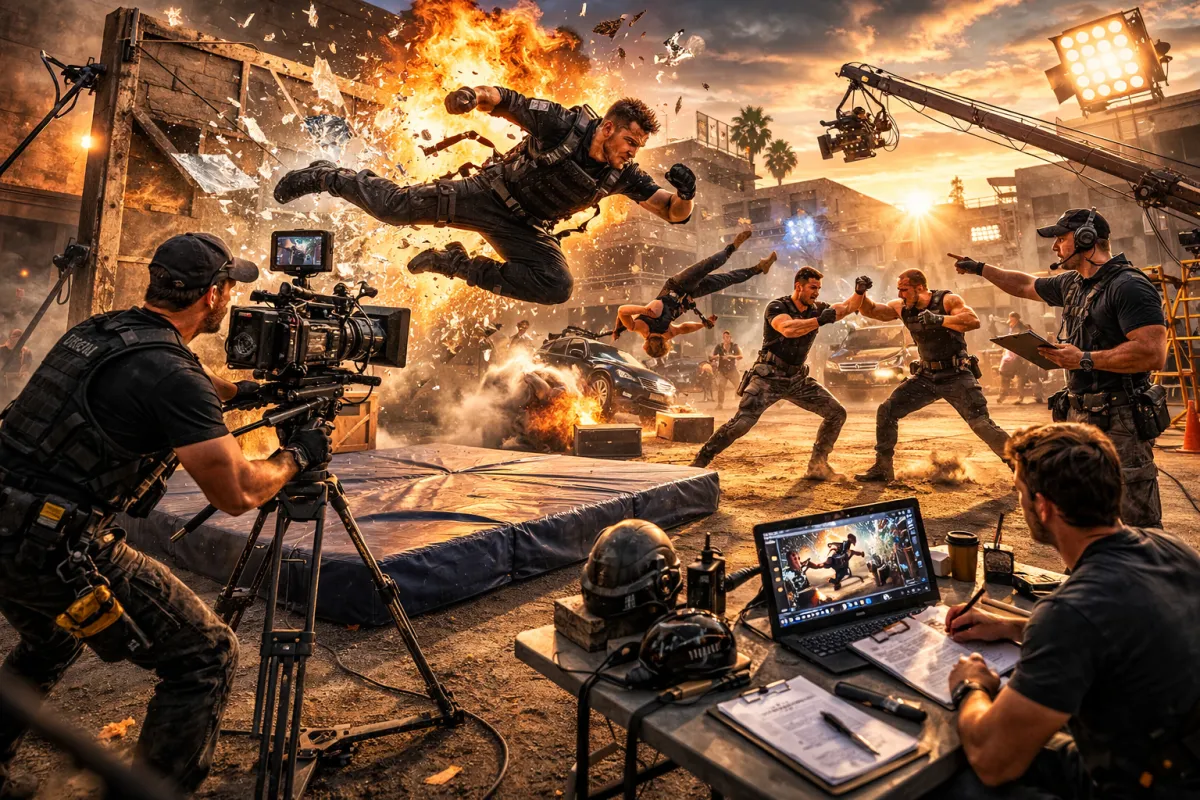
Fight choreographers and stunt coordinators often rely on martial arts techniques to design realistic combat scenes.
Many professional stunt performers train extensively in martial arts disciplines because they develop:
timing
body control
safe striking techniques
performance awareness
These skills are essential for performing fight sequences on camera.
👉 If you're interested in pursuing a career in action films, read our guide:
How to Become a Stunt Performer: The Complete Film & TV Career Guide
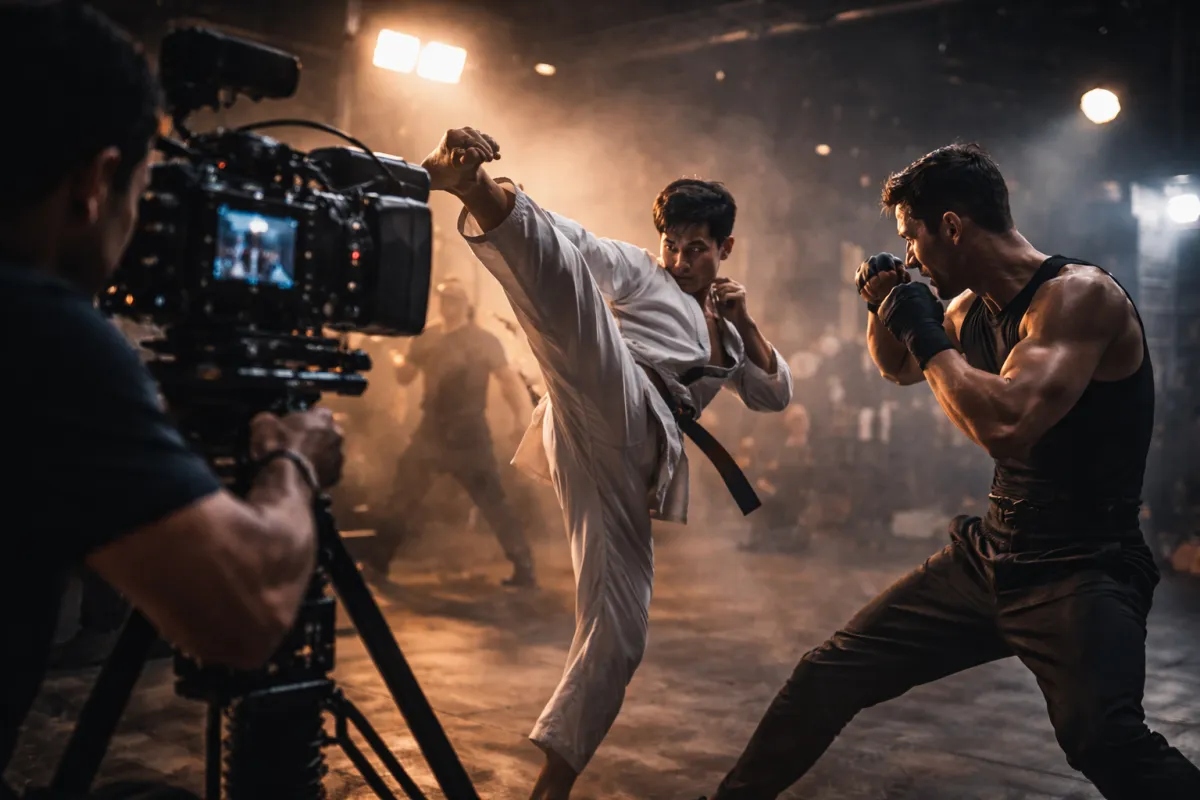
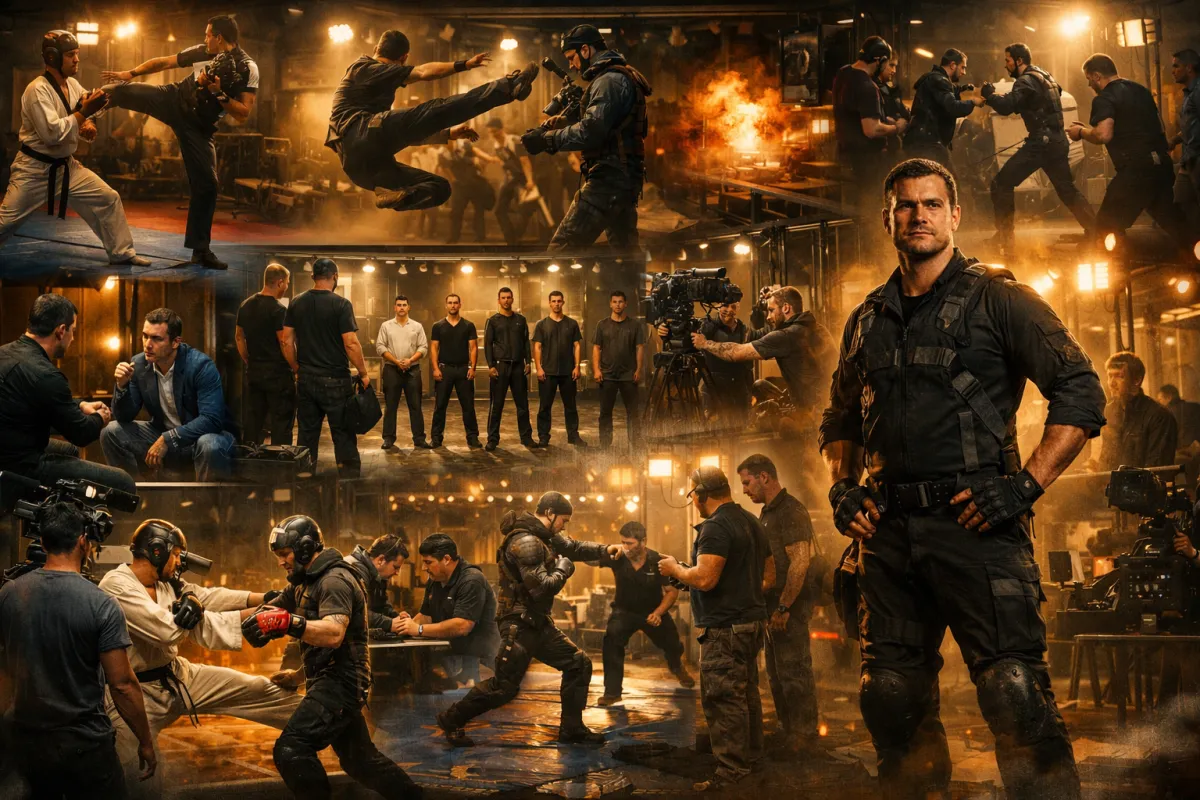
Modern martial arts films combine athletic skill, stunt choreography, and cinematic storytelling to create the dramatic fight scenes audiences see on screen.
Timeline of Martial Arts History
The development of martial arts spans thousands of years. While exact origins are often debated, historians have identified several major milestones in their evolution.
Ancient Era
2000 BCE – Early Combat Systems
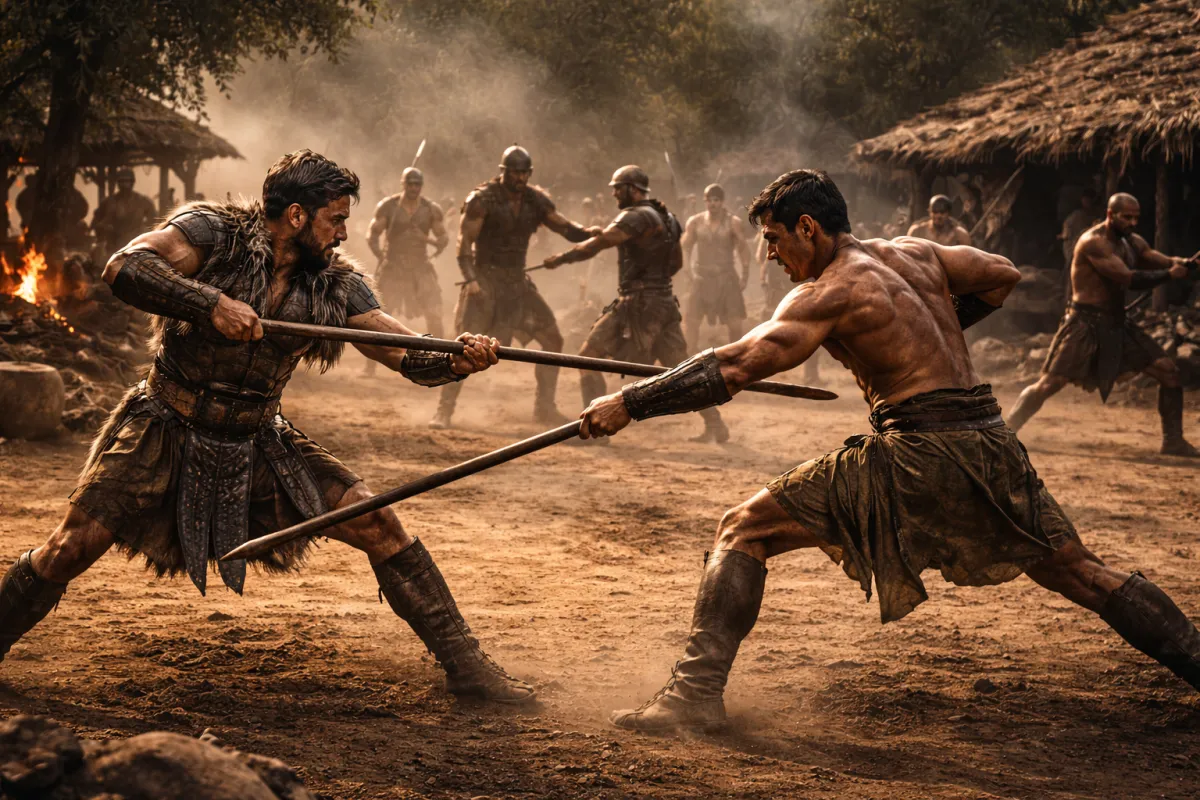
Early forms of wrestling and combat training appear in ancient civilizations including Egypt, Greece, and India.
Temple carvings and artwork show grappling techniques that resemble modern martial arts.
648 BCE – Pankration Introduced to the Olympics
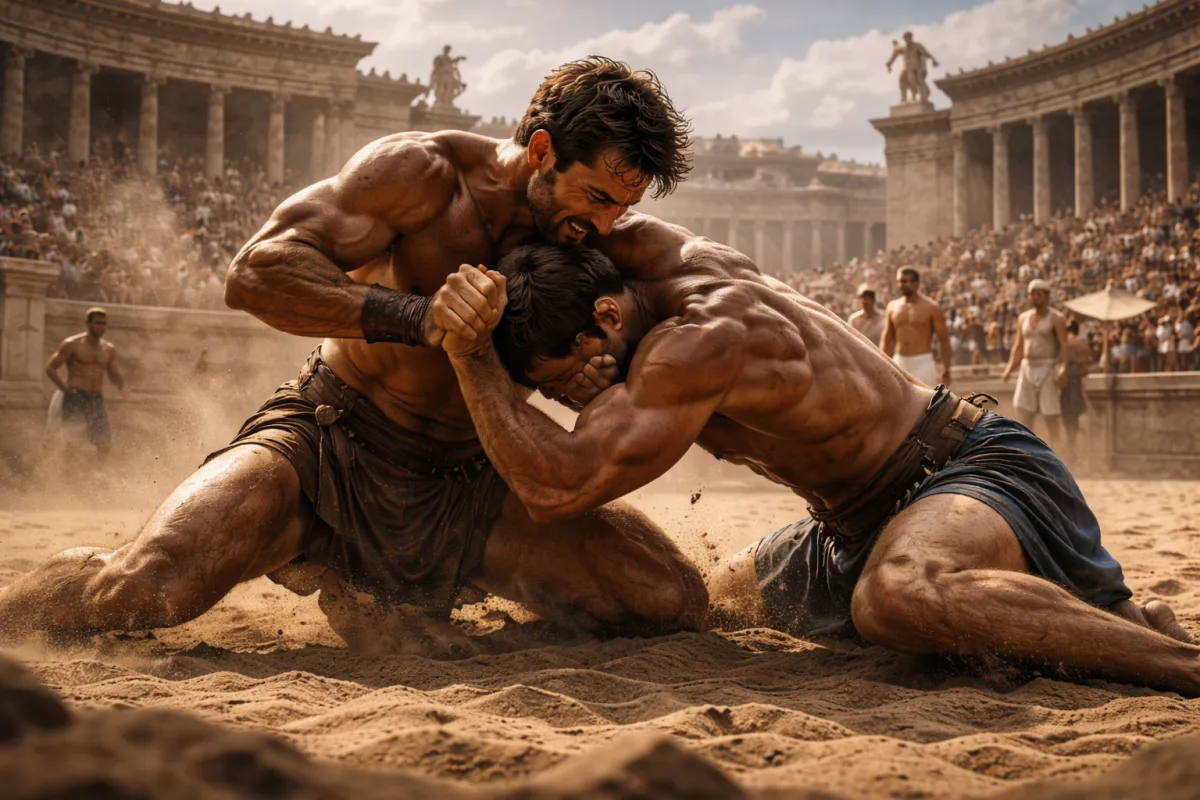
The brutal combat sport Pankration is added to the Olympic Games in ancient Greece.
Pankration combines striking and grappling and is often considered one of the earliest forms of mixed martial arts.
Early Asian Martial Arts Development
5th–6th Century – Shaolin Influence
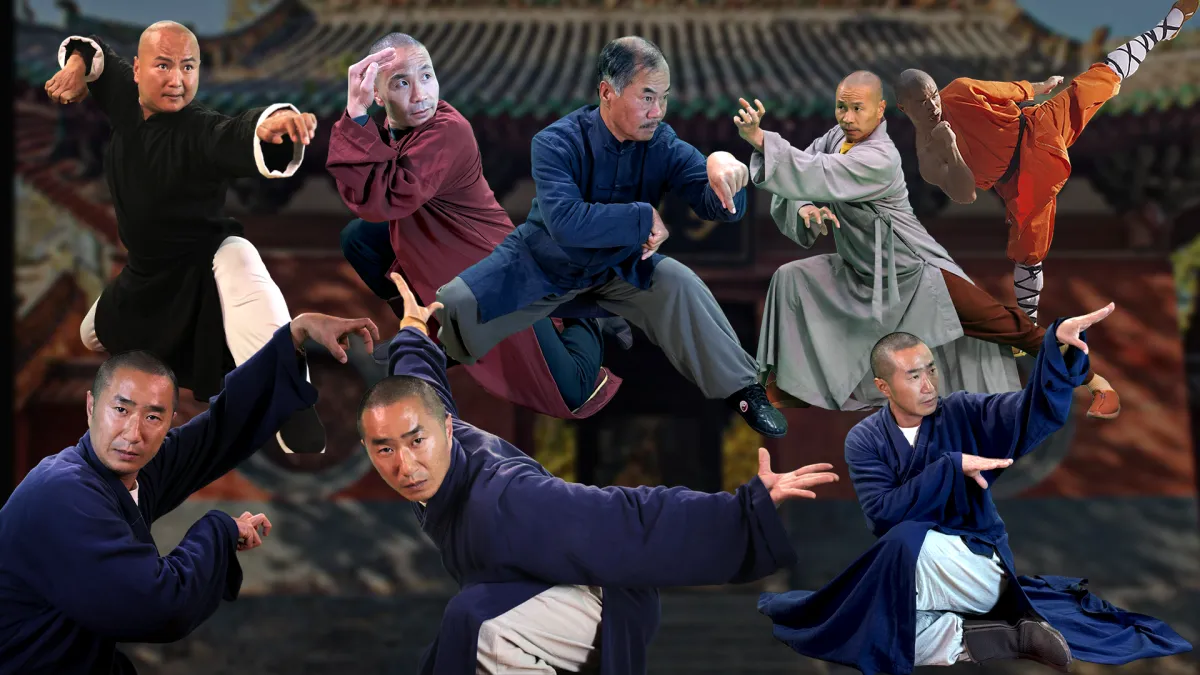
The monk Bodhidharma is traditionally linked to martial training methods at the Shaolin Temple in China, helping influence the development of Kung Fu traditions.
1300–1600 – Samurai Martial Systems
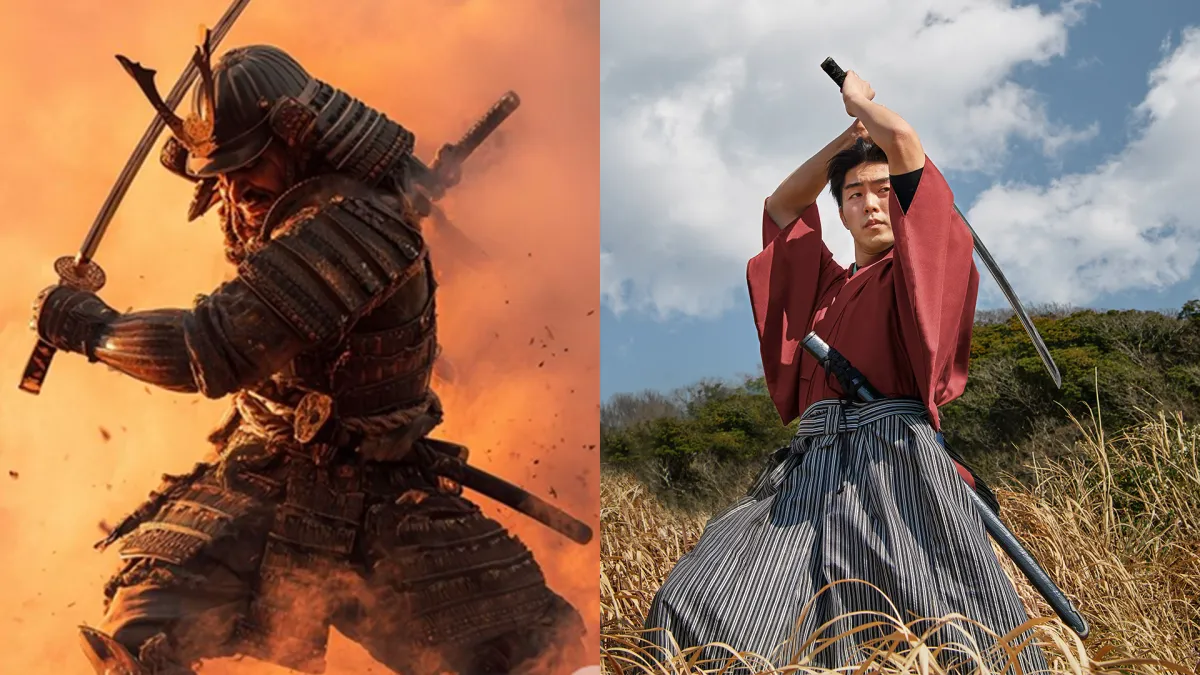
In Japan, the samurai warrior class develops structured combat systems such as: Jujutsu & Kenjutsu.
These arts focus on battlefield combat and weapon use.
Modern Martial Arts
1882 – Creation of Judo
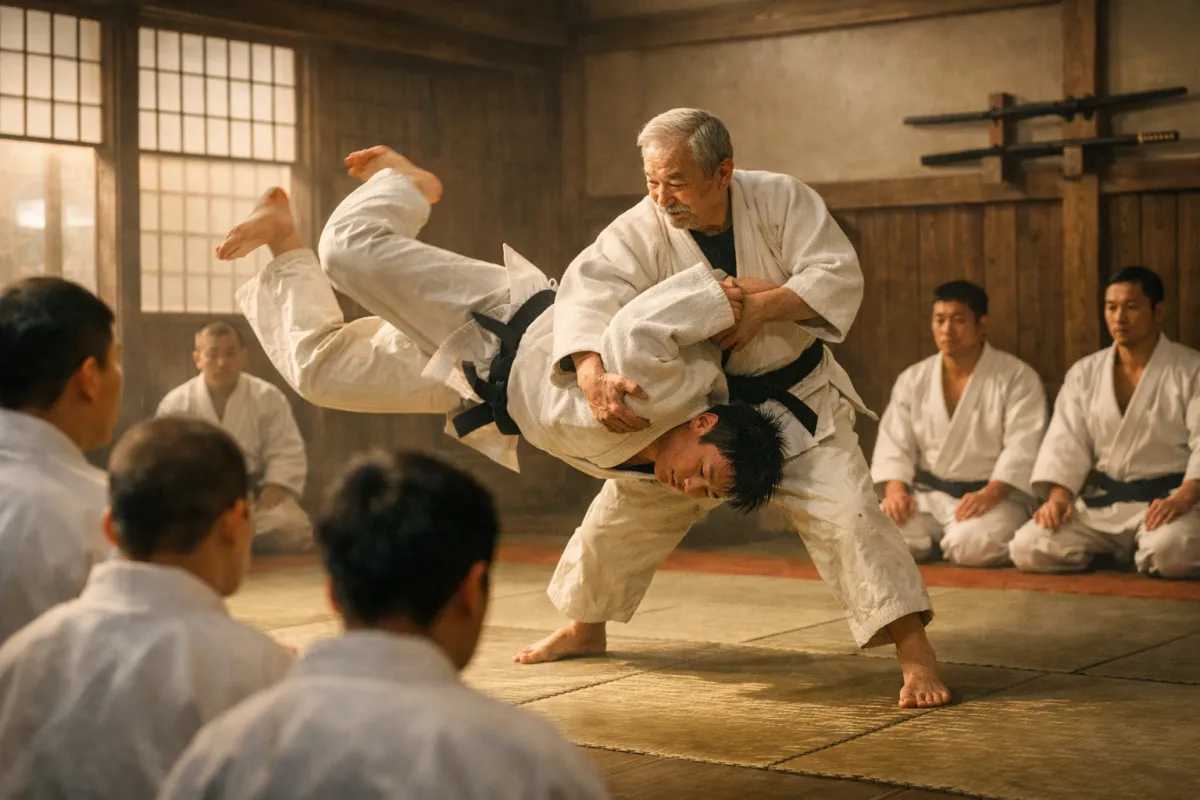
Jigoro Kano founded Judo in 1882, transforming traditional Japanese jujutsu into a modern martial art built on discipline, education, and physical development. His approach emphasized technique, balance, and personal growth, eventually leading Judo to become an international sport and Olympic discipline.
1940s–1950s – Global Spread of Karate
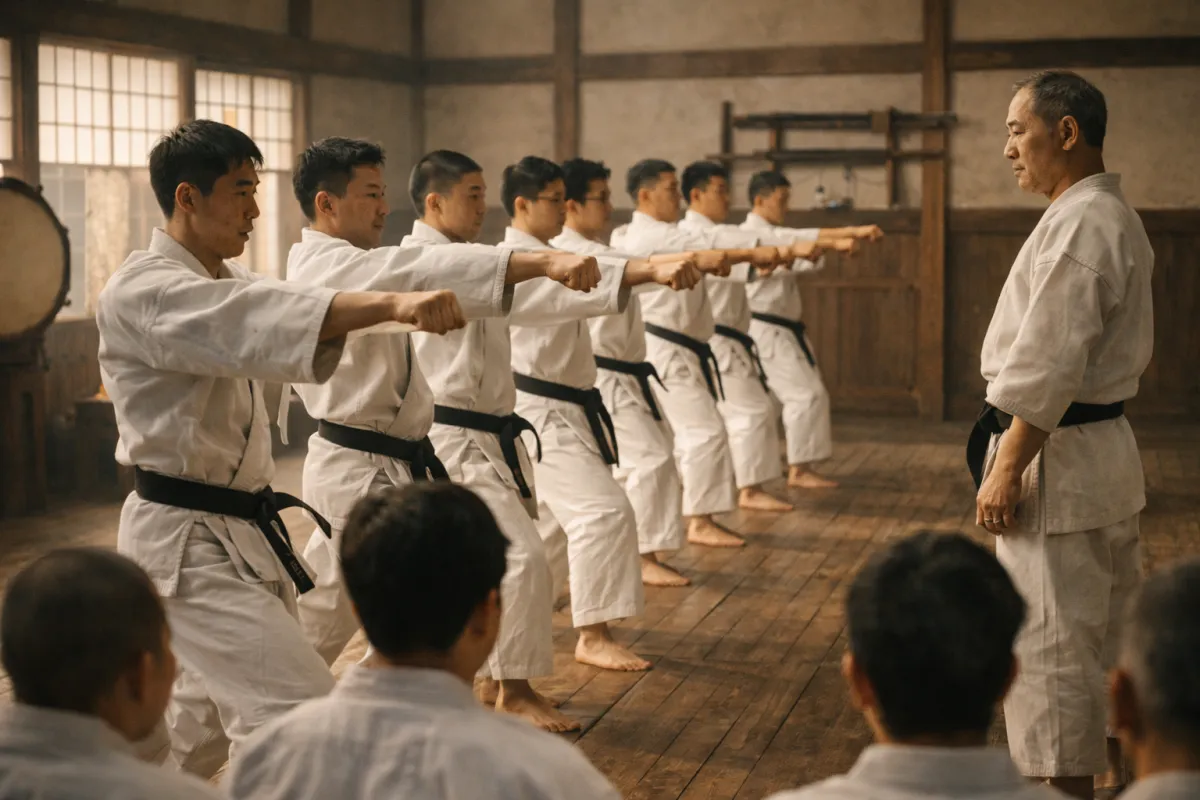
After World War II, Karate spreads internationally from Okinawa and Japan, becoming one of the most widely practiced martial arts in the world.
1950s–1960s – Birth of Taekwondo
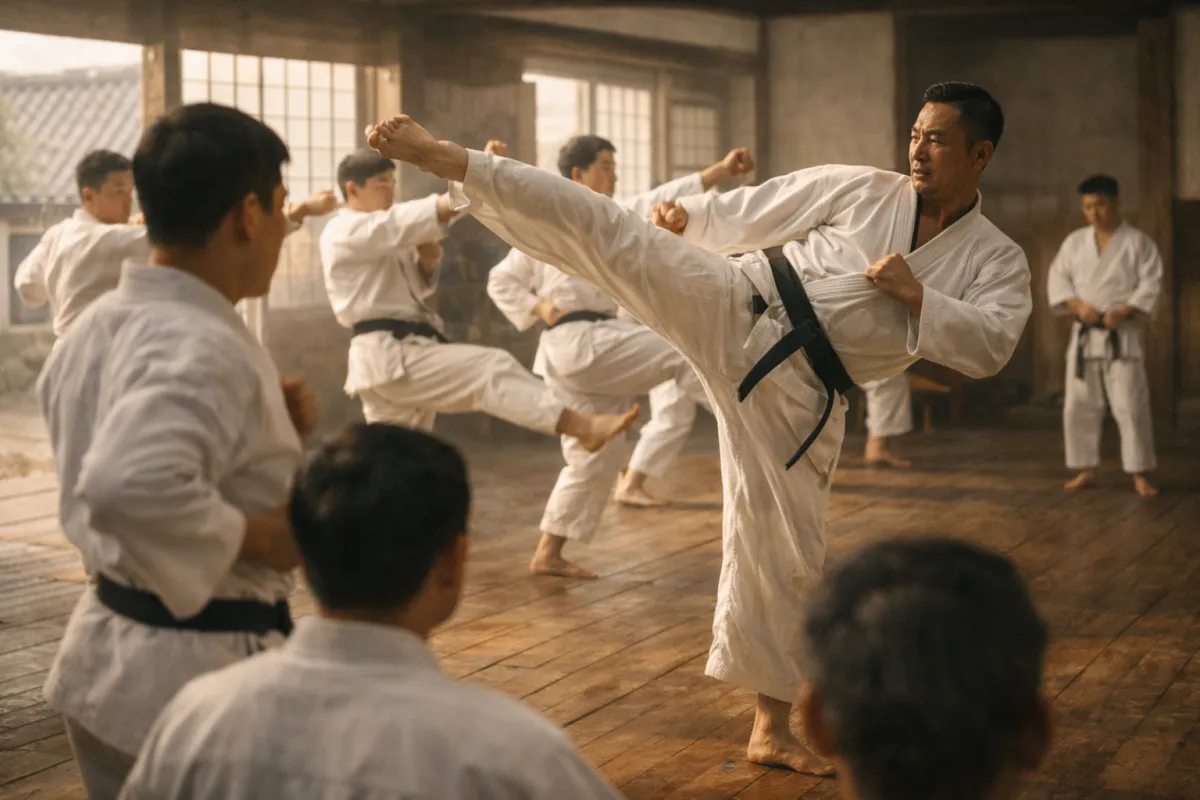
Modern Taekwondo emerged in South Korea during the 1950s and 1960s, as Korean martial arts schools unified their systems into a national discipline. Drawing from traditional Korean fighting methods and influences from Karate, Taekwondo emphasized powerful kicking techniques, speed, and dynamic movement. Over time, it developed into a global martial art practiced by millions and later became an official Olympic sport.
Martial Arts in Modern Era
1970s – Martial Arts Cinema Explosion
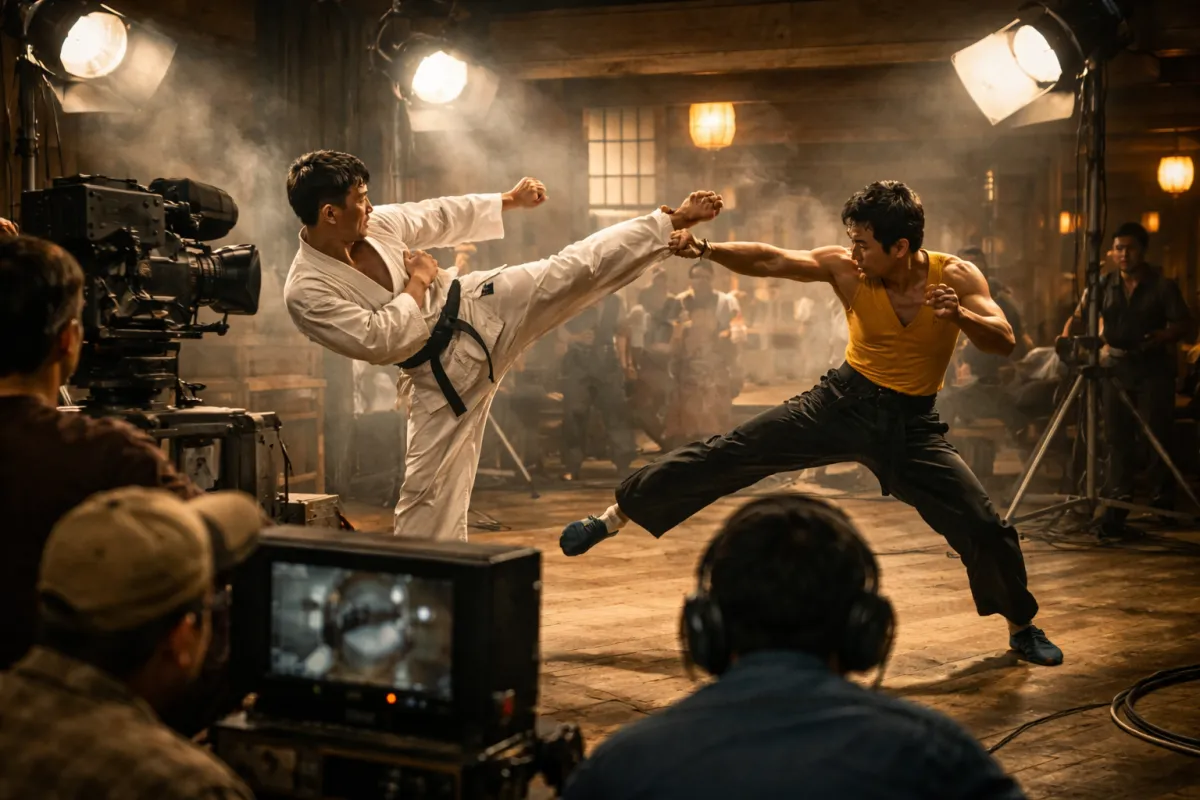
After World War II, Karate spreads internationally from Okinawa and Japan, becoming one of the most widely practiced martial arts in the world.
1993 – Birth of the UFC
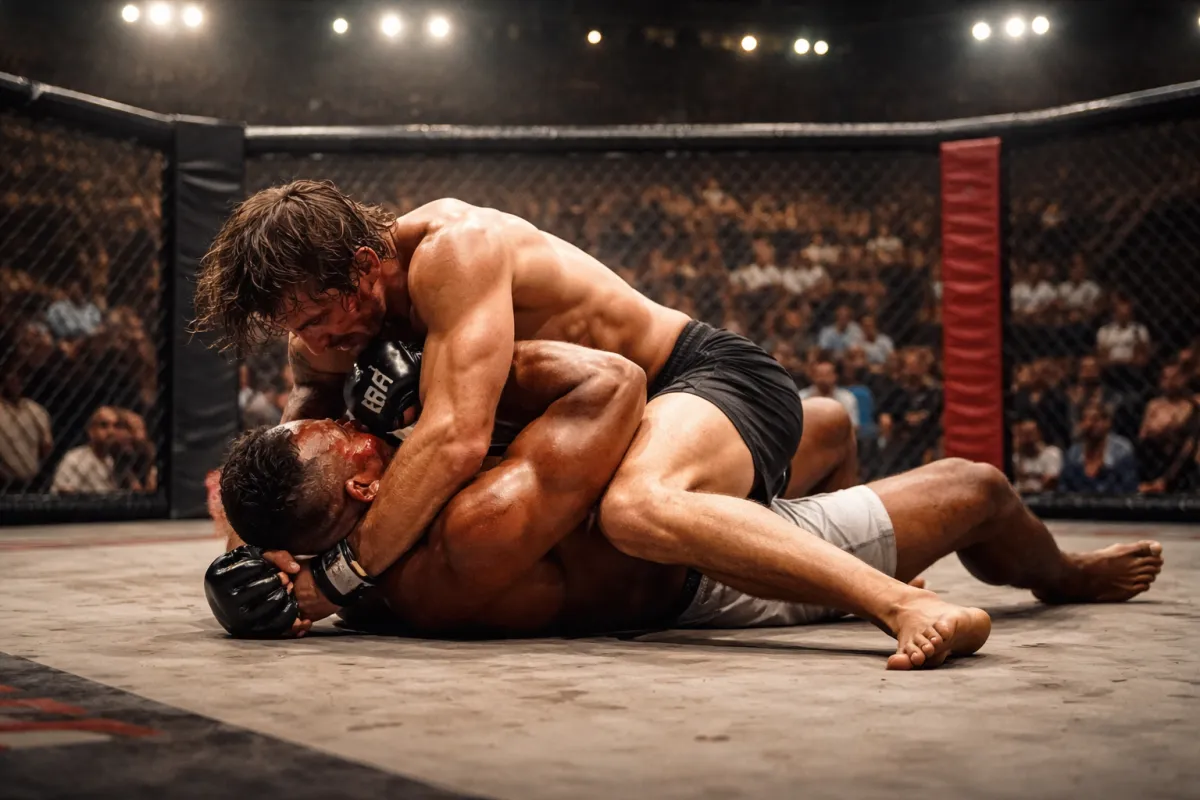
A defining moment in MMA history: Two fighters clash in the octagon during the inaugural UFC event in 1993, showcasing the raw intensity and athleticism that would shape the future of mixed martial arts.
Influential Martial Artists Who Changed the World
Throughout history, certain martial artists have had an extraordinary impact on how martial arts are practiced, taught, and portrayed.
Bruce Lee
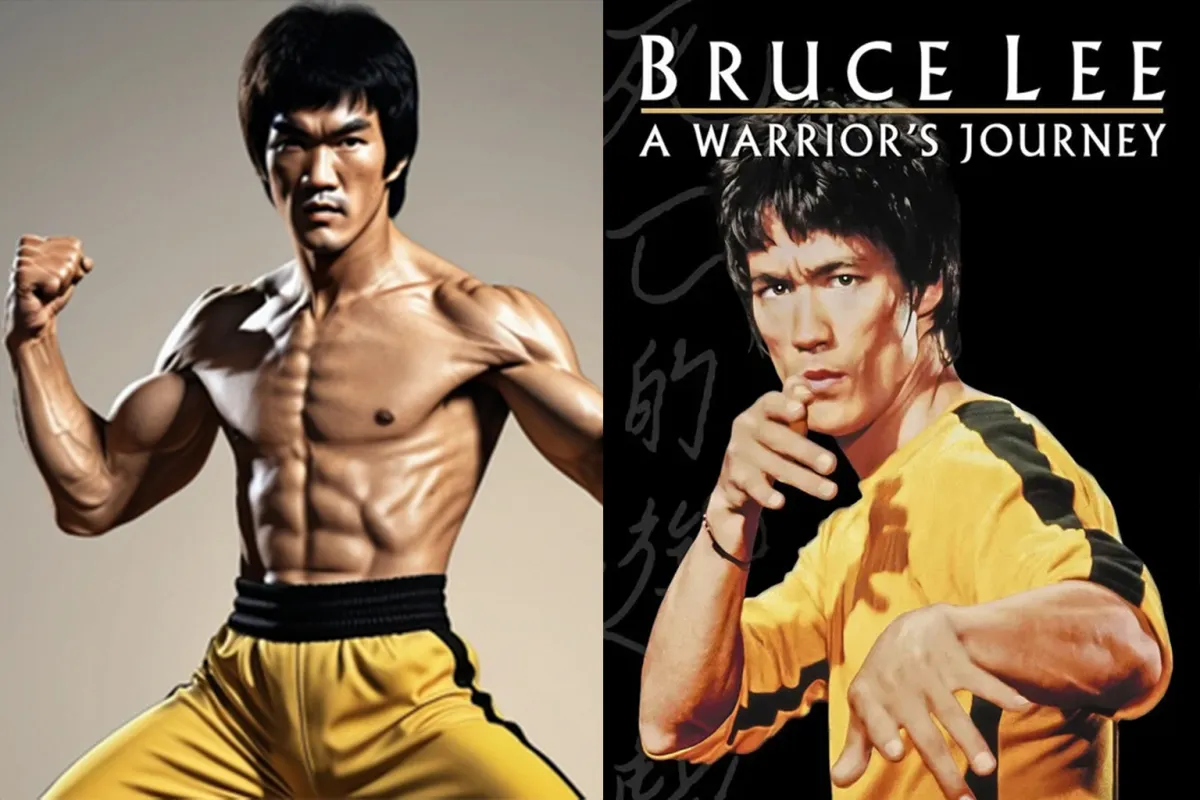
Few martial artists have influenced global culture more than Bruce Lee. Lee created the philosophy of Jeet Kune Do, which emphasized adaptability and efficiency rather than rigid styles.
His films introduced martial arts to international audiences and helped shape modern action cinema.
Jigoro Kano
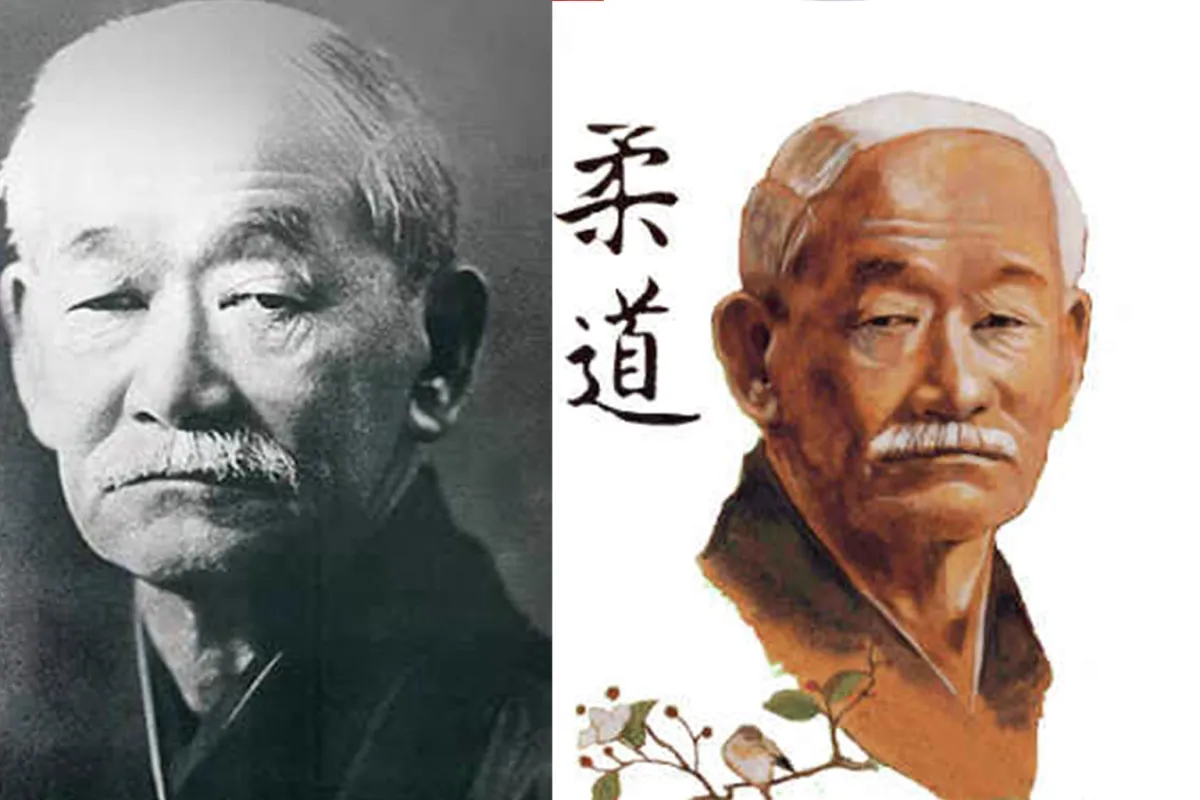
Jigoro Kano revolutionized martial arts education by creating Judo. His system emphasized: leverage over strength, discipline, and character development, structured training and competition
Judo later became one of the first martial arts included in the Olympic Games.
Helio Gracie
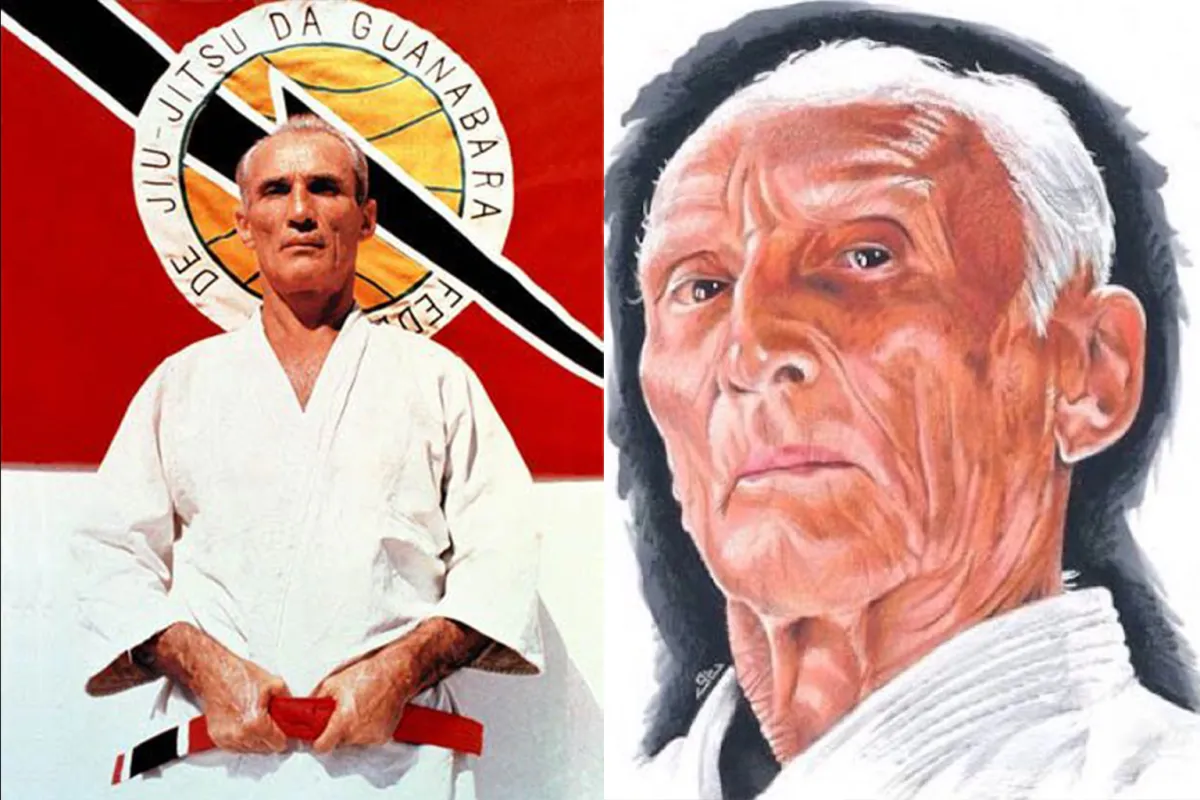
Brazilian martial artist Helio Gracie helped develop Brazilian Jiu-Jitsu, which focuses on ground fighting and submission techniques. Brazilian Jiu-Jitsu later became one of the foundational disciplines of Mixed Martial Arts competition.
Jackie Chan
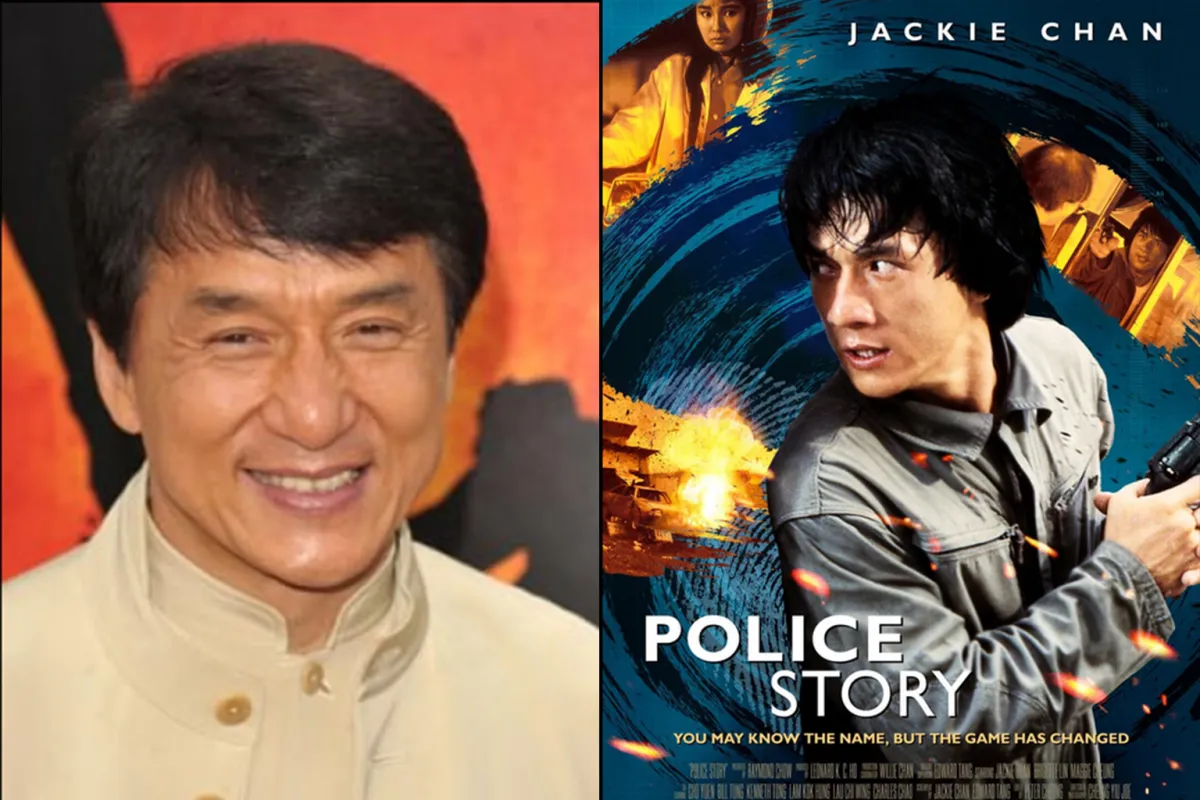
Actor and martial artist Jackie Chan helped redefine martial arts action films by combining martial arts, stunt work, and comedy.
His films feature highly choreographed fight sequences that require exceptional timing, athleticism, and stunt coordination.
Chuck Norris
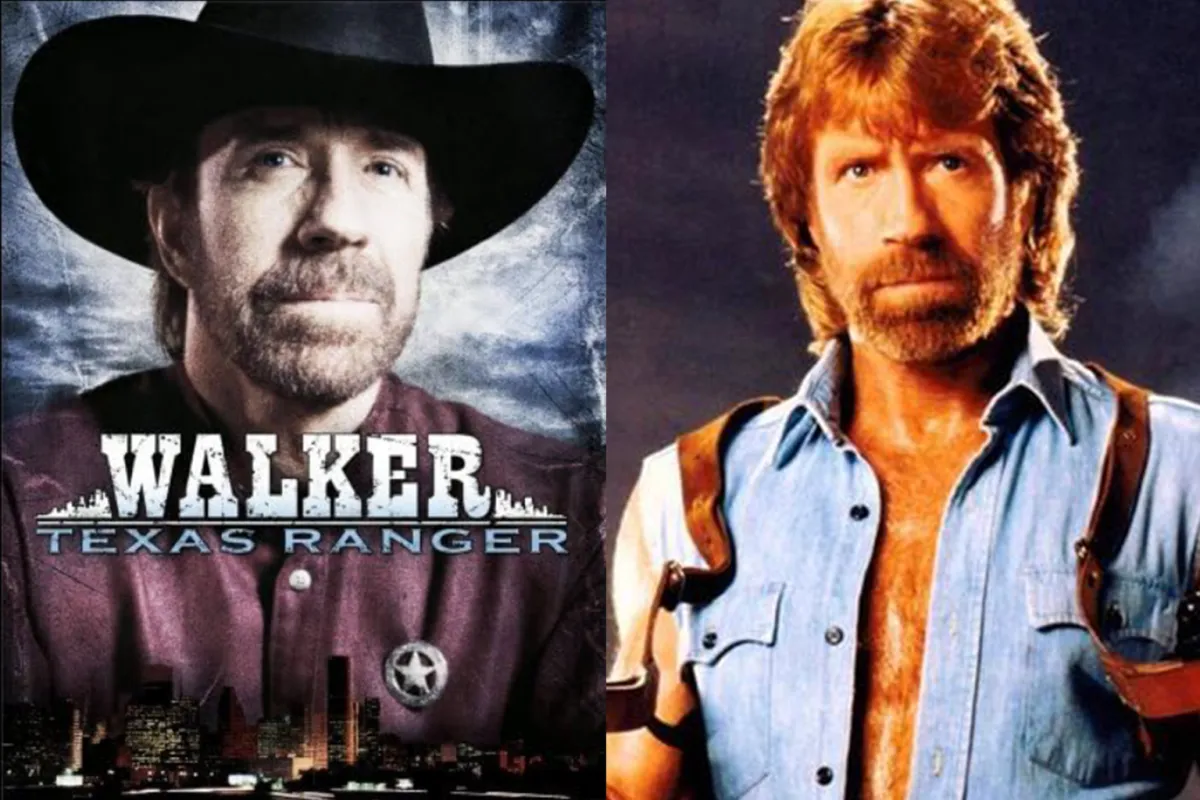
Martial artist and actor Chuck Norris helped popularize martial arts in the United States during the 1960s and 1970s.
A highly accomplished competitor, Norris won multiple karate championships and later founded the martial arts system Chun Kuk Do. He gained worldwide fame through action films and television, most notably the series Walker, Texas Ranger. Norris also appeared alongside Bruce Lee in the classic martial arts film Way of the Dragon, which featured one of the most famous fight scenes in martial arts cinema history. His career helped introduce martial arts training to a broad Western audience and inspired many future martial artists and stunt performers.
Donnie Yen
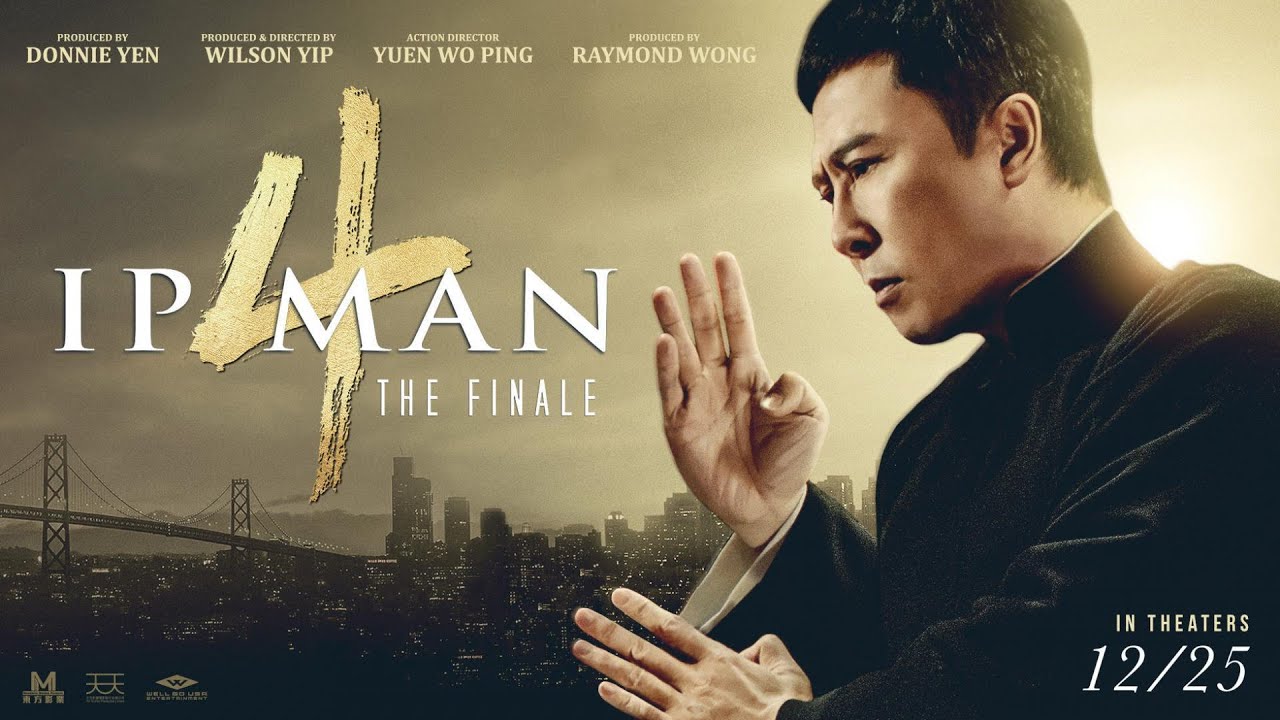
Hong Kong actor and martial artist Donnie Yen is widely regarded as one of the most skilled martial artists in modern action cinema. Yen is known for combining multiple fighting disciplines in his choreography, including Wing Chun, Taekwondo, Boxing, and Brazilian Jiu-Jitsu. He gained international recognition for portraying the legendary martial arts master Ip Man in the Ip Man film series, which introduced many audiences to the principles of Wing Chun. Donnie Yen’s dynamic fighting style and choreography have helped modernize martial arts action films and influence contemporary stunt and fight design
Scott Adkins
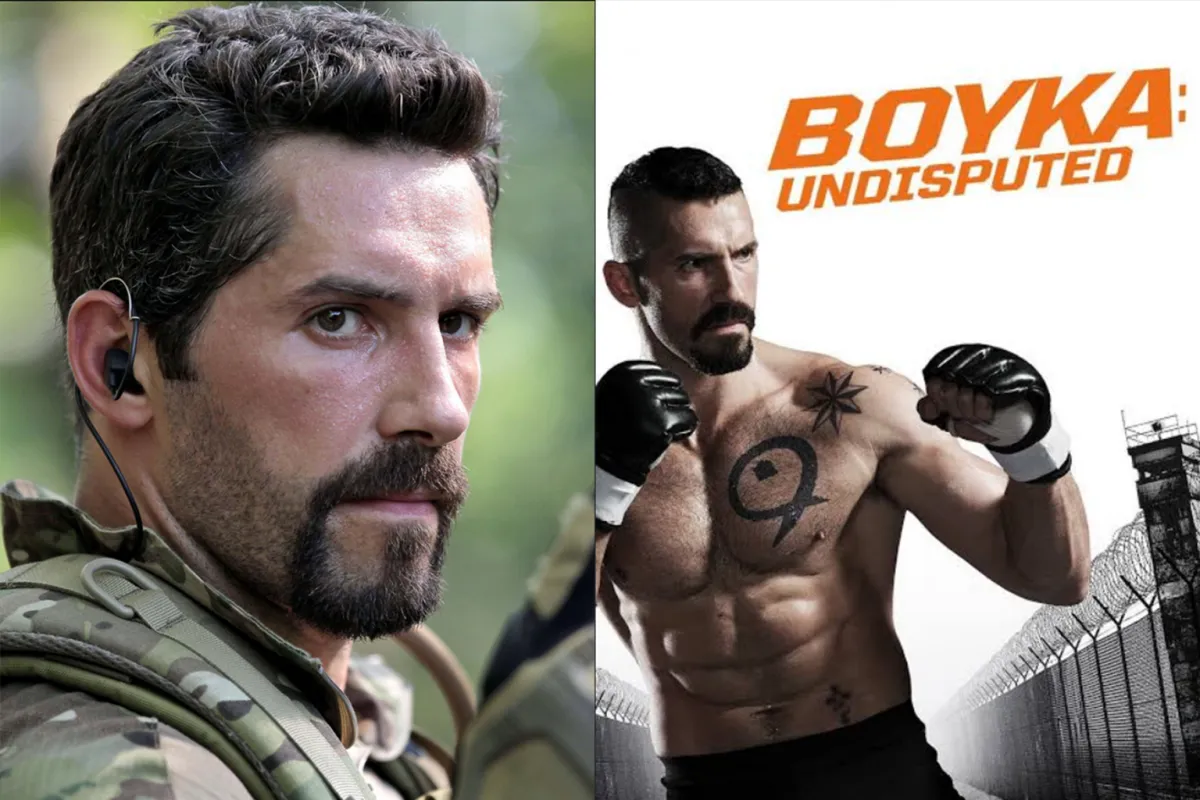
Scott Adkins helped redefine modern martial arts cinema with explosive athleticism, spinning kicks, and tricking-inspired choreography. Through films like Undisputed II and Undisputed III, he demonstrated how contemporary stunt performers blend traditional martial arts with acrobatics and cinematic fight choreography.
Michael Jai White
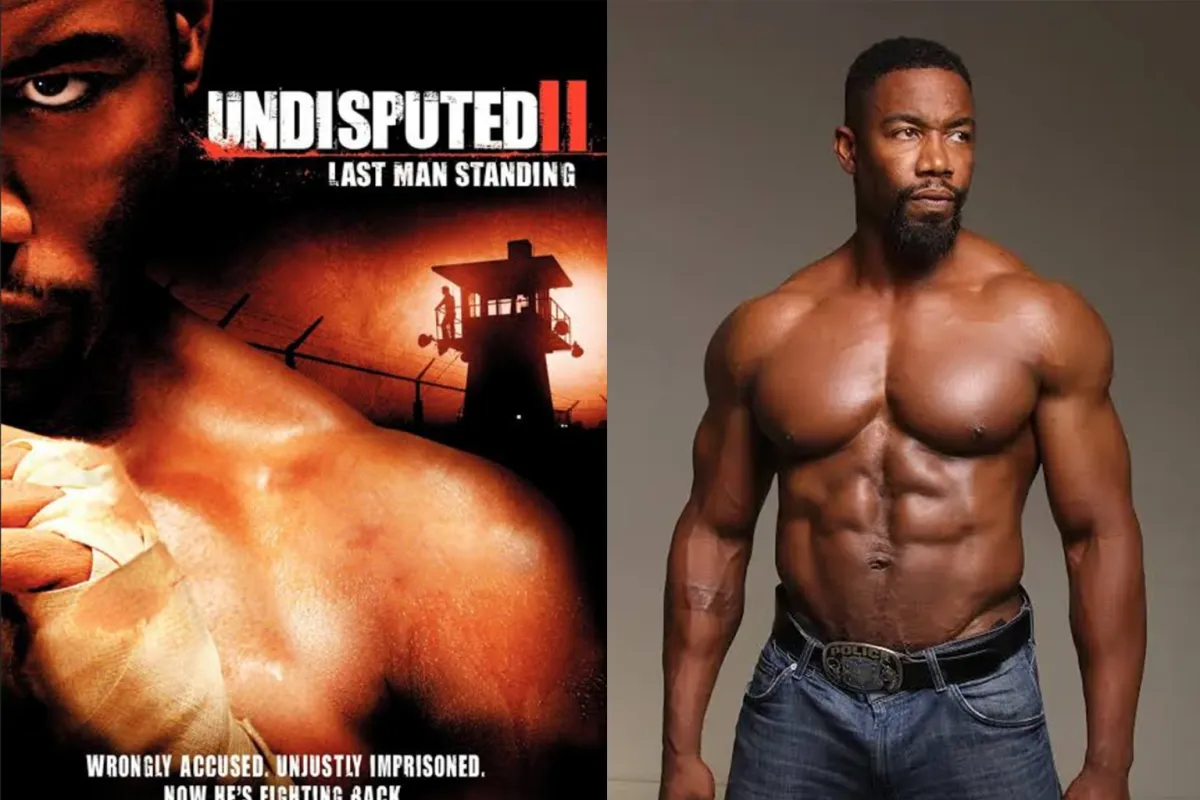
A highly respected martial artist and actor, Michael Jai White brought authenticity and power to modern action cinema. His performances in films like Undisputed III showcased technical striking, high kicks, and disciplined martial arts rooted in Karate, Taekwondo, and Kickboxing.
Keanu Reeves
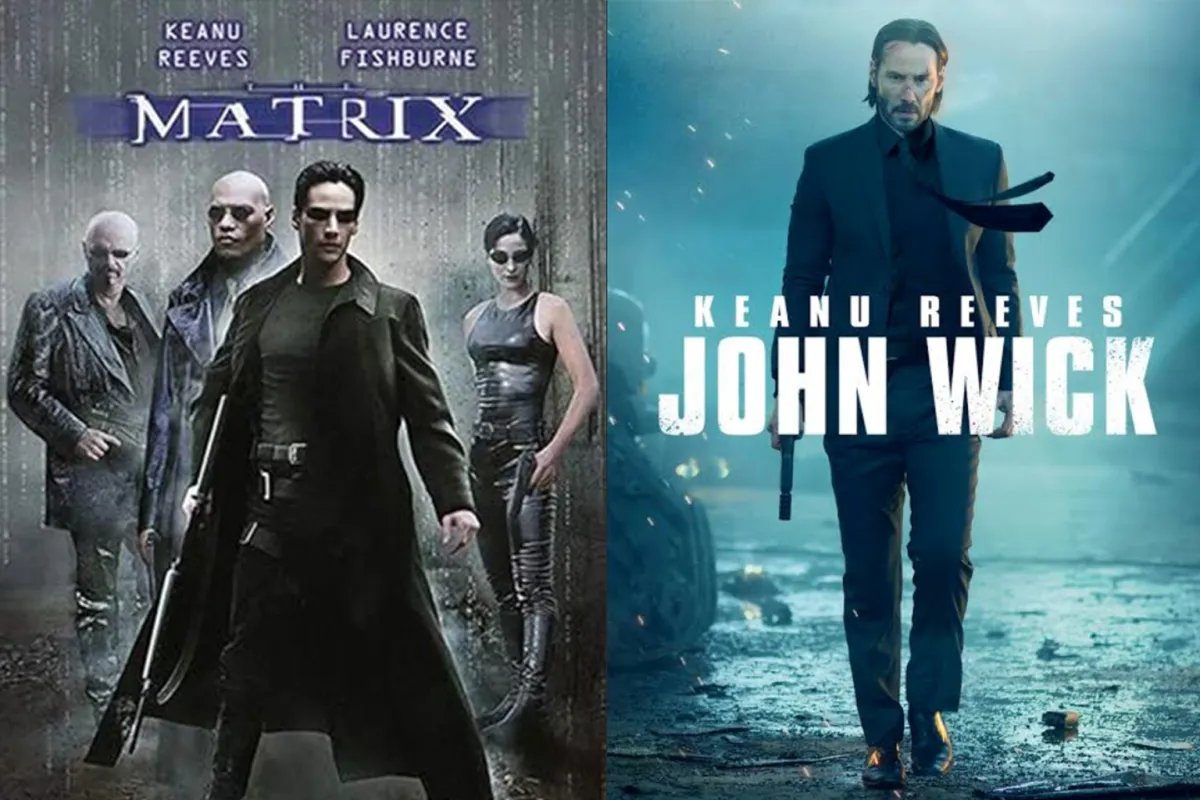
While not a traditional martial arts competitor, Keanu Reeves transformed expectations for action actors through his dedication to intensive training for the John Wick series. His work blends firearms tactics with Judo and Brazilian Jiu-Jitsu, helping popularize a modern style of cinematic combat known as “gun-fu.”
Tiger Hu Chen
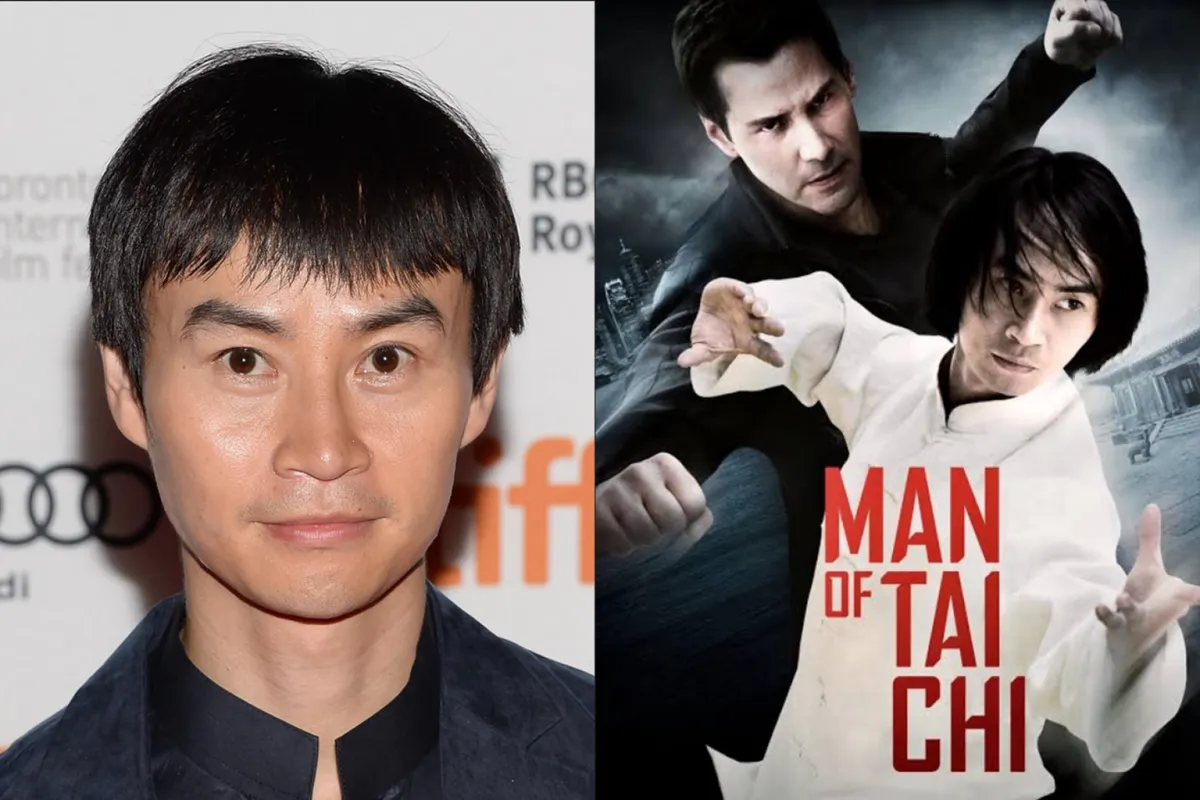
Best known for starring alongside Keanu Reeves in Man of Tai Chi, Tiger Chen is a skilled martial artist whose fluid movements highlight the elegance of traditional Chinese martial arts. His performance showcases how Tai Chi principles can be adapted for powerful and visually striking screen combat.
Tony Jaa
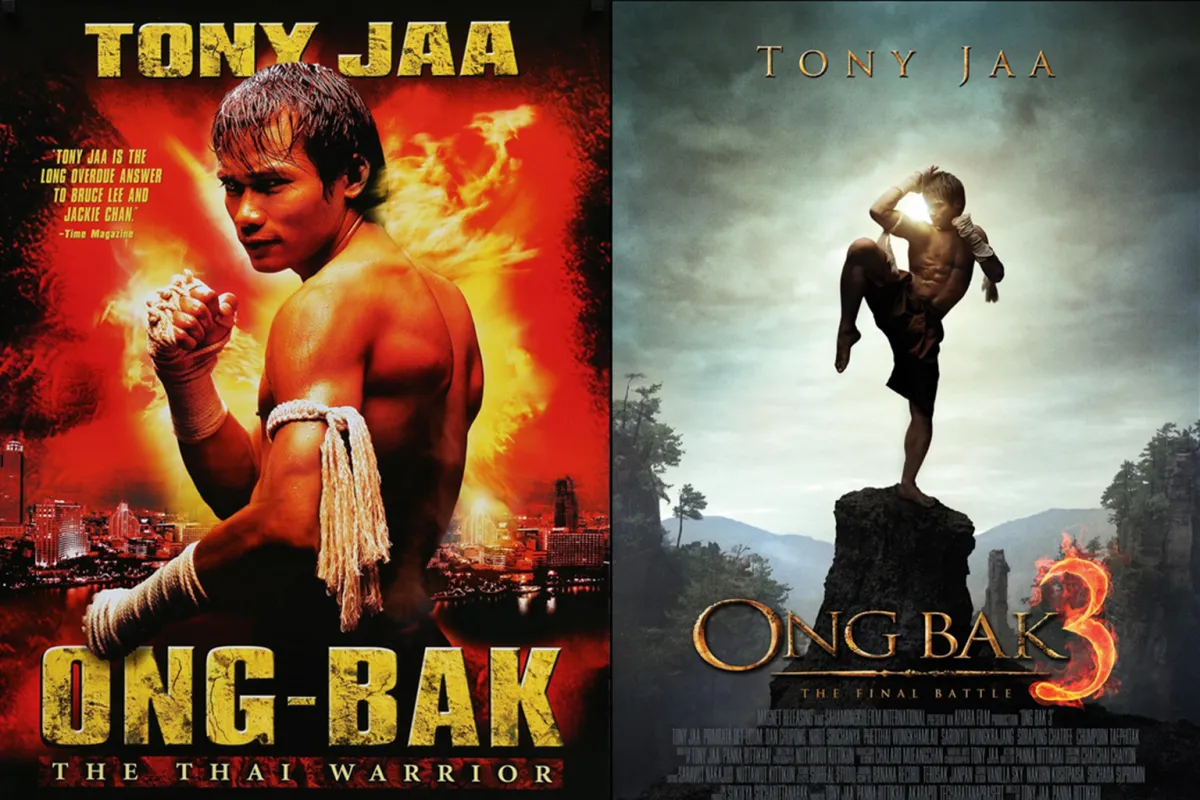
Tony Jaa revitalized global interest in Muay Thai with the groundbreaking film Ong-Bak. His acrobatic jumps, flying kicks, and bone-crunching strikes demonstrated a raw, stunt-driven style of martial arts cinema that emphasized real athletic ability over heavy visual effects.
Jet Li
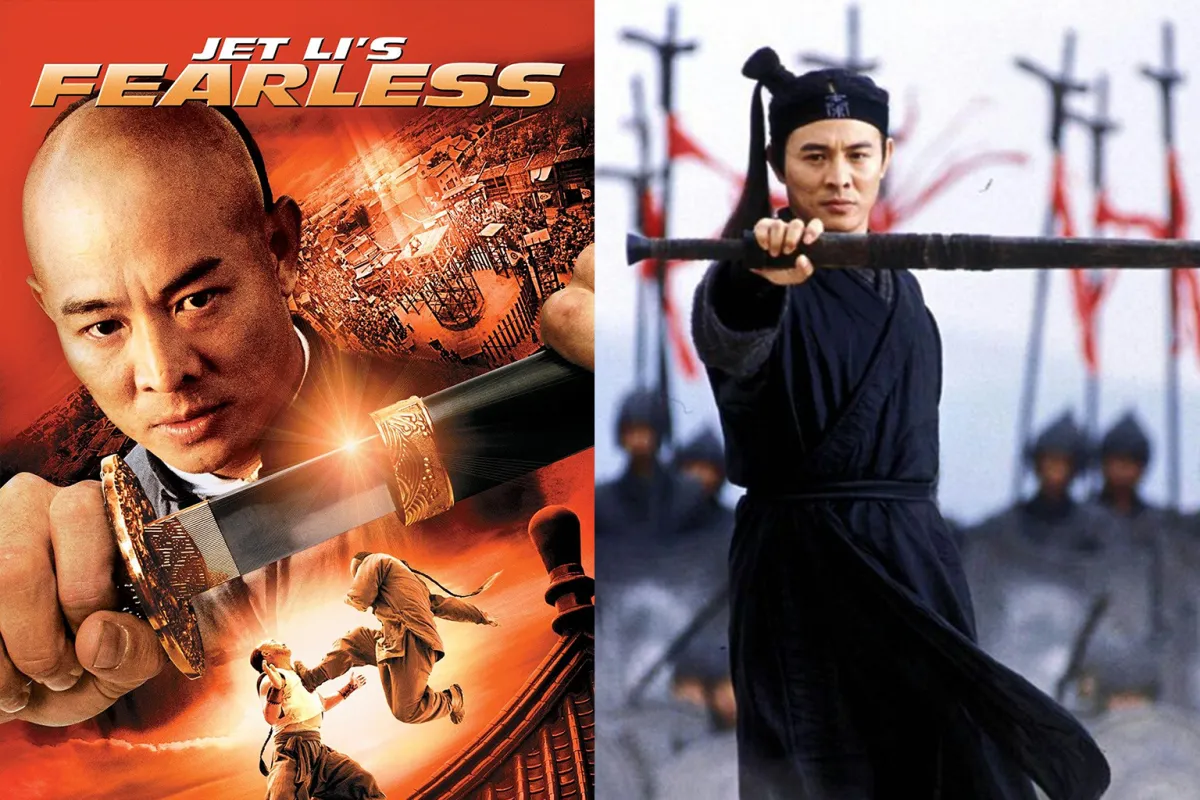
Chinese martial artist and actor Jet Li is widely regarded as one of the greatest martial arts performers in film history.
Before becoming an international movie star, Li was a champion practitioner of Wushu, winning multiple national championships in China as a member of the Beijing Wushu Team. He rose to fame portraying the legendary folk hero Wong Fei-hung in the Once Upon a Time in China film series. These films showcased Li’s speed, precision, and traditional Chinese martial arts techniques.
Jet Li later achieved global success with major international films such as Romeo Must Die, Hero, and Fearless, helping introduce authentic Chinese martial arts choreography to worldwide audiences. His performances combined technical martial arts skill with cinematic storytelling, inspiring both martial artists and stunt performers around the world.
SUMMARY & NEXT STEPS
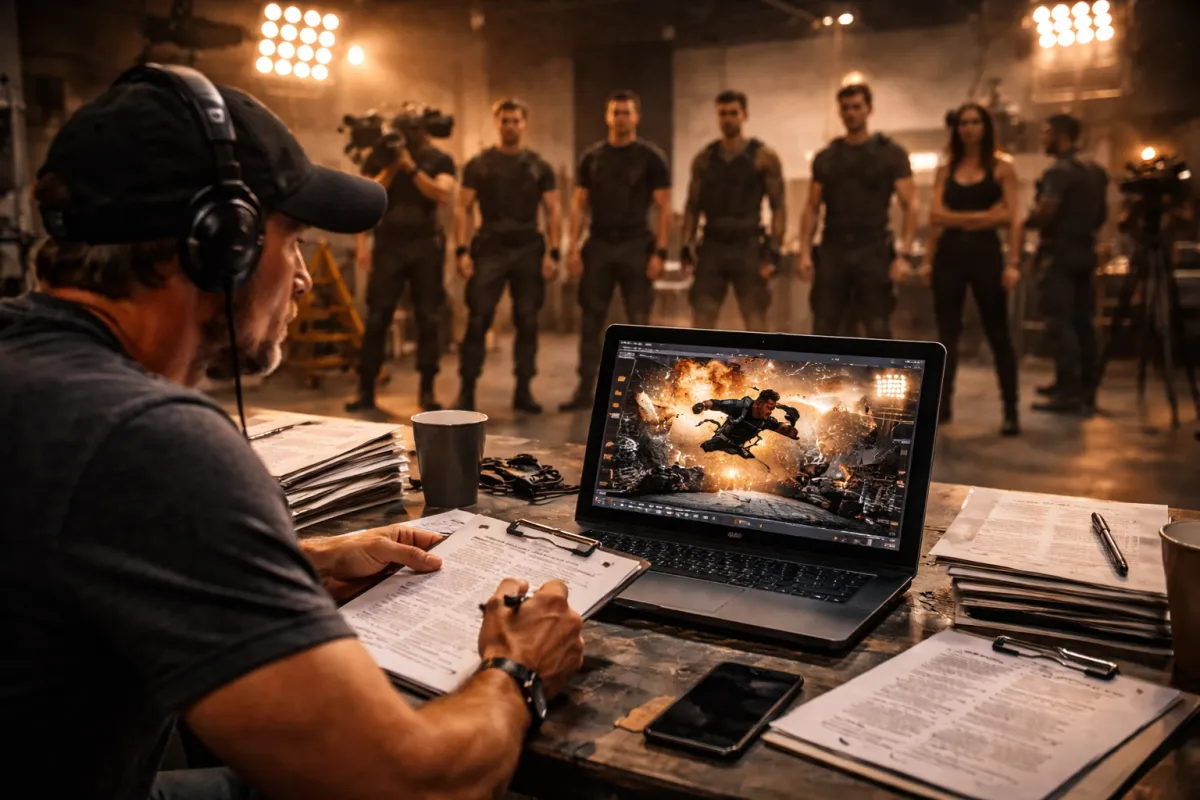
Becoming a stunt performer requires more than physical ability. It demands discipline, training, patience, and a strong professional network. The film and television industry values performers who combine athletic skill with reliability, safety awareness, and a deep understanding of on-set protocols.
While there is no single path into the stunt profession, most successful performers build their careers step by step. They develop strong physical foundations, train in specialized skills, and gradually gain experience working on film and television productions.
If you’re serious about pursuing a career as a stunt performer, focus on the following practical steps:
1. Build Your Physical Foundation
Start by developing the athletic abilities that stunt work demands. Strength, flexibility, endurance, and coordination are essential. Many stunt performers come from backgrounds in gymnastics, martial arts, parkour, or professional sports.
Training consistently in these areas will not only improve performance but also reduce the risk of injury when learning more advanced stunt techniques.
2. Train in Martial Arts and Screen Combat
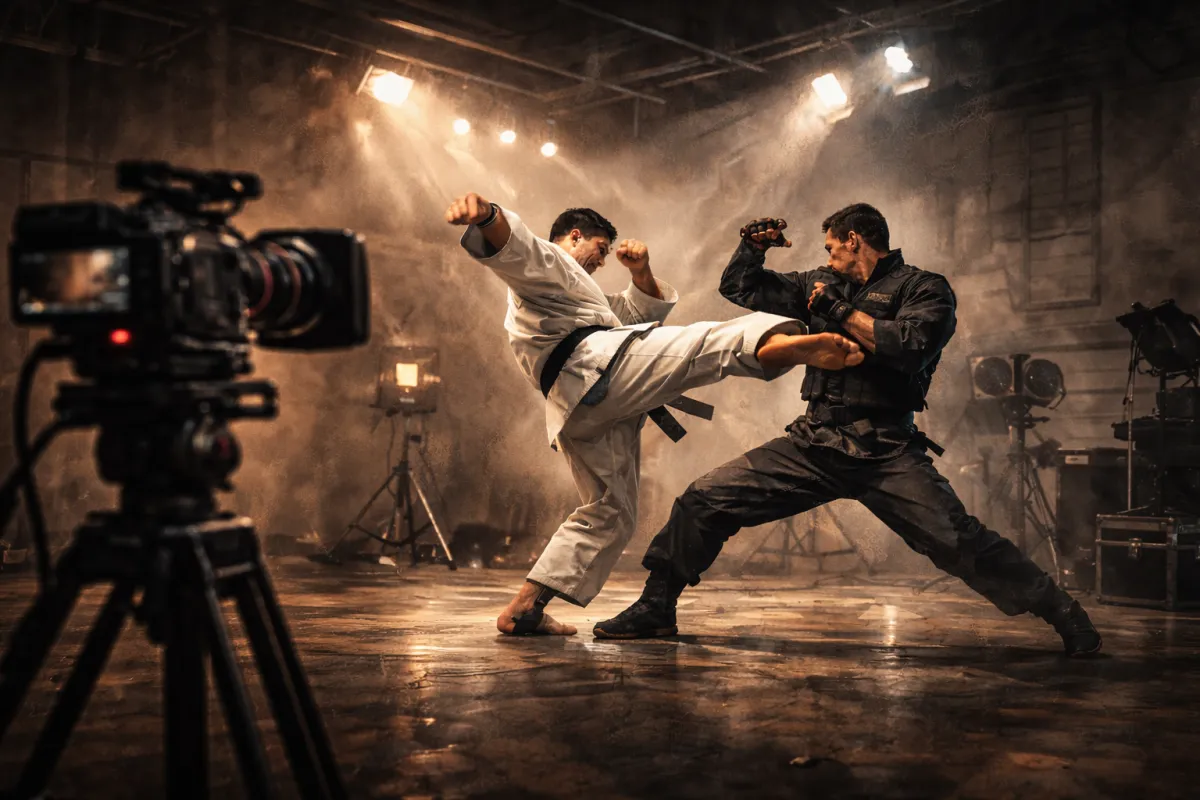
Martial arts training is one of the most common foundations for stunt performers. Styles such as karate, taekwondo, kung fu, boxing, and kickboxing help develop balance, timing, and controlled movement - all critical for performing fight scenes on camera.
In addition, consider studying stage combat or screen fighting, which teaches how to make action sequences look convincing while remaining safe for performers.
3. Attend a Stunt School or Workshop
Professional stunt schools and workshops provide structured training that is difficult to replicate on your own. These programs typically teach:
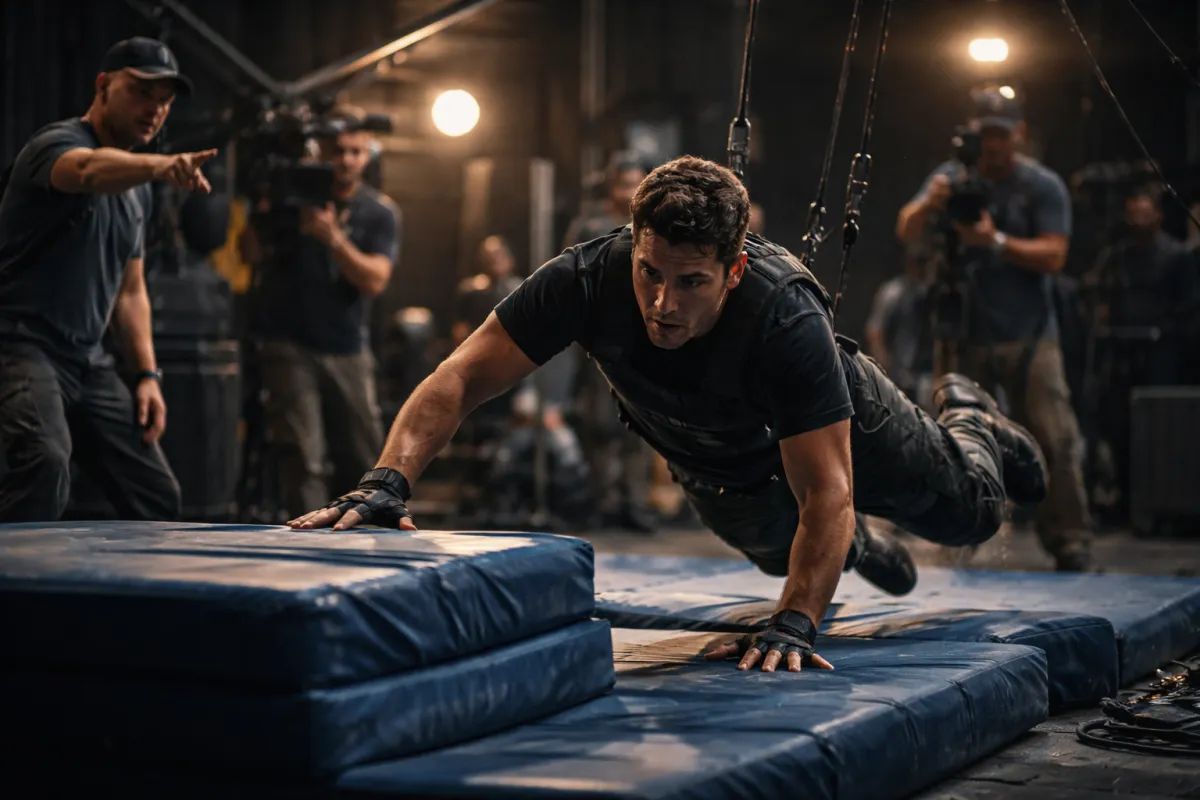
Falling and rolling techniques
Fight choreography
Wire work fundamentals
High falls and stunt safety
On-set etiquette and stunt coordination
Learning these skills from experienced professionals can accelerate your development and introduce you to industry contacts.
4. Create a Professional Stunt Reel
A stunt reel is your visual résumé. It should highlight your strongest abilities and demonstrate your performance skills clearly on camera.
Your reel might include:
Fight choreography
Martial arts demonstrations
Falls and acrobatics
Movement skills such as parkour or gymnastics
Any previous stunt or action work
Keep the reel concise, professional, and focused on quality rather than length.
5. Network With Stunt Coordinators and Industry Professionals
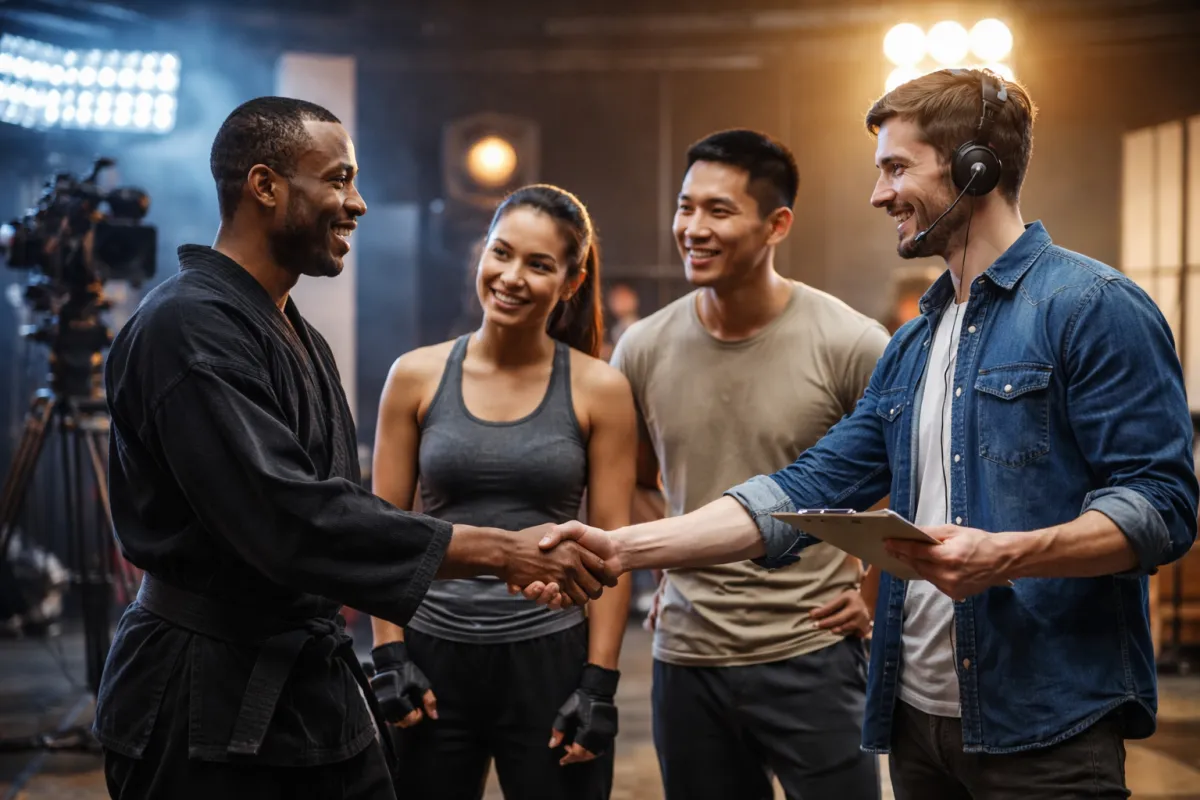
In the stunt world, relationships matter. Many opportunities arise through referrals and professional connections.
Attend industry workshops, training events, and film community gatherings whenever possible. Introduce yourself to stunt performers and coordinators, and maintain a reputation for professionalism, reliability, and safety awareness.
6. Gain On-Set Experience
Many aspiring stunt performers begin by working as background actors or extras on film and television productions. While these roles are not stunt positions, they provide valuable insight into how sets operate and how stunt teams work alongside directors and coordinators.
This experience can help you understand the pace, professionalism, and expectations of the industry.
7. Work Toward Union Membership
In the United States, many stunt performers are members of the SAG‑AFTRA. Union membership often provides access to larger productions, standardized pay rates, and professional protections.
Although joining a union typically requires previous on-set credits or specific eligibility criteria, working toward this milestone can be an important step in building a long-term career.
FAQ
Do stunt performers need martial arts training?
Martial arts training is not mandatory, but it provides a strong advantage because it develops balance, coordination, timing, and partner awareness.
How long does it take to become a stunt performer?
Many professionals spend several years developing the necessary physical skills, showreels, and industry connections before working consistently in film.
Do stunt performers need acting skills?
Yes. Acting ability helps performers sell reactions and emotion during action scenes, making fights appear believable on screen.
Is stunt work dangerous?
Stunt work involves physical risk, which is why professional training, safety planning, and experienced supervision are essential.
Final Thoughts
The world of stunt performance offers exciting opportunities for martial artists who are willing to expand their training beyond traditional techniques.
By combining martial arts ability, stunt fundamentals, acting skills, and professional networking, performers can gradually build the experience needed to work in film and television.
While the journey requires dedication and patience, it can be an incredibly rewarding path for those passionate about martial arts and cinematic action.
Are You Ready to Take Your Career to the Next Level?
Join Movie Martial Arts
Get access to exclusive training, tutorials, and resources that will transform your career.
CONTINUE LEARNING
If you’re eager to learn more about martial arts training for film, check out these related INSIGHTS articles:
Wirework & Aerial Techniques for Cinematic Action – Discover the art of using wirework and aerial stunts to create dynamic fight sequences.
The Evolution of Martial Arts: From Ancient Combat to Modern Cinema – Trace the history of martial arts and how it’s evolved in cinema over time.
High Kicks & Tricks for Screen Combat – Learn about the techniques and choreography behind high-flying kicks and stunts in film.
Martial Arts Training and Techniques: The Ultimate Guide for Beginners and Beyond – A complete guide to the essential martial arts techniques for film.
The Art of Cinematic Martial Arts – Understand how choreography, camera work, and performance combine to create stunning martial arts scenes.
How to Become a Stunt Performer in Film and Television – Your step-by-step guide to starting your career as a stunt performer in film and TV.