
1 June 2026 MOVIE MARTIAL ARTS
HOW TO BECOME A STUNT PERFORMER: THE COMPLETE FILM & TV CAREER GUIDE (2026)
Action films have captivated audiences for generations. From martial arts battles to dramatic falls and explosive action sequences, these moments are often performed not by actors - but by highly trained stunt professionals.
For martial artists, the world of film and television offers an exciting career opportunity. However, many talented practitioners struggle to understand how the stunt industry actually works or how to transition from traditional martial arts training to performing on camera.
This guide explains the real path to becoming a stunt performer, including the skills required, how stunt casting works, and how martial artists can prepare themselves for the film industry.
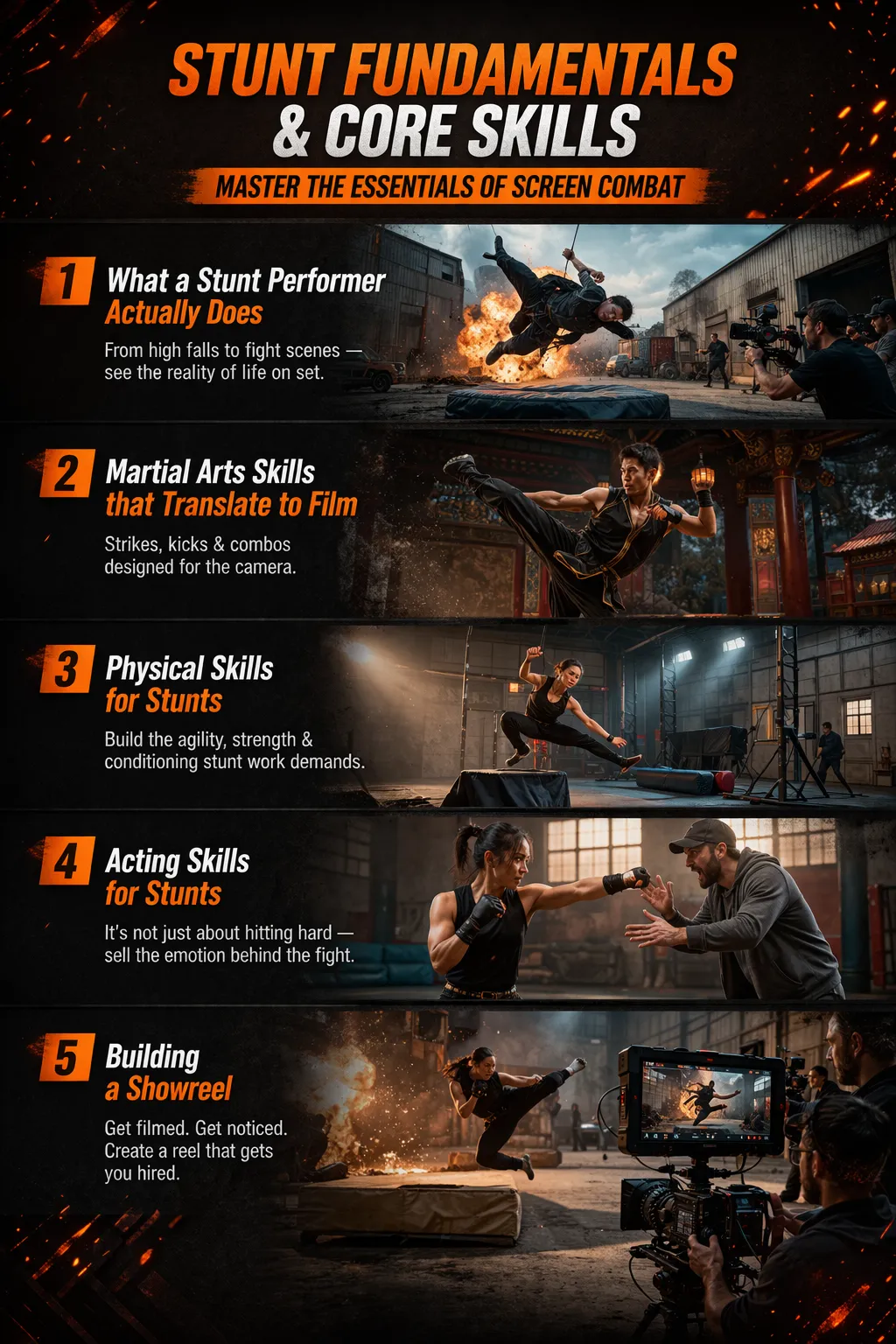
What a Stunt Performer Actually Does
When audiences watch an action sequence, they often assume the actor is performing every movement themselves. In reality, stunt professionals handle many of the physically demanding and dangerous moments seen on screen.
Stunt performers typically work in several roles.
Stunt Doubles
A stunt double performs action sequences on behalf of an actor when scenes involve risk or require specialized physical skills.
The goal is to maintain the illusion that the actor performed the action while ensuring safety.
Stunt Performers
Stunt performers may appear on screen as guards, soldiers, villains, or background characters while performing choreographed action.
These performers are often responsible for executing complex fight choreography, falls, crashes, and other physical sequences.
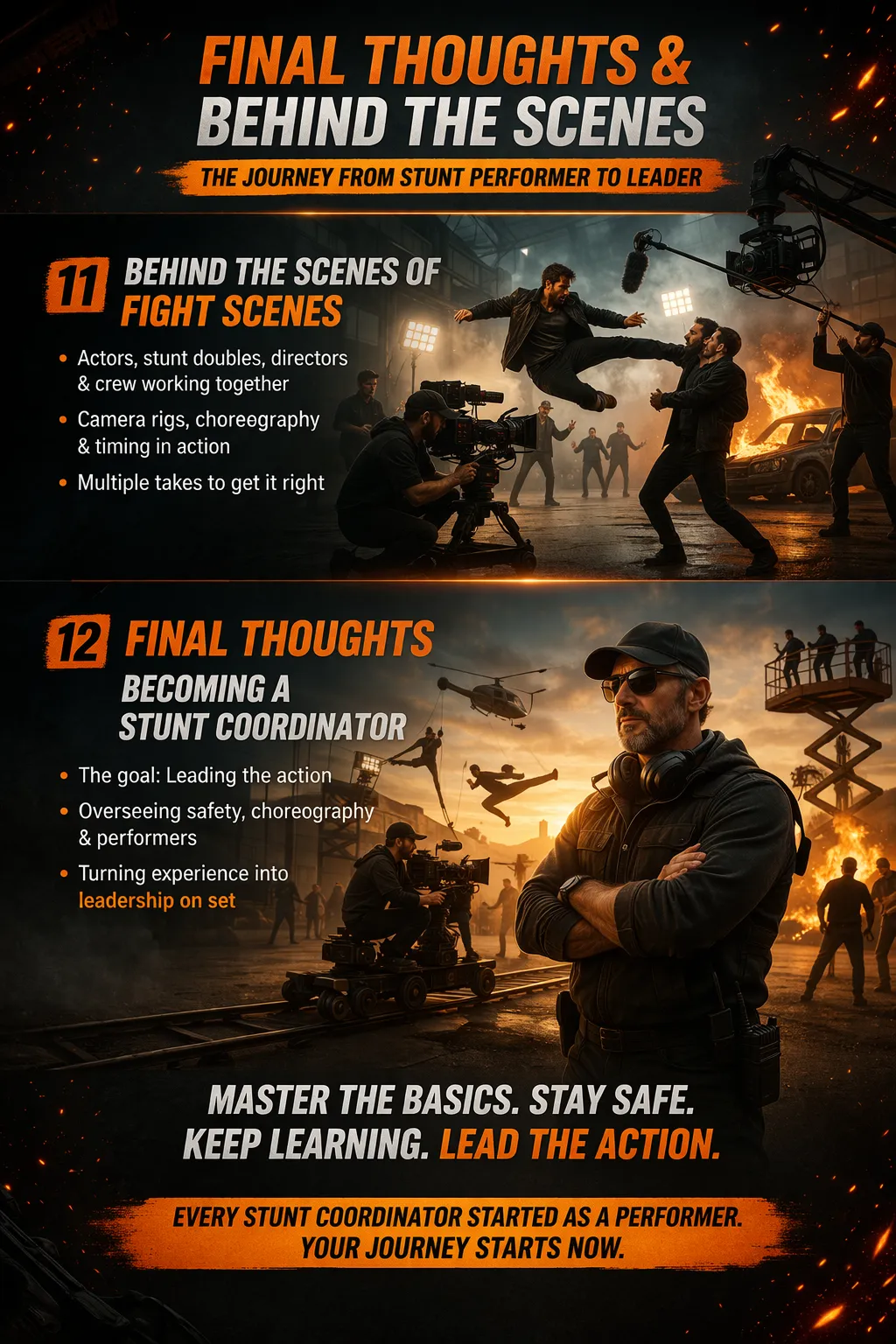
Stunt Coordinators
Stunt coordinators oversee the design and execution of action scenes.
They work closely with directors, cinematographers, and fight choreographers to ensure the action looks exciting while maintaining strict safety standards.
Understanding how stunt teams operate is essential for anyone hoping to enter the industry.
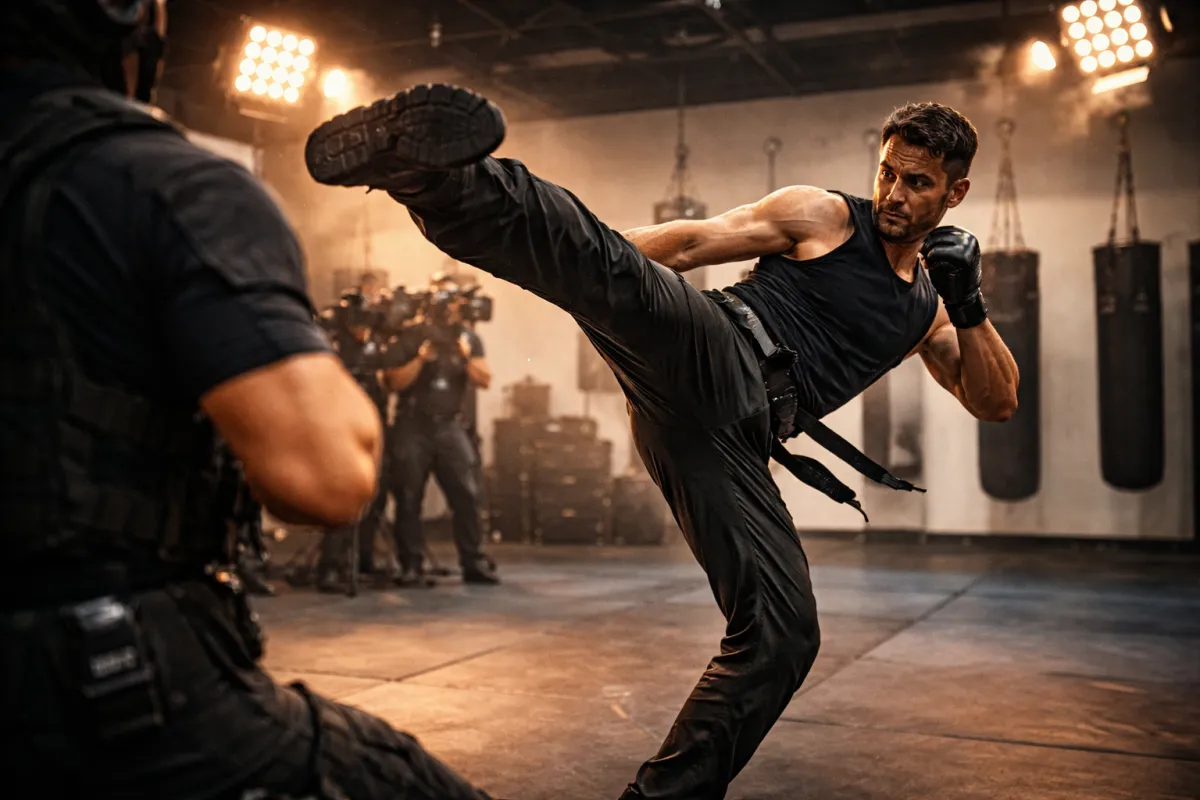
Martial Arts Skills That Translate to Film
Martial arts provide one of the strongest foundations for stunt performance.
However, techniques that work in real combat often need to be adapted for the camera.
Key martial arts qualities valued in film include:
• balance and body control
• strong kicking and striking techniques
• rhythm and timing
• spatial awareness
• partner coordination
Film fighting focuses on visual storytelling rather than real combat effectiveness.
For example, a punch in film combat may travel further and move slower than it would in real fighting to make the impact look dramatic on camera.
Understanding how camera angles influence action is crucial, which is explored in detail in our guide to Camera Angles in Fight Scenes.
Physical Skills Required for Stunt Work
Successful stunt performers usually develop a wide range of physical abilities beyond martial arts.
The stunt industry rewards versatility.
Common stunt disciplines include:
Gymnastics and Tumbling
Many stunt performers train in gymnastics to develop aerial awareness and control.
Flips, rolls, and tumbling skills frequently appear in action films.
High Falls and Breakfalls
High falls require specialized training and safety equipment.
Even basic breakfalls must be performed with precision to avoid injury.
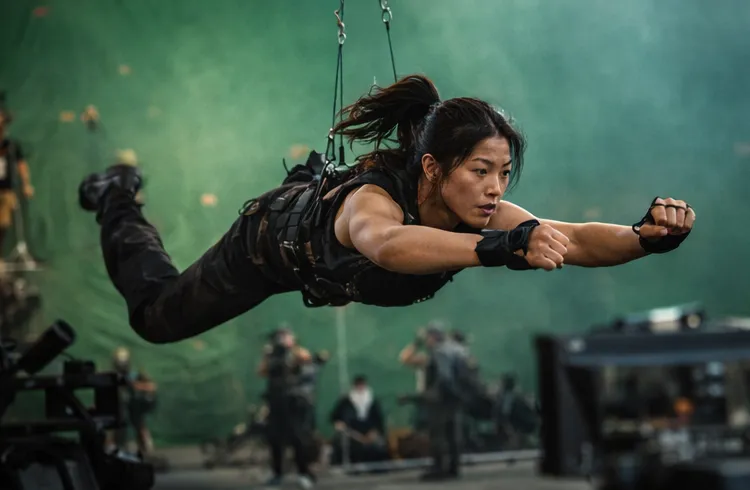
Wirework and Aerial Techniques
Wire rigs allow performers to perform jumps, lifts, and flying kicks that would otherwise be impossible.
Many martial arts films rely heavily on wirework choreography.
Weapons Training
Many productions require performers skilled with:
• swords
• staffs
• knives
• traditional martial arts weapons
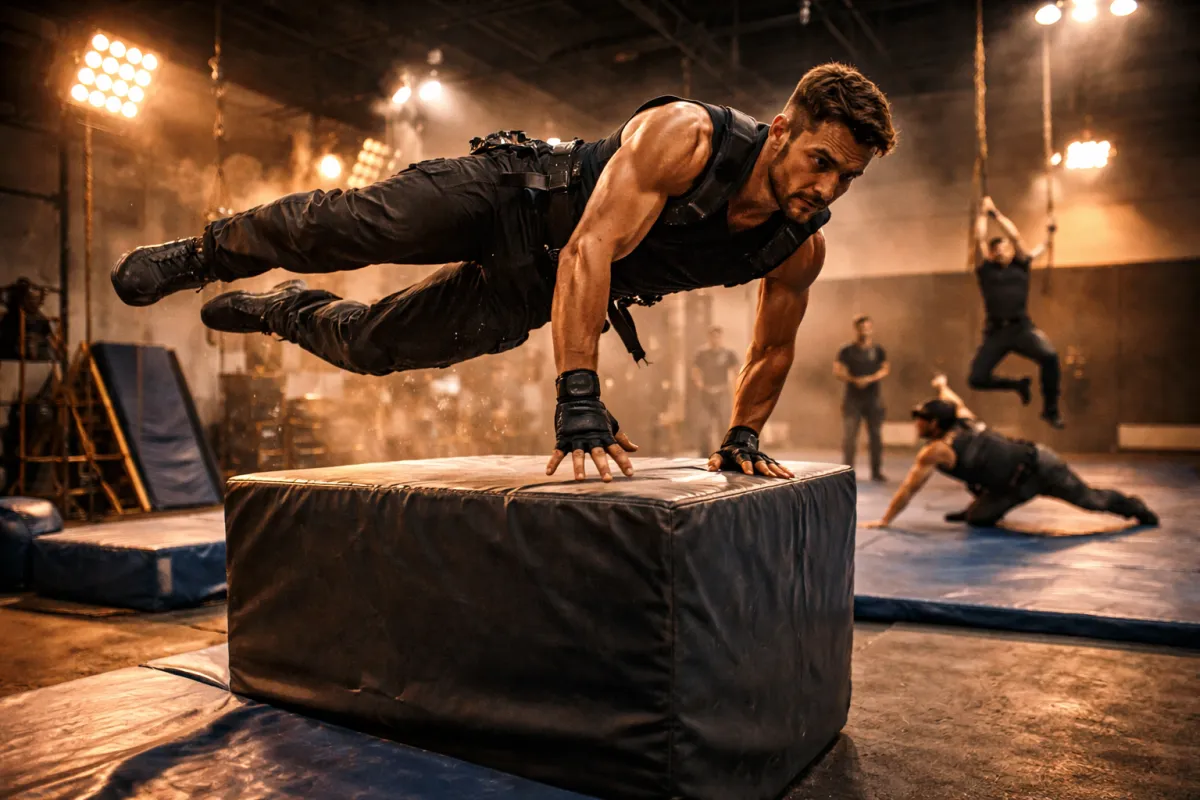
Parkour and Movement Training
Modern action films increasingly use parkour-style movement and dynamic environmental action.
Developing mobility and agility can significantly expand opportunities in the stunt industry.
Acting Skills Most Martial Artists Lack
One of the biggest challenges martial artists face when entering film is performance.
Film action is not simply about executing techniques—it is about telling a story.
Performers must communicate:
• emotion
• impact
• struggle
• character motivation
A technically perfect kick will feel flat on screen if the performer fails to convey emotion or reaction.
Learning to control facial expression, energy, and timing dramatically improves on-camera performance.
If you are developing these skills, learning how to Film a Monologue That Gets You Noticed is an excellent starting point for improving screen presence.
How to Build a Professional Showreel
A showreel is one of the most important tools for entering the stunt industry.
This short video demonstrates your ability to perform safely and convincingly on camera.
A strong showreel should showcase:
• fight choreography
• stunt skills
• screen presence
• movement and athletic ability
Casting professionals often review dozens of showreels when assembling stunt teams.
Understanding The Importance of a Showreel can dramatically improve your chances of being noticed by industry professionals.
For deeper insight into what professionals actually evaluate, see our article Beyond the Showreel: What Casting Directors Really Look For.
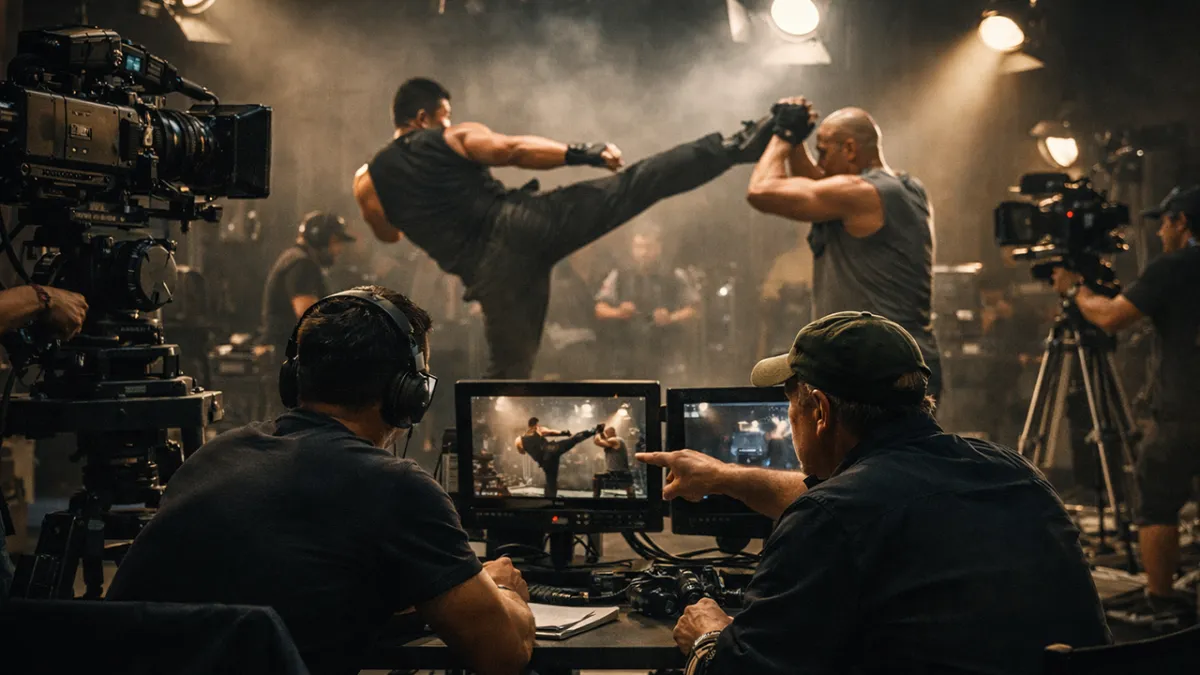
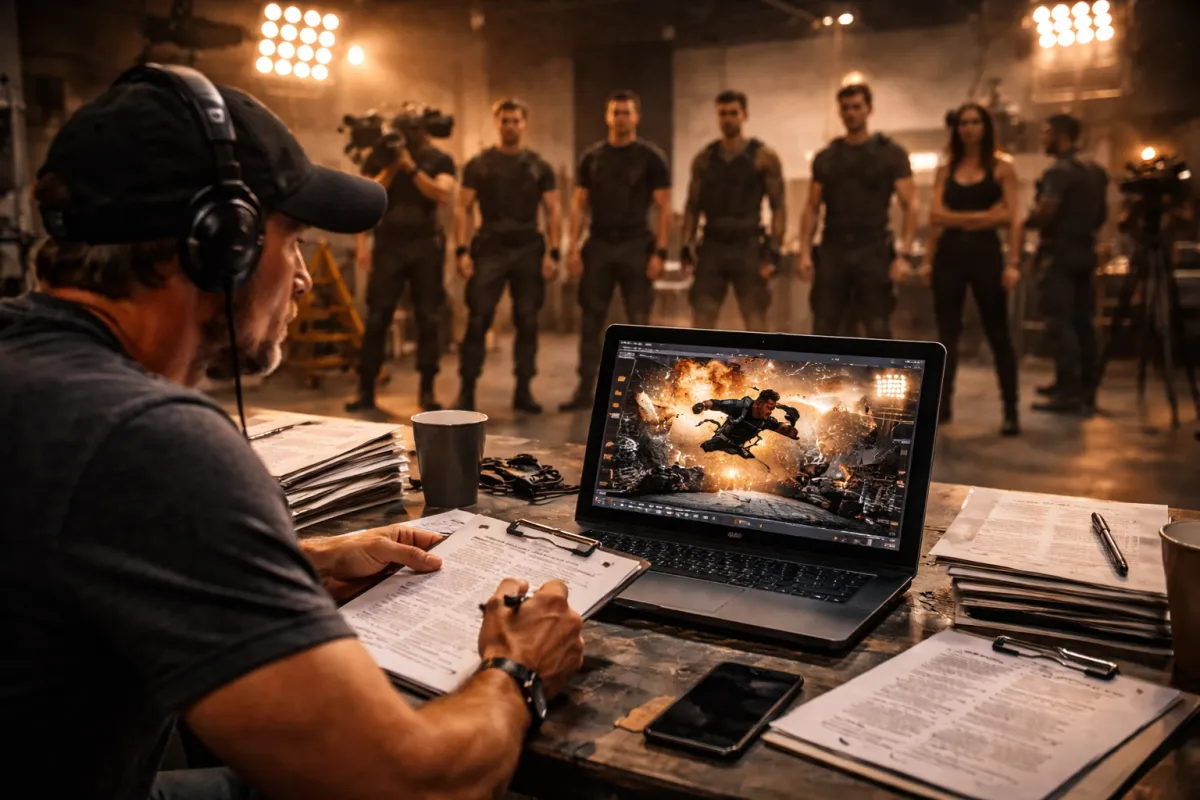
How Stunt Casting Actually Works
Many aspiring performers imagine that stunt casting works like traditional acting auditions.
In reality, most stunt hiring happens through professional networks.
Stunt coordinators typically hire performers they already know or who come recommended by trusted colleagues.
This means networking and reputation play a major role in building a stunt career.
Many performers gradually enter the industry by:
• training with established stunt teams
• assisting experienced performers
• working on independent productions
• building relationships with coordinators
Understanding the professional environment behind film action can provide valuable perspective, which we explore further in Inside the Stunt Coordinator’s Mind.
The Reality of Getting Your First Stunt Job
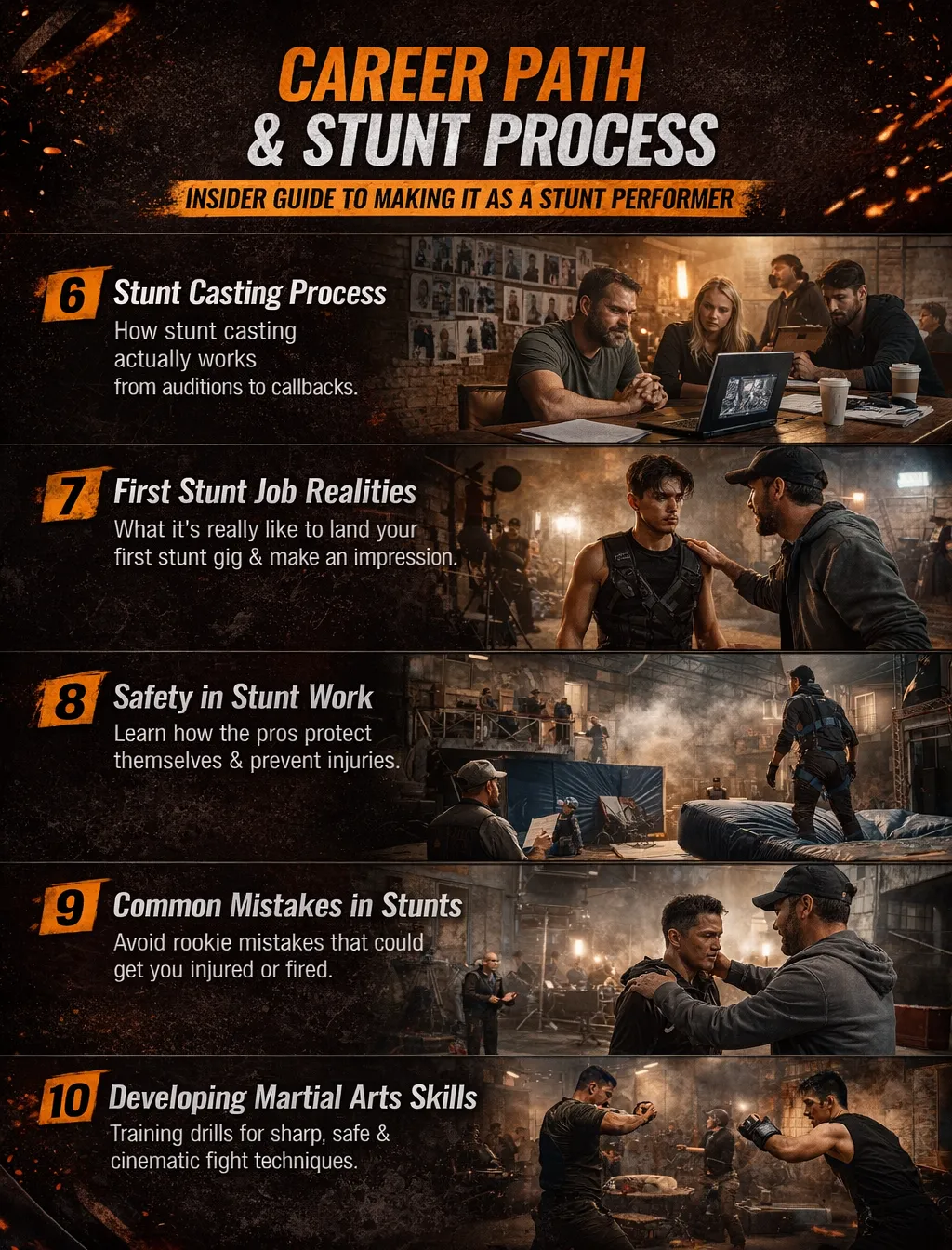
Many professionals spend years developing skills and building connections before landing regular work.
Typical early opportunities may include:
• student films
• independent action productions
• stunt workshops and training programs
• assisting stunt teams
Each experience helps performers develop the trust and reputation necessary to work on larger productions.
Patience and persistence are essential.
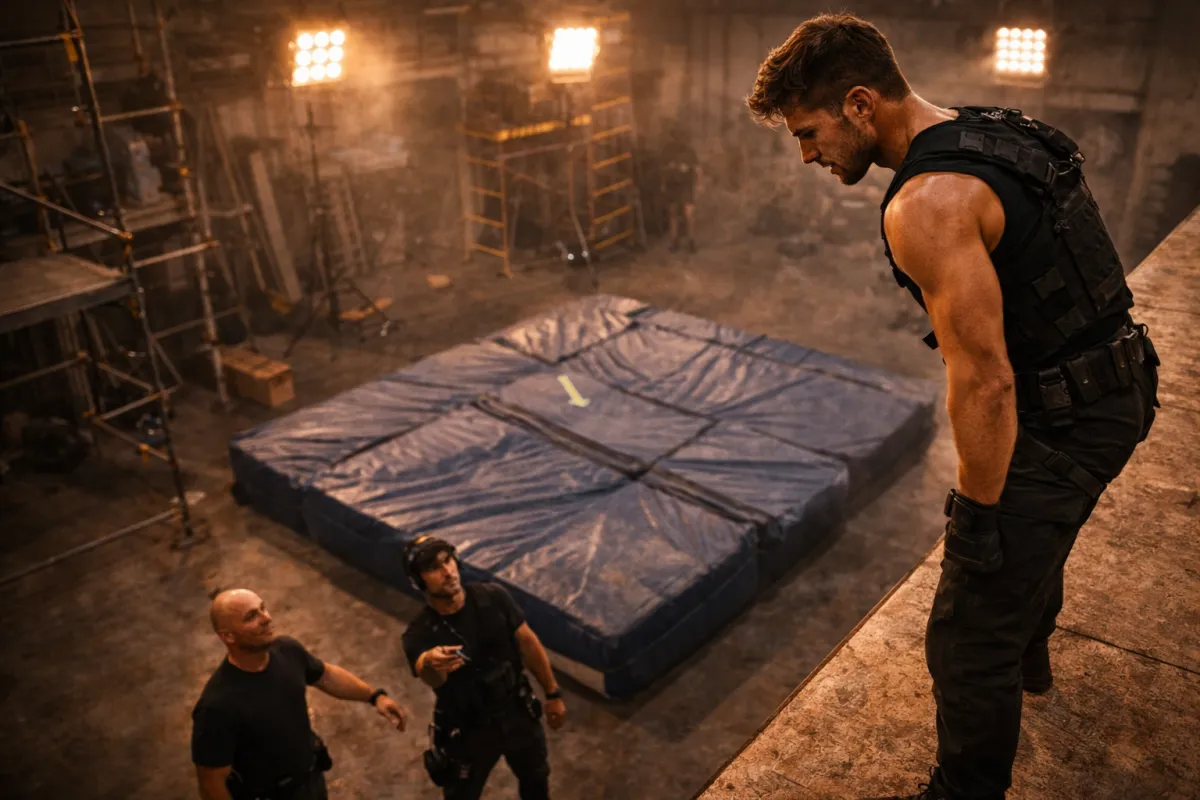
Safety: The Foundation of Stunt Work
Safety is the most important principle in stunt performance.
Every stunt must be carefully designed, rehearsed, and supervised.
Professional stunt training focuses on:
• safe falling techniques
• reaction timing
• partner awareness
• choreography precision
• communication with the film crew
Understanding safety protocols protects both performers and production teams.
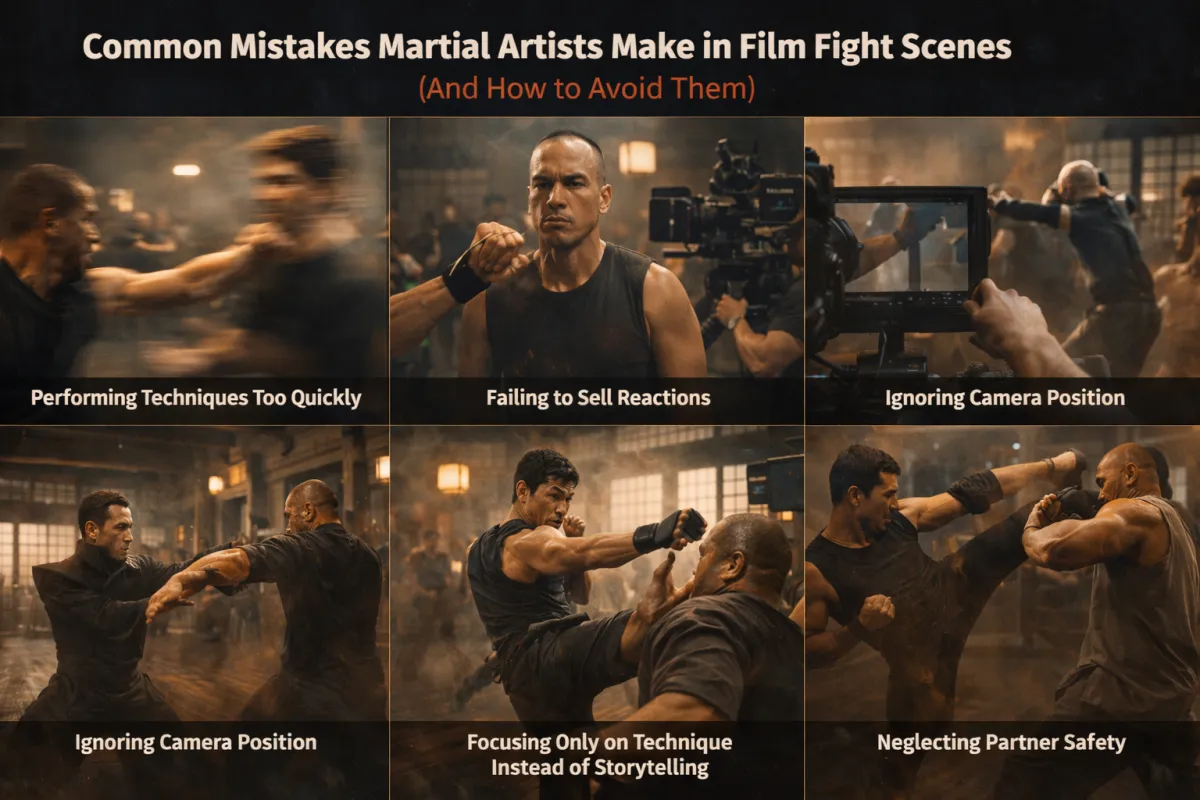
Mistakes Beginners Often Make
Many martial artists entering the film world unintentionally approach fight scenes as real combat.
This often creates problems on set.
Common mistakes include:
• performing techniques too quickly
• failing to sell reactions
• ignoring camera position
• focusing only on technique rather than storytelling
• neglecting partner safety
Film fighting is a collaborative performance where timing and visual impact matter more than speed or power.
Developing the Skills for Film Martial Arts
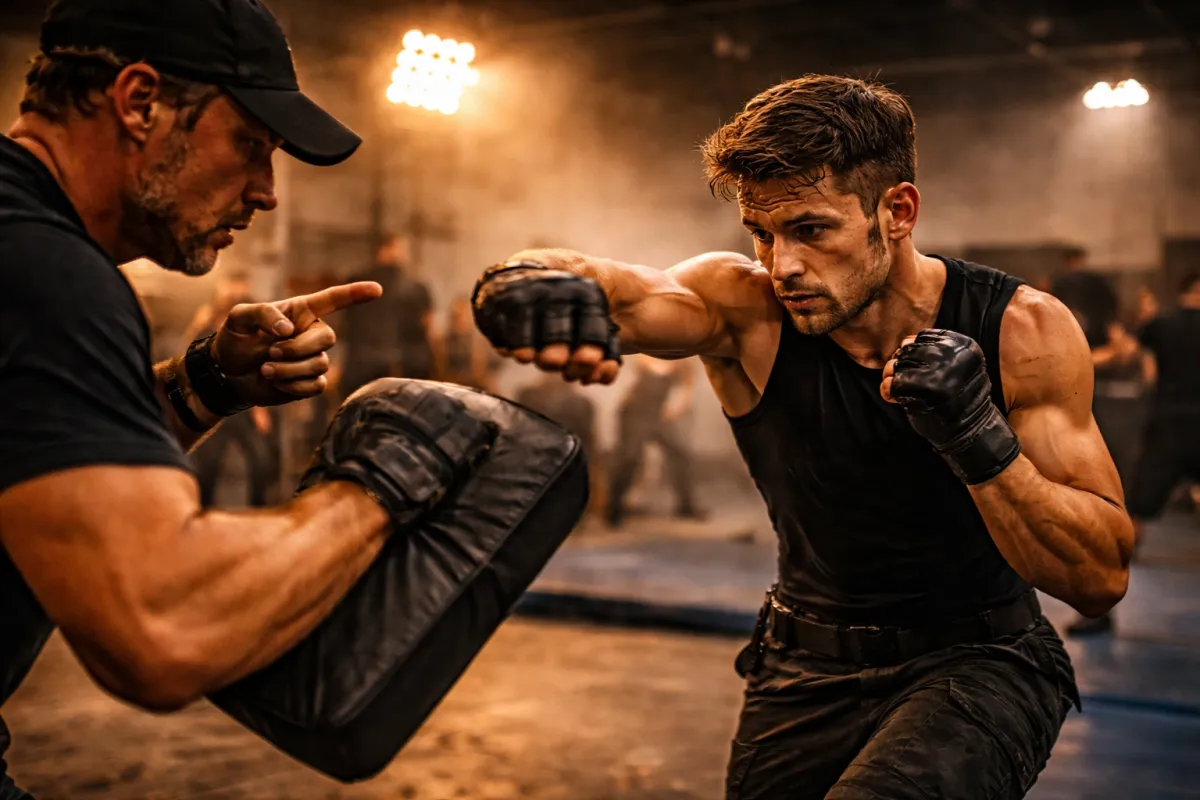
If your goal is to work in film and television, training should focus on adapting martial arts skills specifically for the camera.
Important training areas include:
• screen combat choreography
• stunt safety fundamentals
• acting and expression
• camera awareness
• partner coordination
Developing these skills allows martial artists to translate their training into compelling cinematic action.
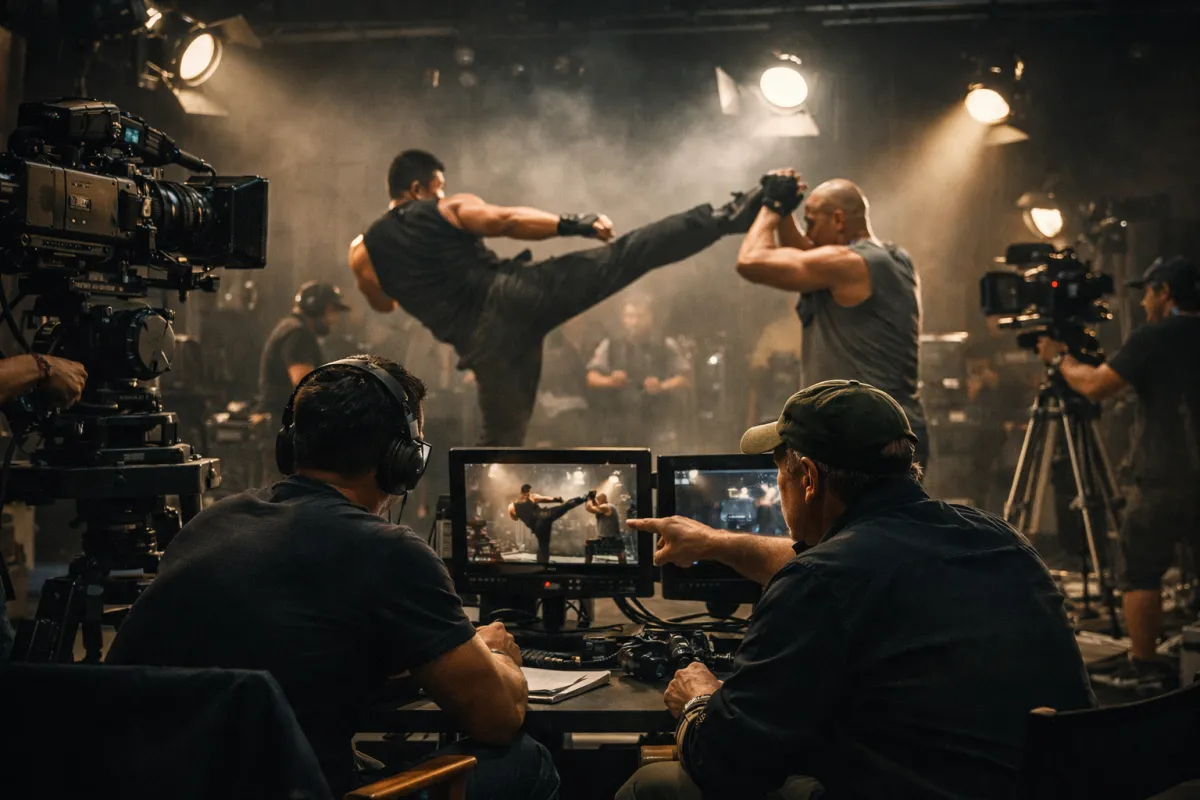
Behind the Scenes: How Film Fight Scenes Are Created
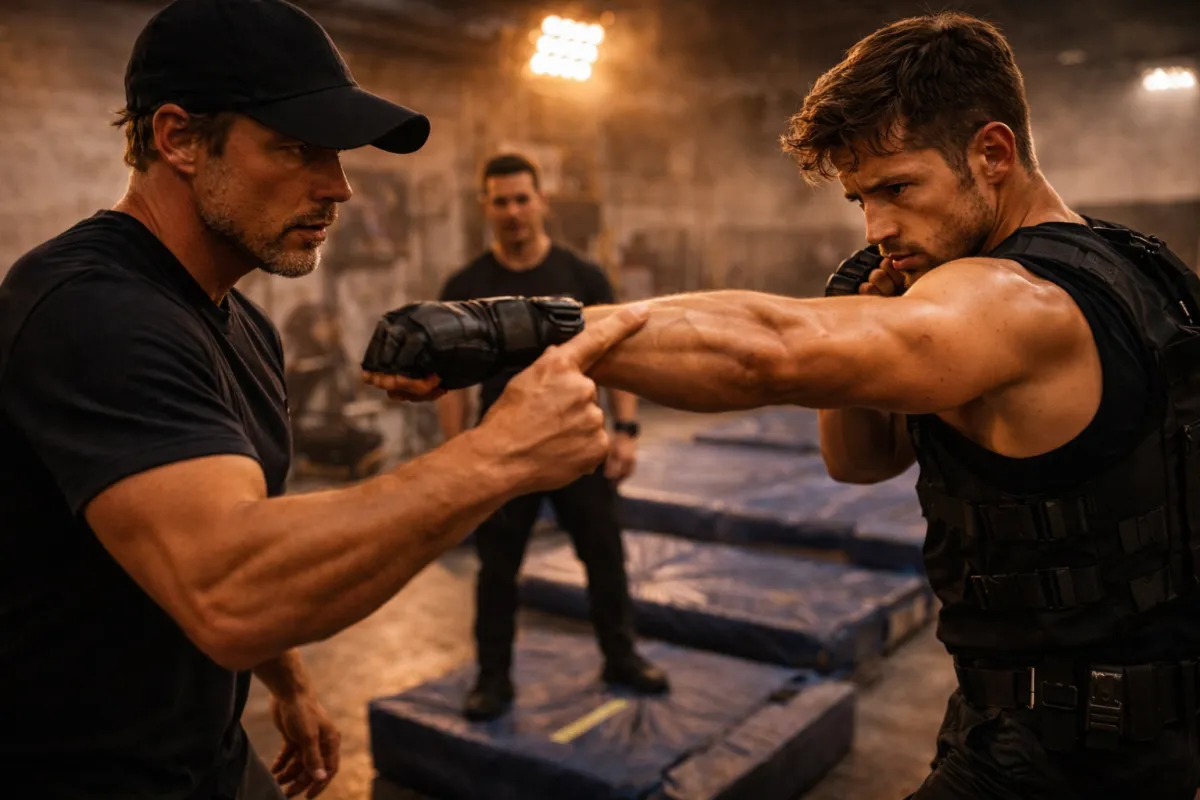
Fight choreography rehearsal
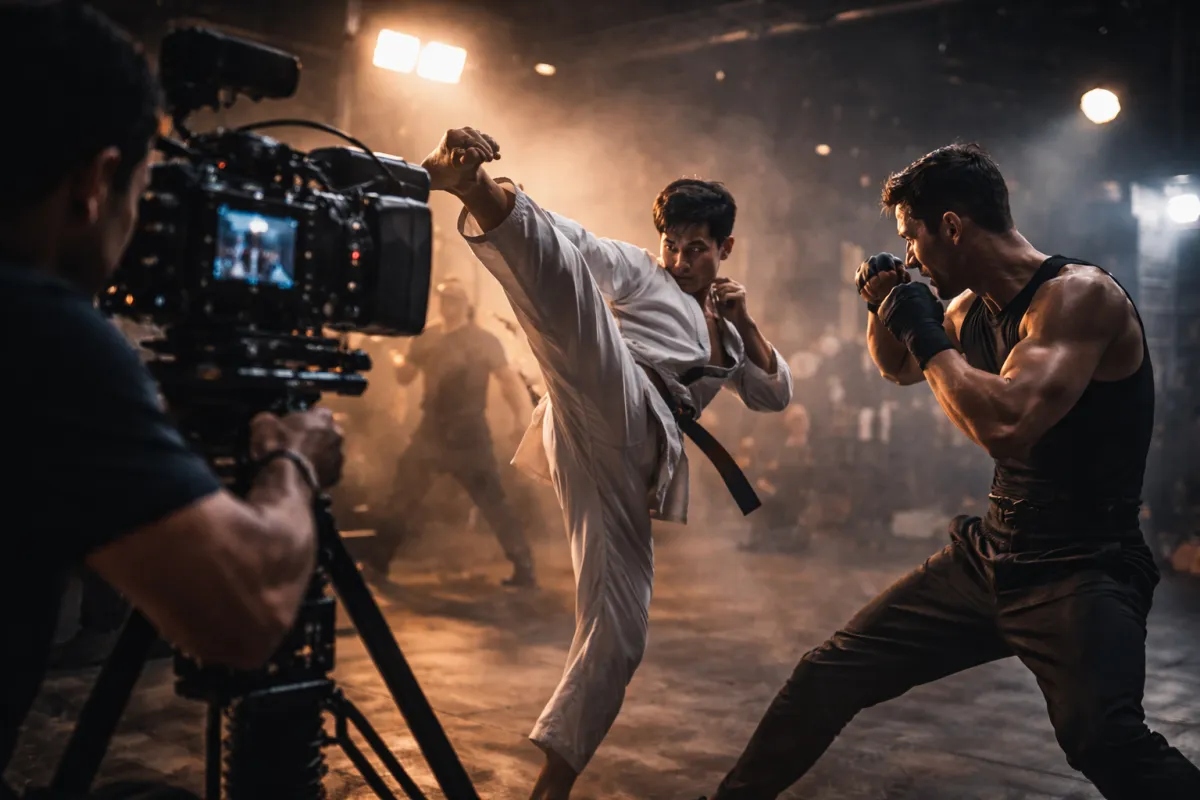
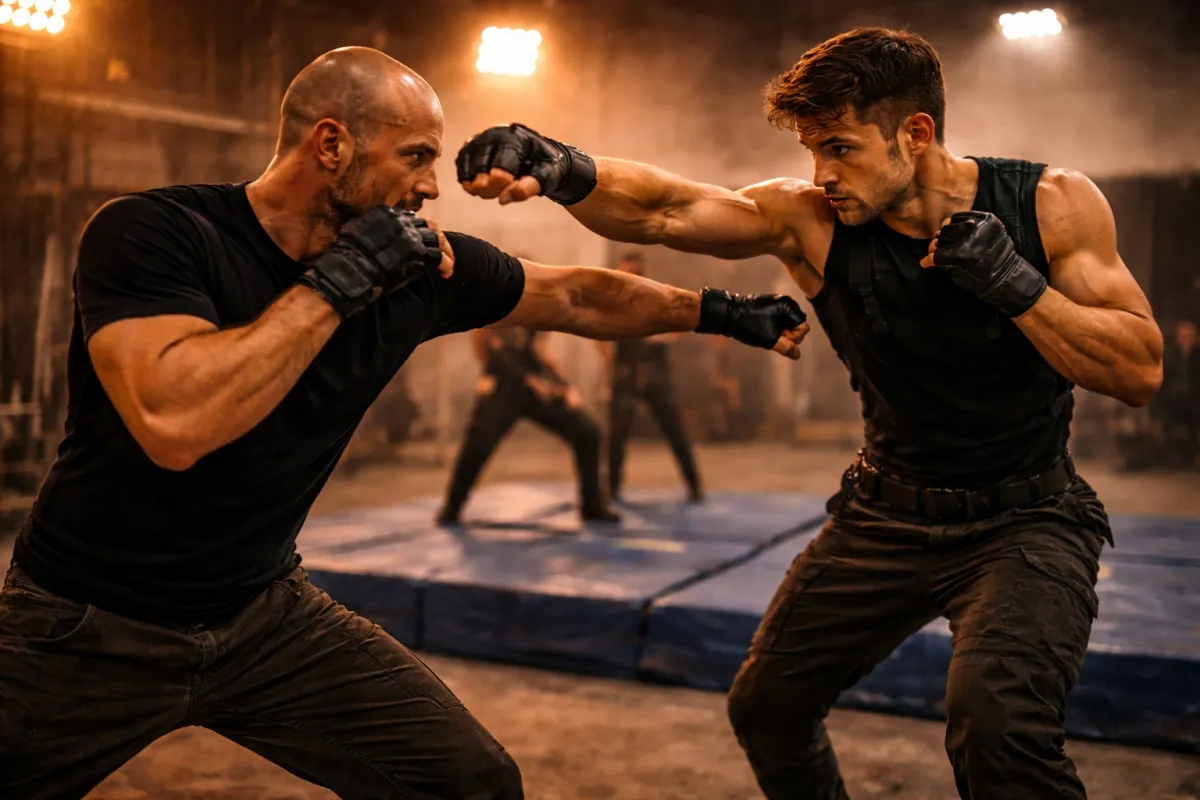
Fight choreography rehearsals allow stunt performers to coordinate timing, safety, and camera positioning before filming begins.
Camera angle demonstration
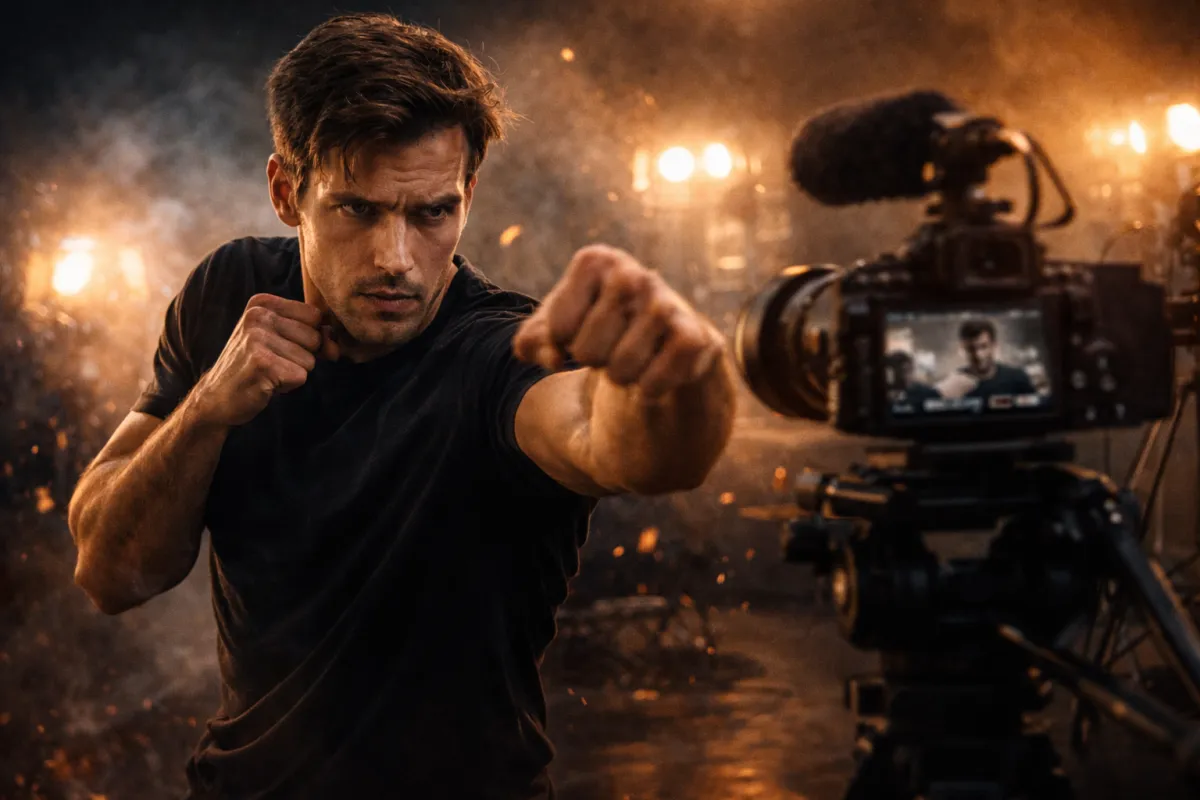
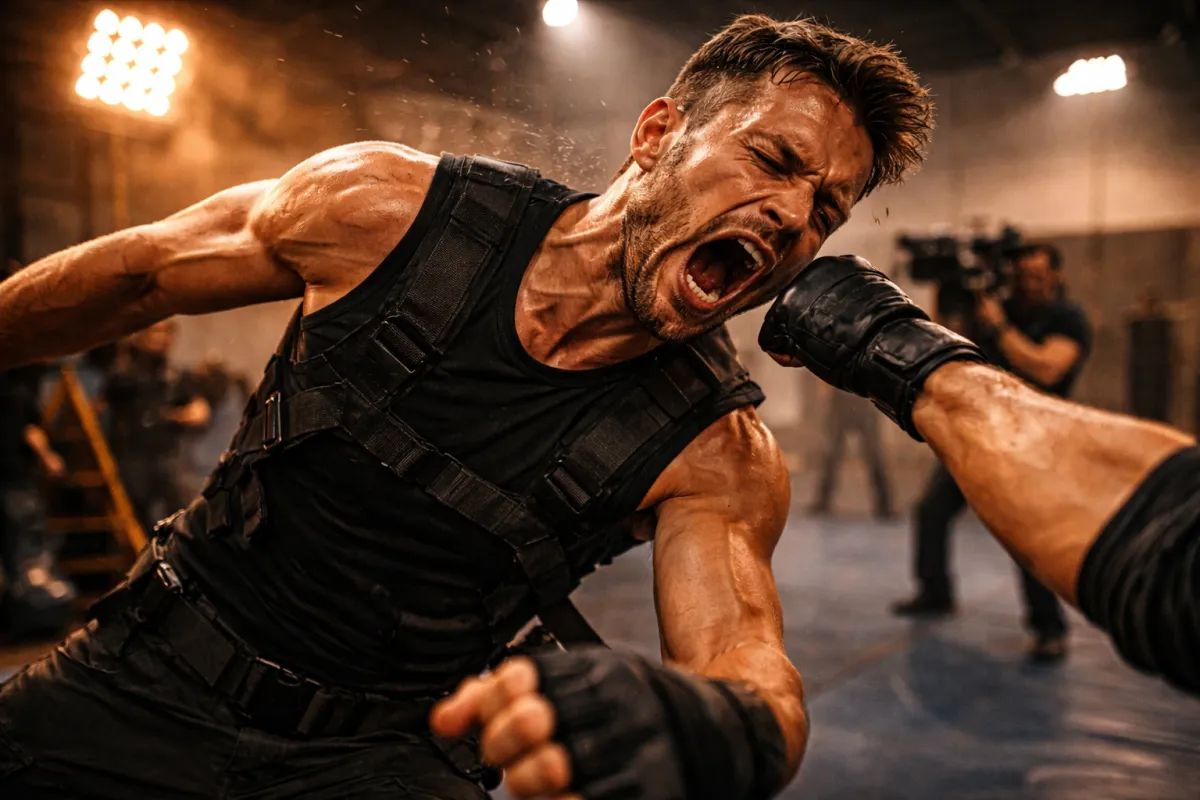
Film fight scenes rely heavily on camera angles to create the illusion of impact without real contact.
Selling the reaction
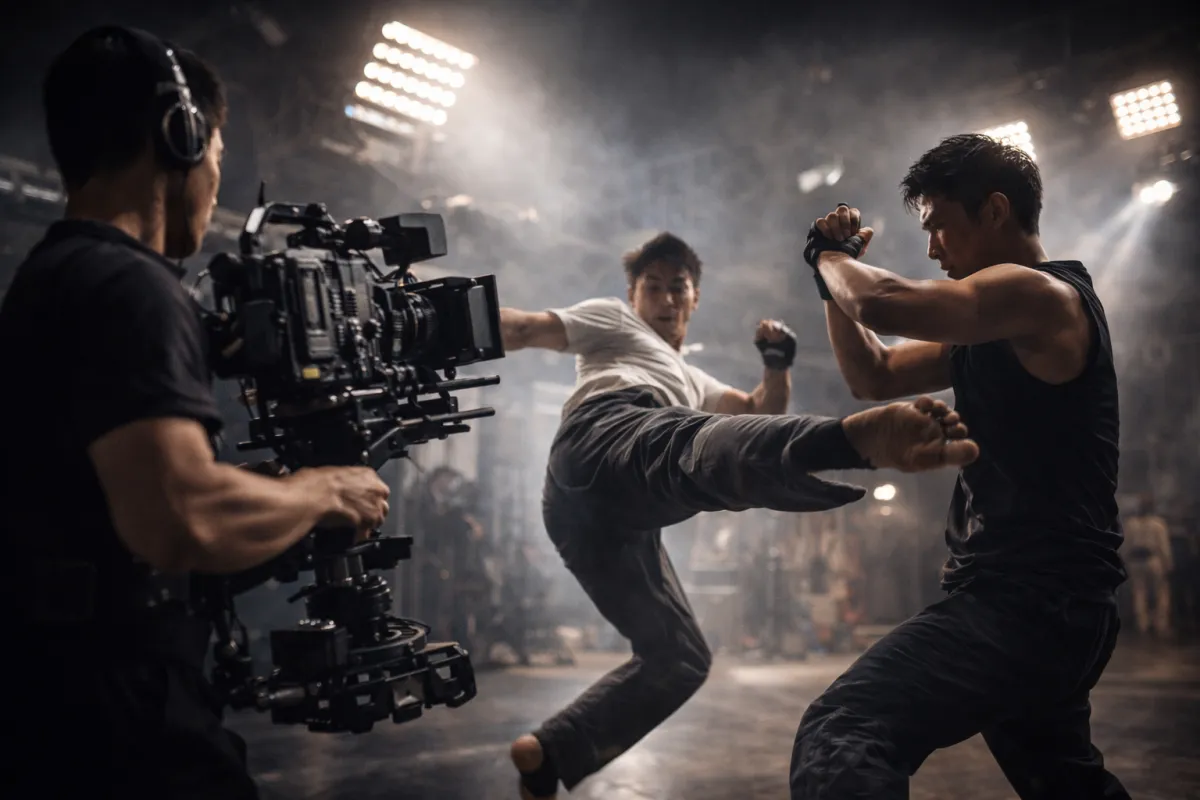
Reaction timing is often more important than the strike itself when creating believable on-screen combat.
Wirework training
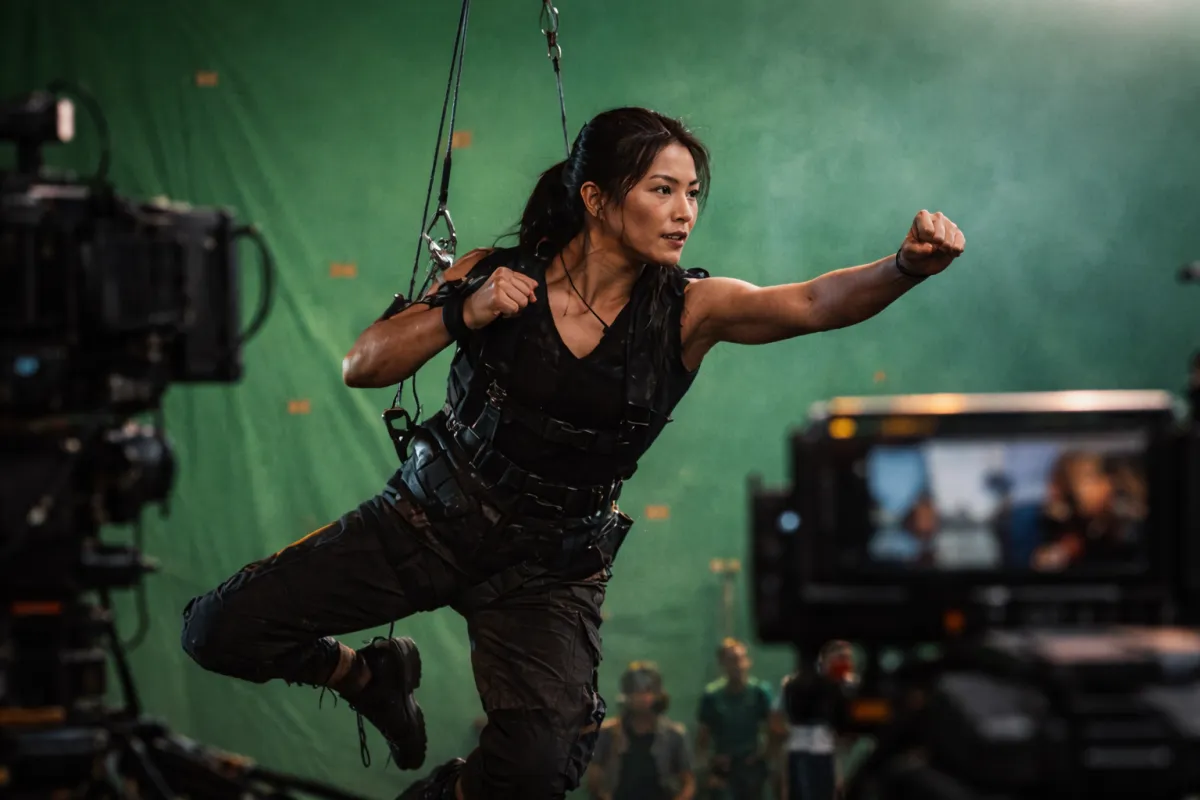
Wirework allows performers to create dramatic aerial movements often seen in martial arts films.
SUMMARY & NEXT STEPS
Becoming a stunt performer requires more than physical ability. It demands discipline, training, patience, and a strong professional network. The film and television industry values performers who combine athletic skill with reliability, safety awareness, and a deep understanding of on-set protocols.
While there is no single path into the stunt profession, most successful performers build their careers step by step. They develop strong physical foundations, train in specialized skills, and gradually gain experience working on film and television productions.
If you’re serious about pursuing a career as a stunt performer, focus on the following practical steps:
1. Build Your Physical Foundation
Start by developing the athletic abilities that stunt work demands. Strength, flexibility, endurance, and coordination are essential. Many stunt performers come from backgrounds in gymnastics, martial arts, parkour, or professional sports.
Training consistently in these areas will not only improve performance but also reduce the risk of injury when learning more advanced stunt techniques.
2. Train in Martial Arts and Screen Combat
Martial arts training is one of the most common foundations for stunt performers. Styles such as karate, taekwondo, kung fu, boxing, and kickboxing help develop balance, timing, and controlled movement - all critical for performing fight scenes on camera.
In addition, consider studying stage combat or screen fighting, which teaches how to make action sequences look convincing while remaining safe for performers.
3. Attend a Stunt School or Workshop
Professional stunt schools and workshops provide structured training that is difficult to replicate on your own. These programs typically teach:
Falling and rolling techniques
Fight choreography
Wire work fundamentals
High falls and stunt safety
On-set etiquette and stunt coordination
Learning these skills from experienced professionals can accelerate your development and introduce you to industry contacts.
4. Create a Professional Stunt Reel
A stunt reel is your visual résumé. It should highlight your strongest abilities and demonstrate your performance skills clearly on camera.
Your reel might include:
Fight choreography
Martial arts demonstrations
Falls and acrobatics
Movement skills such as parkour or gymnastics
Any previous stunt or action work
Keep the reel concise, professional, and focused on quality rather than length.
5. Network With Stunt Coordinators and Industry Professionals
In the stunt world, relationships matter. Many opportunities arise through referrals and professional connections.
Attend industry workshops, training events, and film community gatherings whenever possible. Introduce yourself to stunt performers and coordinators, and maintain a reputation for professionalism, reliability, and safety awareness.
6. Gain On-Set Experience
Many aspiring stunt performers begin by working as background actors or extras on film and television productions. While these roles are not stunt positions, they provide valuable insight into how sets operate and how stunt teams work alongside directors and coordinators.
This experience can help you understand the pace, professionalism, and expectations of the industry.
7. Work Toward Union Membership
In the United States, many stunt performers are members of the SAG‑AFTRA. Union membership often provides access to larger productions, standardized pay rates, and professional protections.
Although joining a union typically requires previous on-set credits or specific eligibility criteria, working toward this milestone can be an important step in building a long-term career.
FAQ
Do stunt performers need martial arts training?
Martial arts training is not mandatory, but it provides a strong advantage because it develops balance, coordination, timing, and partner awareness.
How long does it take to become a stunt performer?
Many professionals spend several years developing the necessary physical skills, showreels, and industry connections before working consistently in film.
Do stunt performers need acting skills?
Yes. Acting ability helps performers sell reactions and emotion during action scenes, making fights appear believable on screen.
Is stunt work dangerous?
Stunt work involves physical risk, which is why professional training, safety planning, and experienced supervision are essential.
Final Thoughts
The world of stunt performance offers exciting opportunities for martial artists who are willing to expand their training beyond traditional techniques.
By combining martial arts ability, stunt fundamentals, acting skills, and professional networking, performers can gradually build the experience needed to work in film and television.
While the journey requires dedication and patience, it can be an incredibly rewarding path for those passionate about martial arts and cinematic action.

Are You Ready to Take Your Career to the Next Level?
Join Movie Martial Arts
Get access to exclusive training, tutorials, and resources that will transform your career.
CONTINUE LEARNING
If you want to break down iconic martial arts fight scenes, check out these related INSIGHTS articles:
Breakdown of Iconic Film Fight Scene – See how professional choreography creates some of the most memorable fight scenes.
How Movie Fight Scenes Are Created: A Complete Guide to Cinematic Action – Explore the entire process of creating cinematic fight sequences from choreography to camera angles.
Analyzing Fight Scene Pacing – Learn how pacing affects the energy and emotional impact of a fight scene.
Camera Angles in Fight Scenes – Understand how different camera angles enhance the dynamics of martial arts choreography.
The Role of Reaction Shots in Action Sequences – Discover how reaction shots build emotional depth and suspense in fight scenes
How to Become a Stunt Performer in Film and Television – Learn the necessary steps to break into stunt performing in the film and TV industry.