19 June 2026 MOVIE MARTIAL ARTS
Mastering Camera Angles for Martial Arts Performance
The Importance of Camera Angles in Martial Arts Film
In martial arts cinema, choreography and performance are undeniably crucial. However, no matter how skilled the fighter or how intricate the moves, the final experience depends heavily on the camera. The right camera angles can enhance the storytelling, amplify the action, and even elevate a simple fight scene into an unforgettable spectacle.
This article explores the art of mastering camera angles in martial arts performances, explaining how filmmakers use angles to bring out the best in choreography and engage viewers emotionally. Whether you're a filmmaker, stunt coordinator, or martial artist, understanding the impact of camera angles can take your project to the next level.
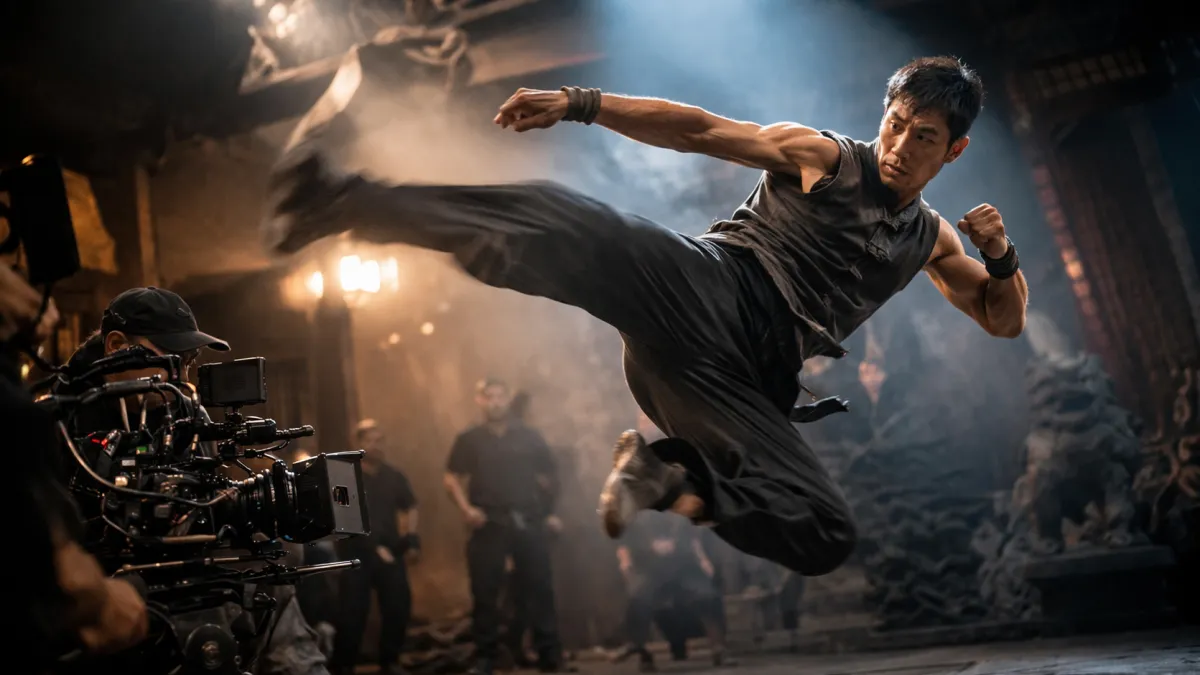
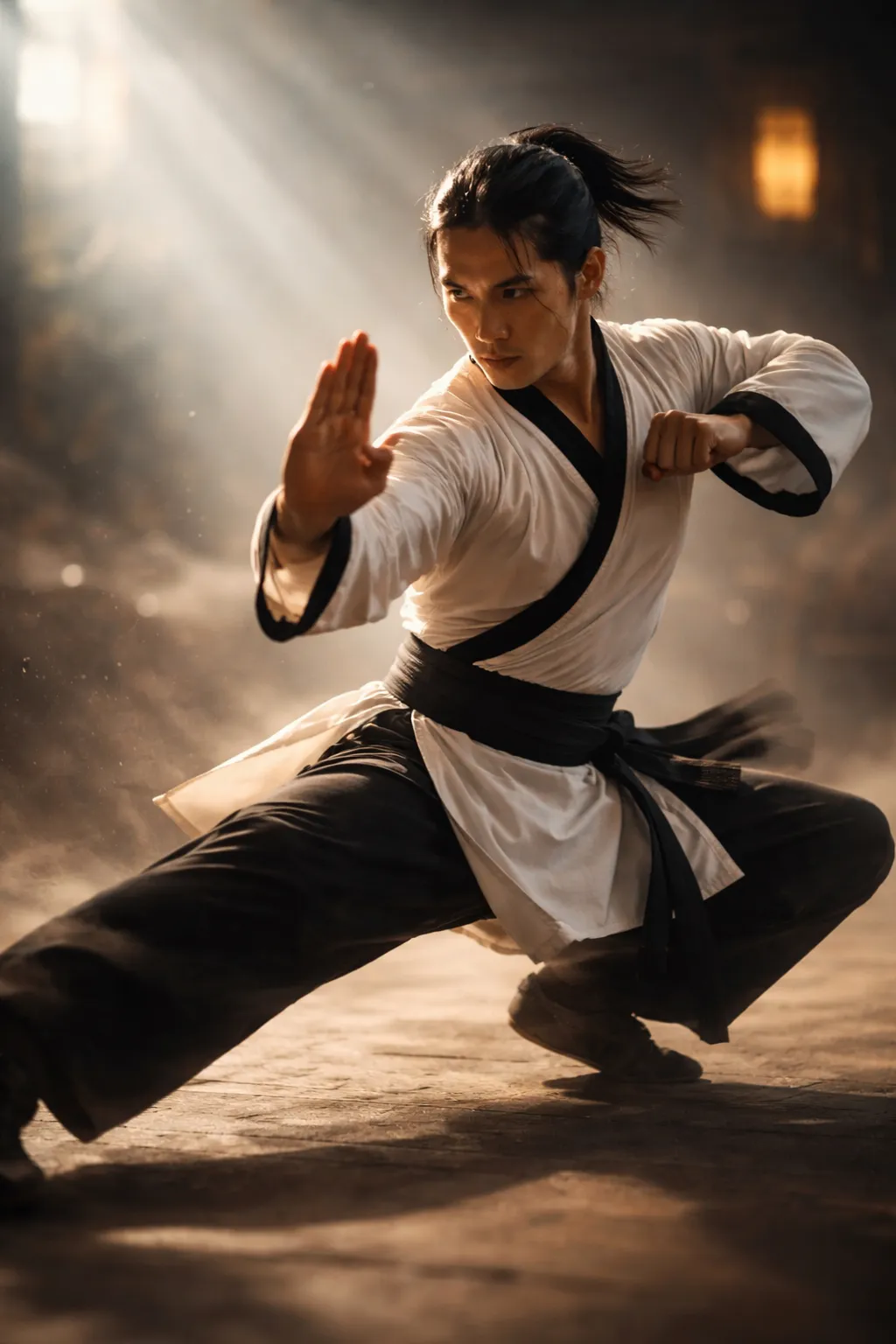
The art of cinematic martial arts combines precise choreography, dynamic camera work, and visual storytelling - where every movement is designed to captivate the audience.
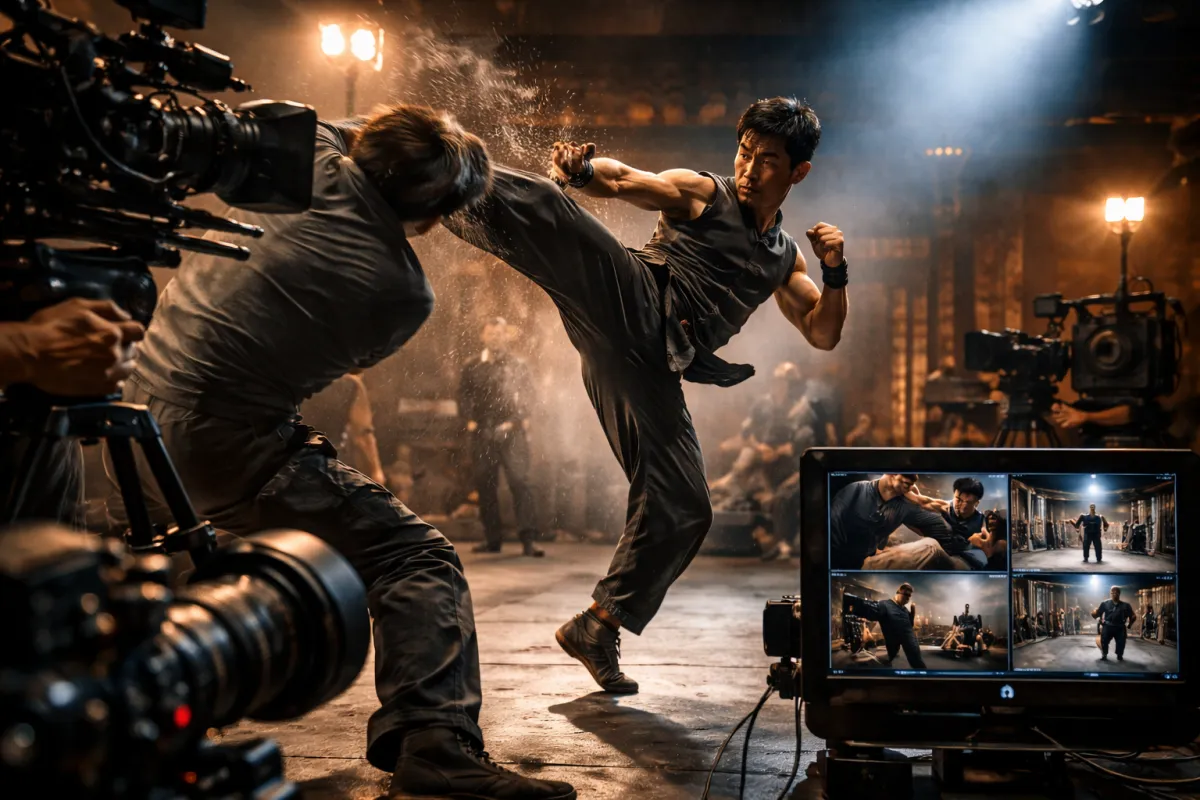
Camera angles are key to highlighting precision, power, and emotion - transforming every movement into cinematic impact.
Why Camera Angles Matter in Martial Arts Performance
Camera angles do more than just capture the action—they shape how the audience perceives the scene. With martial arts, where physical movement and precision are key, the camera serves as a tool to convey emotion, highlight technique, and guide the viewer’s attention. A well-chosen angle can add intensity, drama, and clarity to a fight scene, while the wrong choice can leave the viewer disconnected from the action.
Key Benefits of Mastering Camera Angles:
Amplifying the Impact: A punch or kick seen from the right angle can feel more powerful and satisfying.
Enhancing Storytelling: Camera angles can show not just the fight, but the emotional stakes and narrative behind it.
Creating Immersion: Engaging camera angles make the audience feel like they’re right in the middle of the action, heightening the experience.
Key Camera Angles Used in Martial Arts Performances
Here are some of the most commonly used camera angles in martial arts films and how they enhance the storytelling:
Wide Shots
Purpose: Establish the environment and show the full scope of the action.
Usage: These shots are used to show the entire fight scene or even the whole setting, providing context to the action and positioning of the fighters. They’re often used at the beginning of a fight or when characters are facing off across a large space. Wide shots help set the stage, whether it's a street fight, a dojo battle, or a rooftop duel.
Example: Think of Bruce Lee’s legendary fight scenes, where wide shots allow you to see his fluid movements while giving a sense of the space around him.
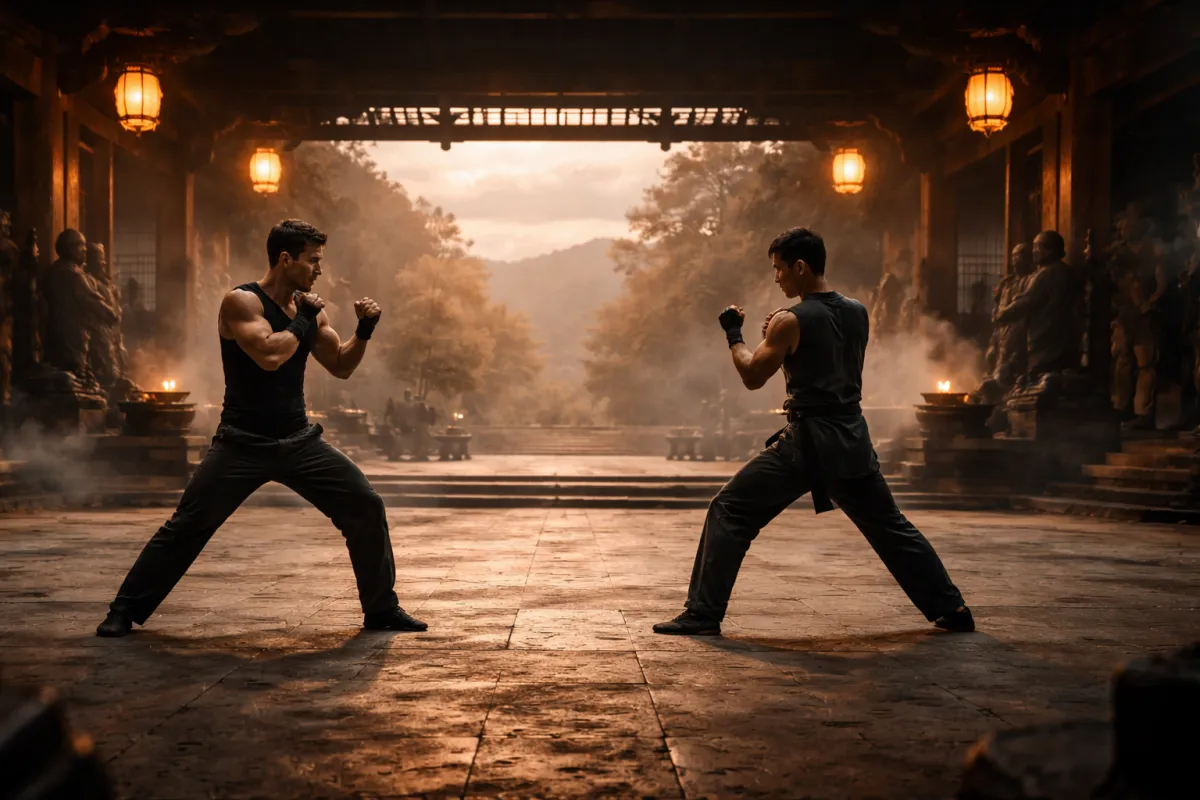
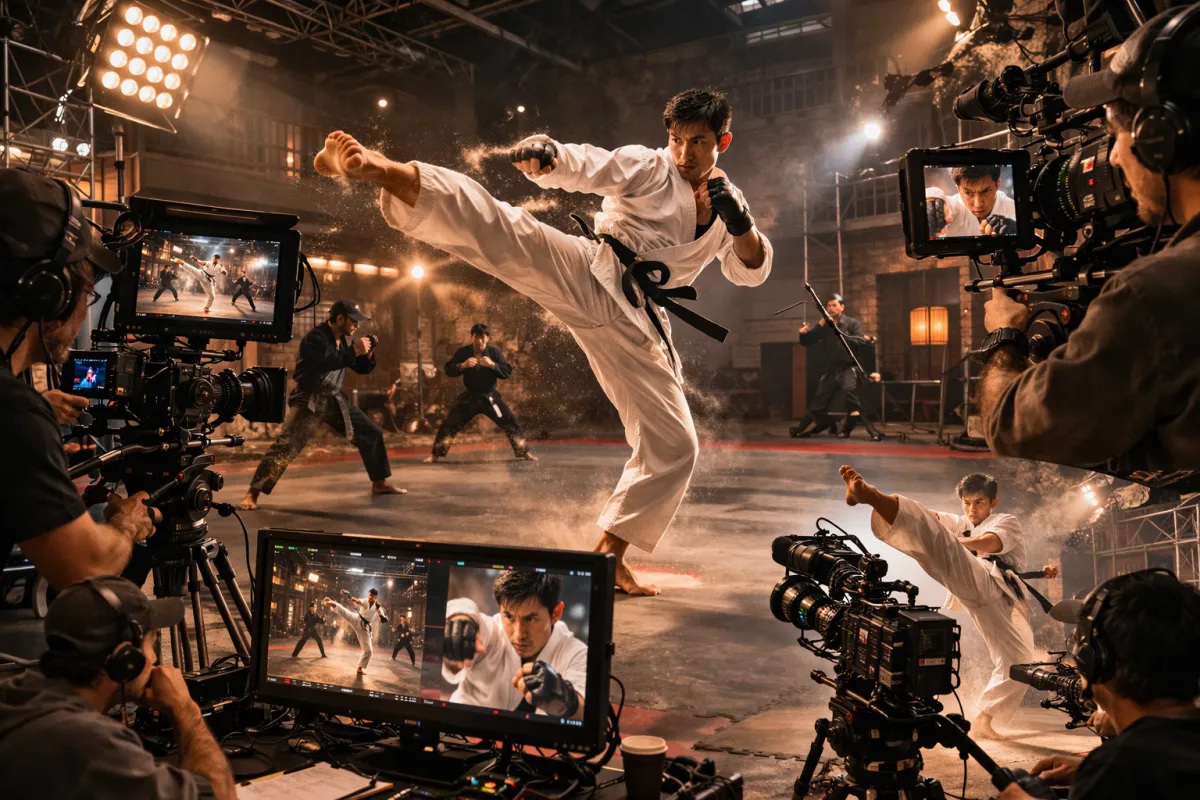
Wide shots provide context by showcasing the full environment, positioning the fighters and setting the stage for the action to unfold.
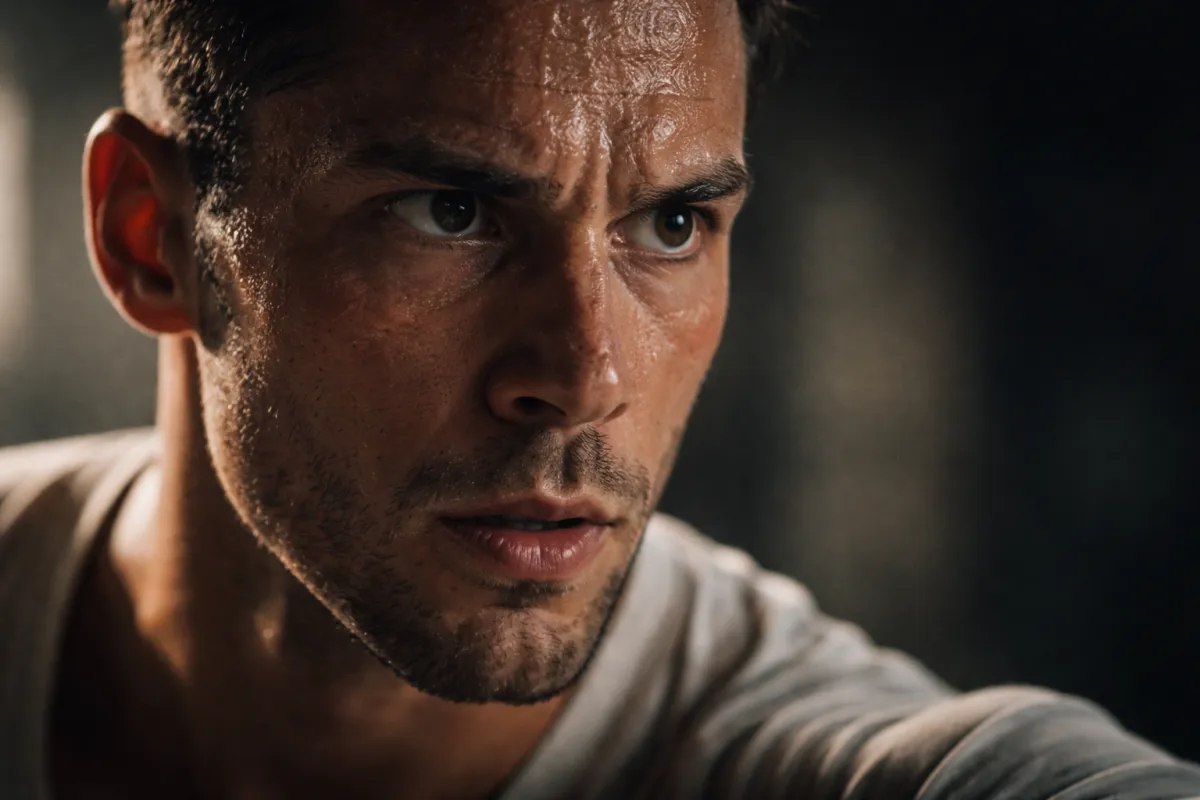
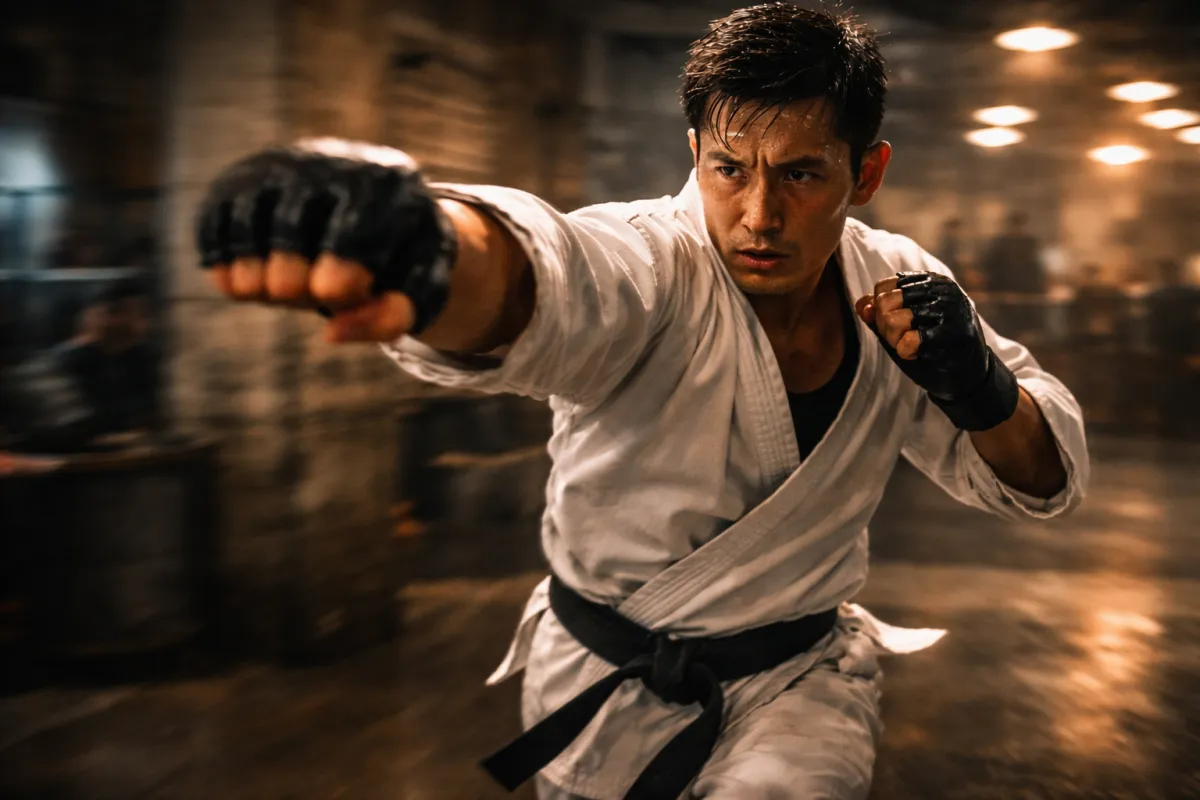
Close-ups capture the emotional intensity of the fight, highlighting the martial artist’s focus and the precision of each move.
Close-ups
Purpose: Focus on emotions and key movements.
Usage: Close-up shots focus on a specific detail or part of the body-typically a facial expression or a single action, like the punch connecting with the target. These shots are used to capture emotion, intensity, and the subtle tension in the fight. When a character reacts to a move, close-ups show their emotional response, making the fight feel more personal and grounded.
Example: In movies like Ip Man, close-ups of the actors’ faces during critical moments convey the emotional stakes of the fight, such as when Ip Man faces overwhelming odds.
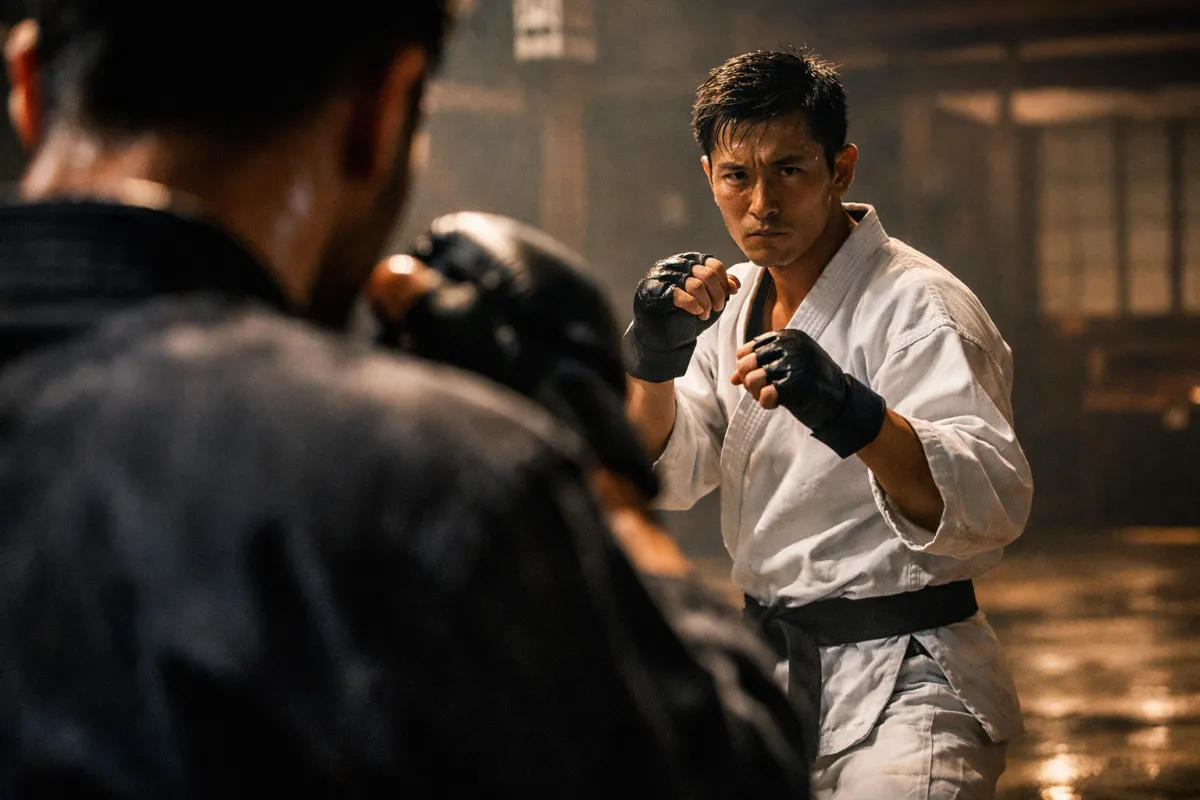
Over-the-Shoulder Shots
Purpose: Create intimacy and a sense of perspective.
Usage: These shots place the viewer directly in the fighter’s position, allowing them to see the action from a more personal angle. This technique is often used during one-on-one fight scenes to emphasize the tension between two characters. It’s an excellent way to immerse the audience in the action while allowing them to focus on the opponent.
Example: In a martial arts duel, a shot from over the shoulder of the fighter adds a sense of immediacy, showing not only the opponent but the fighter’s own perspective on the fight.
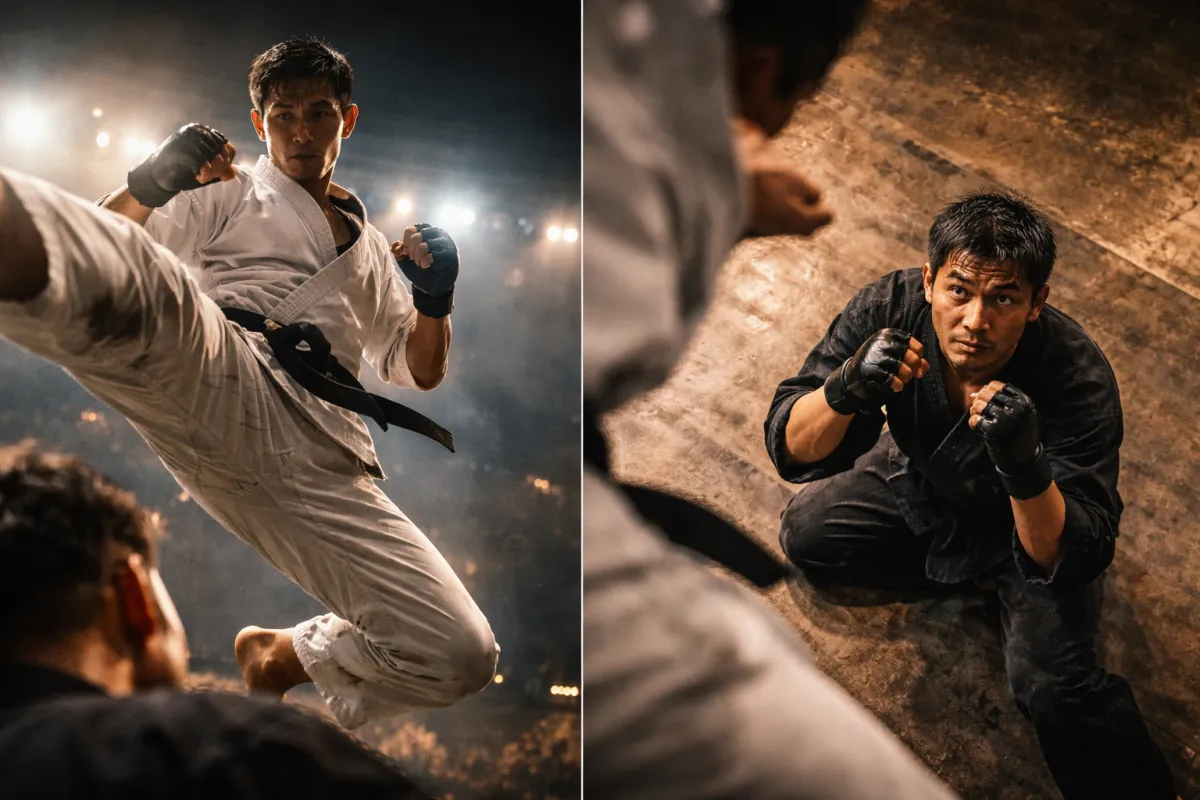
Low and High Angle Shots
Purpose: Manipulate power dynamics and perspective.
Usage: Low-angle shots (looking up at the fighter) make the character seem more powerful and dominant. Conversely, high-angle shots (looking down at the fighter) can make them appear vulnerable or inferior. These angles can be used strategically to manipulate how the audience feels about the character’s position in the fight.
Example: In The Matrix, Neo’s fight scenes often use low-angle shots to convey his rising power and mastery of the martial arts world.
Tracking Shots – Following the Action
Purpose: Follow the action and build momentum.
Usage: These shots involve the camera moving with the characters as they fight, often in sync with their movements. Tracking shots can create fluidity and excitement, especially in fast-paced scenes. They’re perfect for emphasizing the speed and intensity of martial arts choreography. Whether it’s a continuous fight in a hallway or a chase sequence, tracking shots keep the audience’s attention on the action without breaking the flow.
Example: The famous hallway fight scene in Oldboy uses a tracking shot to emphasize the relentless motion of the fight, adding realism and intensity.
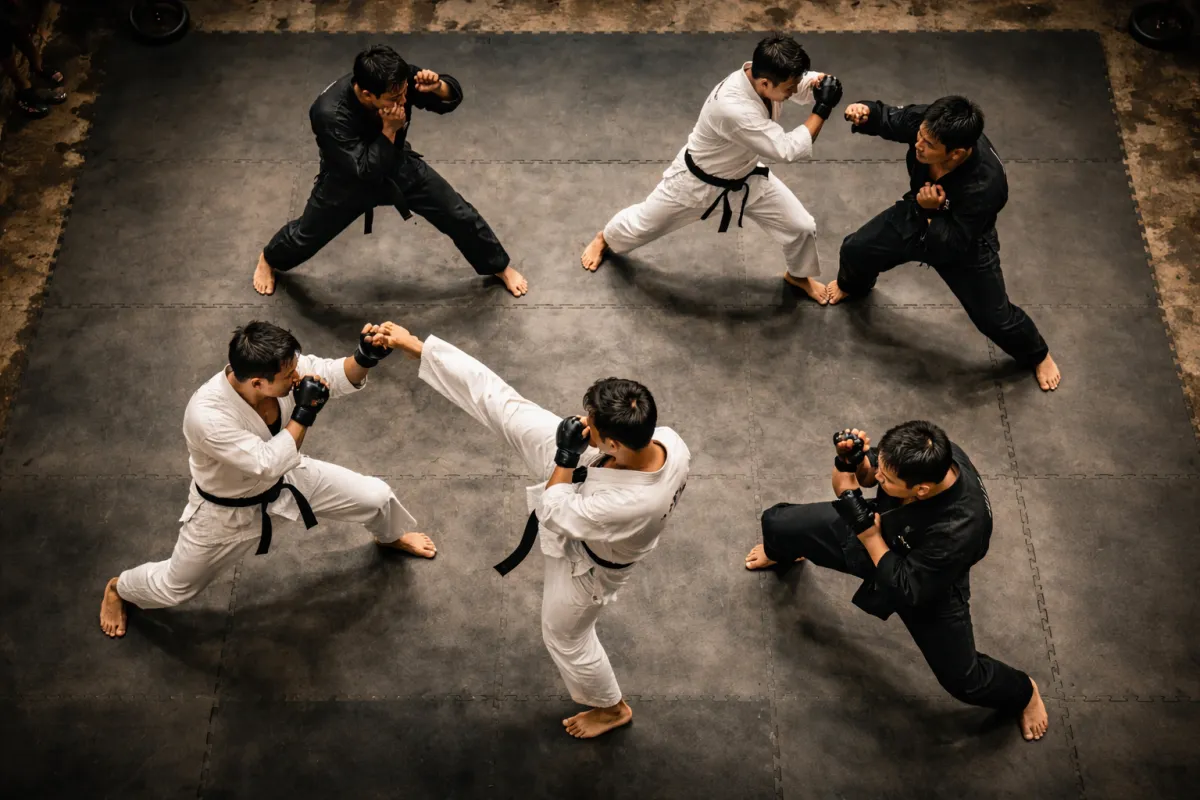
Bird’s Eye View – Full Spatial Awareness
Purpose: Provide a unique perspective and overview.
Usage: The bird’s-eye view gives an overarching perspective of the fighters and the fight scene. This angle is often used in choreographed combat scenes where the director wants to show the entire battle or capture the coordination between multiple fighters. It’s particularly useful for martial arts styles like kung fu or jujutsu, where the interaction between multiple opponents is key.
Example: In martial arts films like Crouching Tiger, Hidden Dragon, bird’s-eye views are used in fight choreography to emphasize grace and technique while showing the environment in relation to the fighters.
How Camera Angles Affect the Emotional Impact of a Fight Scene
1. Building Suspense
Camera angles can be used to slow down a fight and build anticipation. A long shot or a close-up that lingers on a key moment before the impact can create a sense of tension and heighten the dramatic payoff when the blow finally lands.
2. Emphasizing Technique and Skill
Close-ups and wide shots can focus on the precision of a fighter’s technique, such as a perfectly executed roundhouse kick or a well-timed block. These shots allow the viewer to appreciate the technical prowess of the performer, showcasing the mastery involved.
3. Heightening the Stakes
When used strategically, camera angles can make a fight feel more personal. For example, an over-the-shoulder shot during a close-quarter exchange or a tight close-up during a moment of vulnerability can make the audience feel as though they’re right there with the fighter, invested in their success or failure.
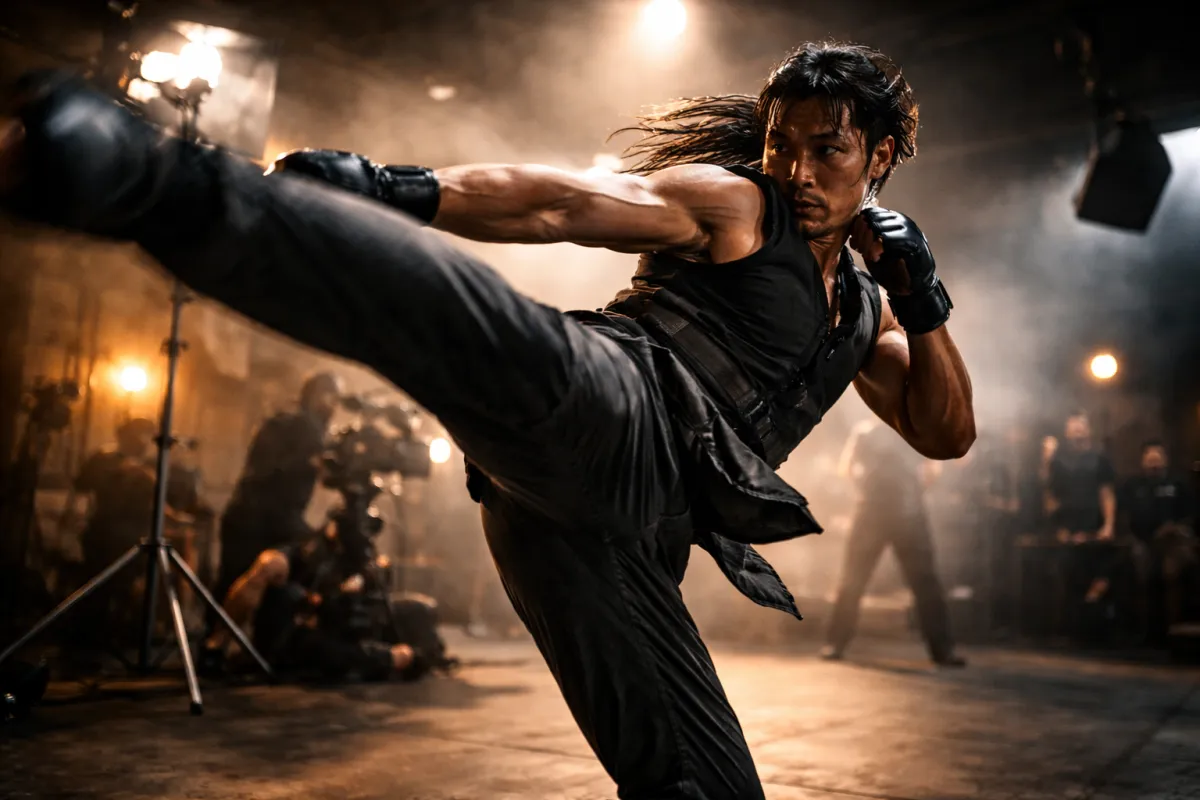
Camera angles transform perception - turning strength into spectacle and emotion into connection.
Best Practices for Using Camera Angles in Martial Arts Performance
Balance Action and Emotion: While action shots highlight the choreography, don’t forget the emotional stakes of the fight. Use close-ups and reaction shots to show how the fight affects the characters emotionally.
Keep the Action Clear: Don’t overwhelm the audience with too many cuts or shaky camera work. Keep the action fluid by using wide and mid shots to establish context, and rely on close-ups and dynamic angles to capture key moments.
Consider the Fighter’s Perspective: The camera should be an extension of the fighter’s experience. Whether it’s through a first-person shot or tracking their movements, the camera should convey the physical and emotional journey of the character.
The Art of Cinematic Martial Arts – Elegance, Power, and Visual Storytelling
Mastering camera angles in martial arts performance is about more than just capturing action - it’s about telling a story through movement. By strategically using angles, filmmakers can enhance the drama, highlight technique, and immerse the audience in the fight. When done right, the camera doesn’t just follow the action; it becomes part of the performance.
By understanding the power of the camera, martial arts films can transcend mere action sequences and become emotionally gripping stories that resonate with audiences long after the final punch is thrown.
Are You Ready to Take Your Career to the Next Level?
Join Movie Martial Arts
Get access to exclusive training, tutorials, and resources that will transform your career.
CONTINUE LEARNING
If you're interested in mastering martial arts performance on screen, explore these related INSIGHTS articles:
How to Film a Monologue – Learn the essential techniques for delivering impactful monologues on film.
5 Biggest Mistakes Martial Artists Make on Film Sets (And How to Avoid Them) – Avoid common errors that could jeopardize safety and professionalism on set.
What Casting Directors Look for in Martial Artists – Understand how casting decisions are made for action roles in film and television.
Mastering Camera Angles for Martial Arts Performance – Learn how different camera angles impact the intensity and visual storytelling of martial arts scenes.
The Importance of Reaction Shots in Action Sequences – Discover how reaction shots help to build tension and emotional depth in fight scenes.
How to Become a Stunt Performer in Film and Television – A comprehensive guide to starting a successful stunt performance career in film and TV.