1 June 2026 MOVIE MARTIAL ARTS
Martial Arts Training and Techniques: The Ultimate Guide for Beginners and Beyond
Martial arts are ancient systems of combat that have evolved over centuries into diverse, specialized practices. Whether for self-defense, fitness, competition, or cinematic performance, martial arts offer something for everyone. From the disciplined grace of Karate to the high-octane excitement of MMA, the journey through martial arts is as much about personal growth and philosophy as it is about physical technique.
In this guide, we’ll explore the core principles of martial arts training, from foundational techniques to advanced training regimens, and give you the tools to understand how martial arts fit into the world of film and TV. Whether you’re a beginner just starting or an advanced practitioner looking to deepen your knowledge, this article has everything you need to succeed in martial arts.
The Different Types of Martial Arts
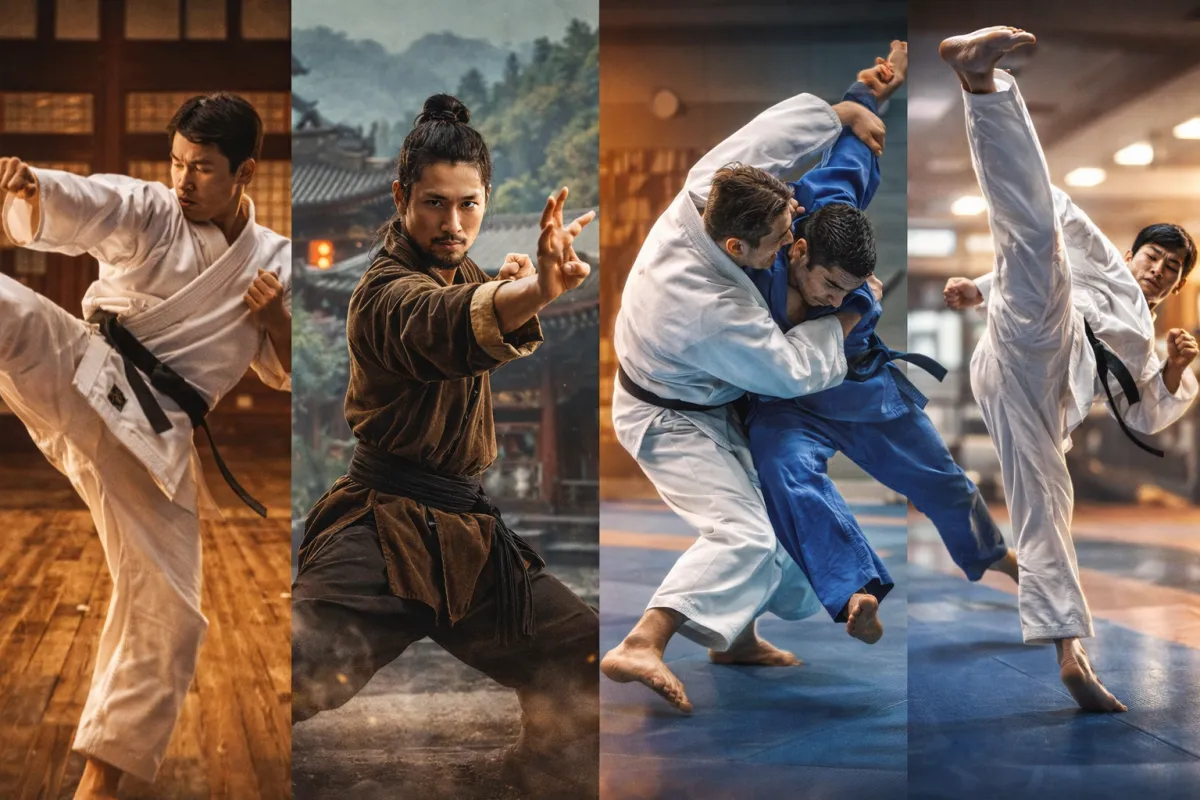
1.1 Traditional Martial Arts
Traditional martial arts are characterized by deep-rooted history, philosophy, and structured techniques. These arts focus on discipline, respect, and self-improvement, making them ideal for those seeking more than just physical combat training. Here are some of the most popular:
Karate: Originating from Japan, Karate is a striking art known for its powerful punches, kicks, and blocking techniques. It emphasizes speed, precision, and control.
Kung Fu: A Chinese martial art system that incorporates fluid movements and elegant techniques. Kung Fu is often practiced for health, self-defense, and its connection to traditional Chinese culture.
Judo: Known for its throws and grappling, Judo emphasizes using an opponent’s force against them. It’s a great martial art for developing balance and leverage.
Taekwondo: A Korean martial art that focuses on high, fast kicks and dynamic footwork. It’s particularly known for its competitive nature and Olympic status.

1.2 Modern Martial Arts
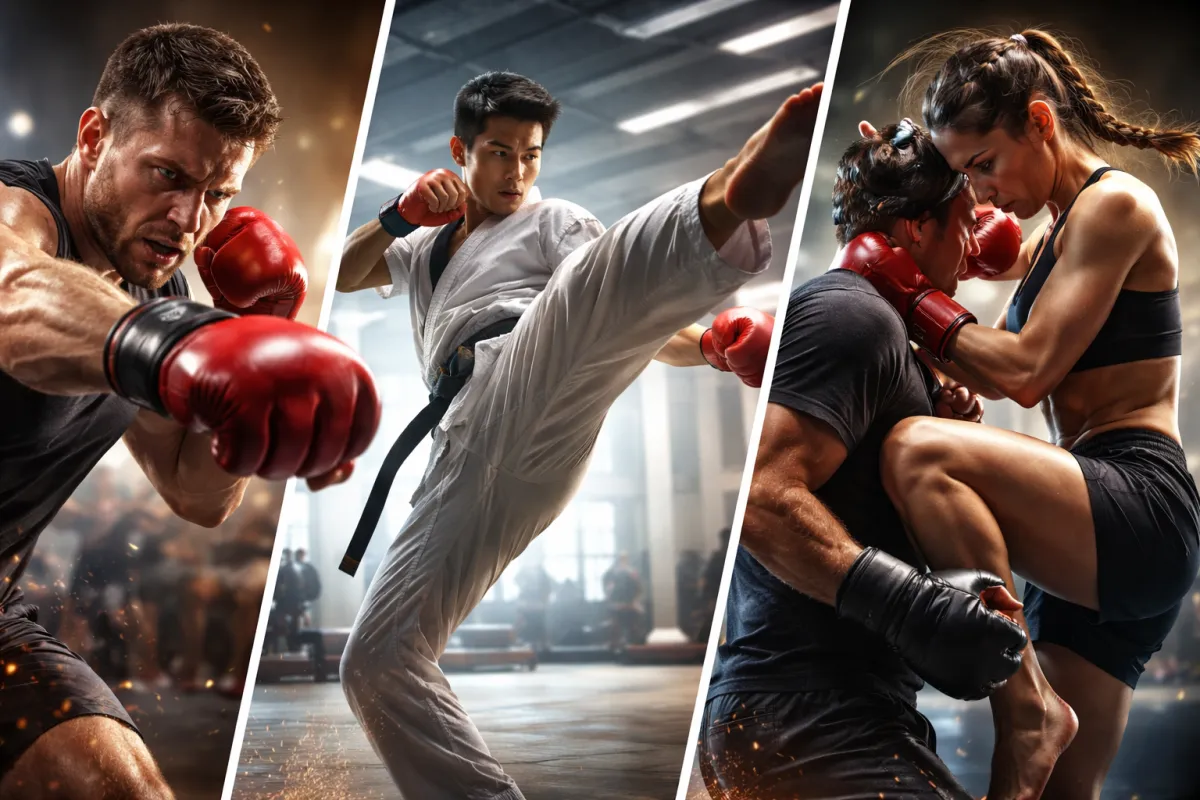
Modern martial arts, such as Brazilian Jiu-Jitsu (BJJ), Muay Thai, and MMA, have grown in popularity, often combining techniques from various traditional martial arts into comprehensive systems of fighting.
Brazilian Jiu-Jitsu (BJJ): Focused on ground fighting, BJJ is renowned for its emphasis on submissions, chokes, and joint locks. It’s essential for MMA fighters and self-defense.
Muay Thai: A striking art from Thailand, Muay Thai utilizes the fists, elbows, knees, and shins, making it one of the most effective stand-up fighting styles in the world.
Mixed Martial Arts (MMA): Combining elements from boxing, wrestling, Brazilian Jiu-Jitsu, Muay Thai, and other arts, MMA fighters are trained in both striking and grappling techniques for all-around combat.
Key Techniques in Martial Arts
2.1 Striking Techniques
Striking is one of the most fundamental elements in martial arts. These techniques allow you to engage an opponent from a distance, using powerful and controlled movements.
Punching Techniques: Punches are basic yet essential tools for martial artists. Key punches include the jab, cross, uppercut, and hook.
Kicks: Kicking techniques are versatile and allow you to attack at different levels. The roundhouse kick, front kick, and side kick are some of the most common in arts like Karate, Taekwondo, and Muay Thai.
Elbows & Knees: These are close-range strikes typically used in Muay Thai and MMA, designed to cause maximum damage from short distances.
2.2 Grappling Techniques
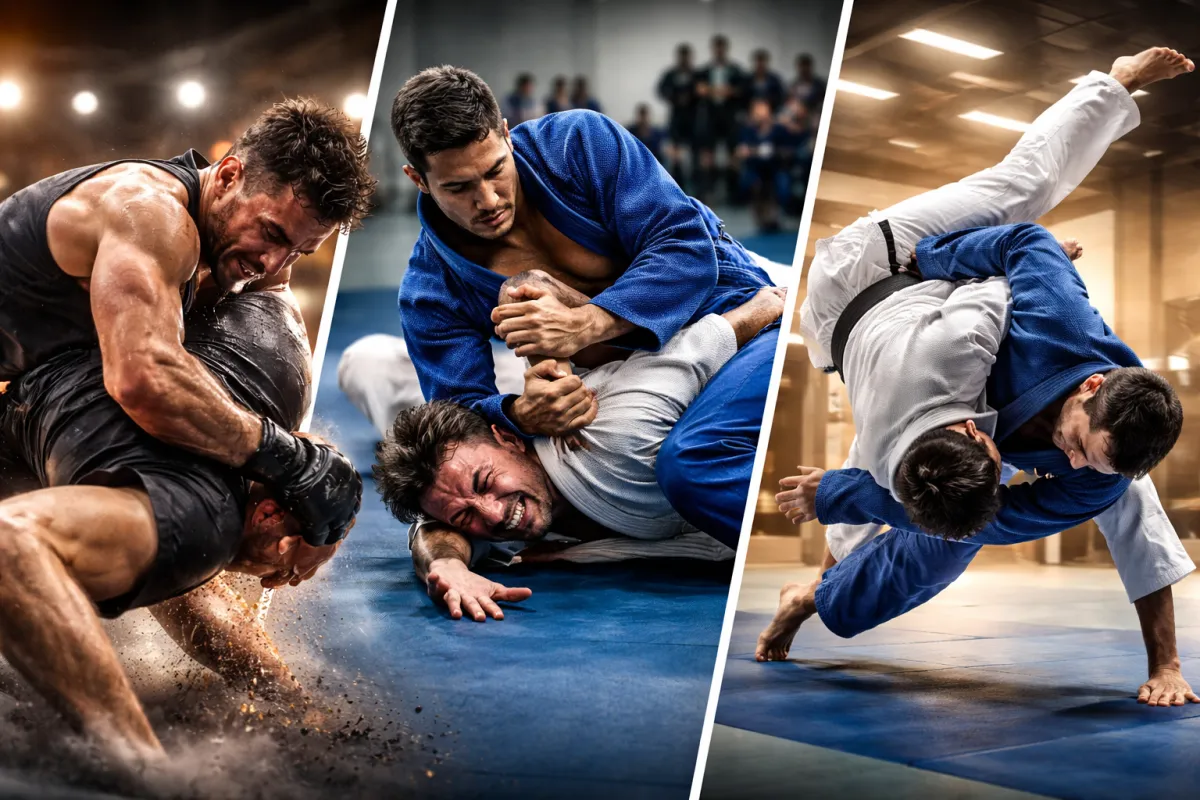
Grappling is an essential component for ground-based combat and involves various control tactics, throws, submissions, and takedowns.
Takedowns: A key part of wrestling and BJJ, takedowns involve using leverage and positioning to bring an opponent to the ground. Popular techniques include the double leg takedown and single leg takedown.
Submissions & Locks: A fundamental aspect of Brazilian Jiu-Jitsu, submission holds like the armbar, triangle choke, and guillotine choke are used to force an opponent into submission.
Throws & Sweeps: In arts like Judo and Kung Fu, throws are used to unbalance an opponent and take them to the ground. Sweeps are effective for changing positions and gaining control.
2.3 Defensive Techniques
A strong defense is just as important as offense. Defensive techniques enable martial artists to protect themselves while creating opportunities to counter-attack.
Blocks & Parries: Using your arms and legs to deflect incoming strikes or redirect an opponent’s force.
Evasion & Footwork: Effective footwork and body movement can help you avoid attacks while positioning yourself for the next strike. Side-stepping and pivoting are key for maintaining distance.
Counters: Recognizing the right moment to counter-attack is crucial. A well-timed counter can turn the tide of a fight.
2.4 Weapon Techniques
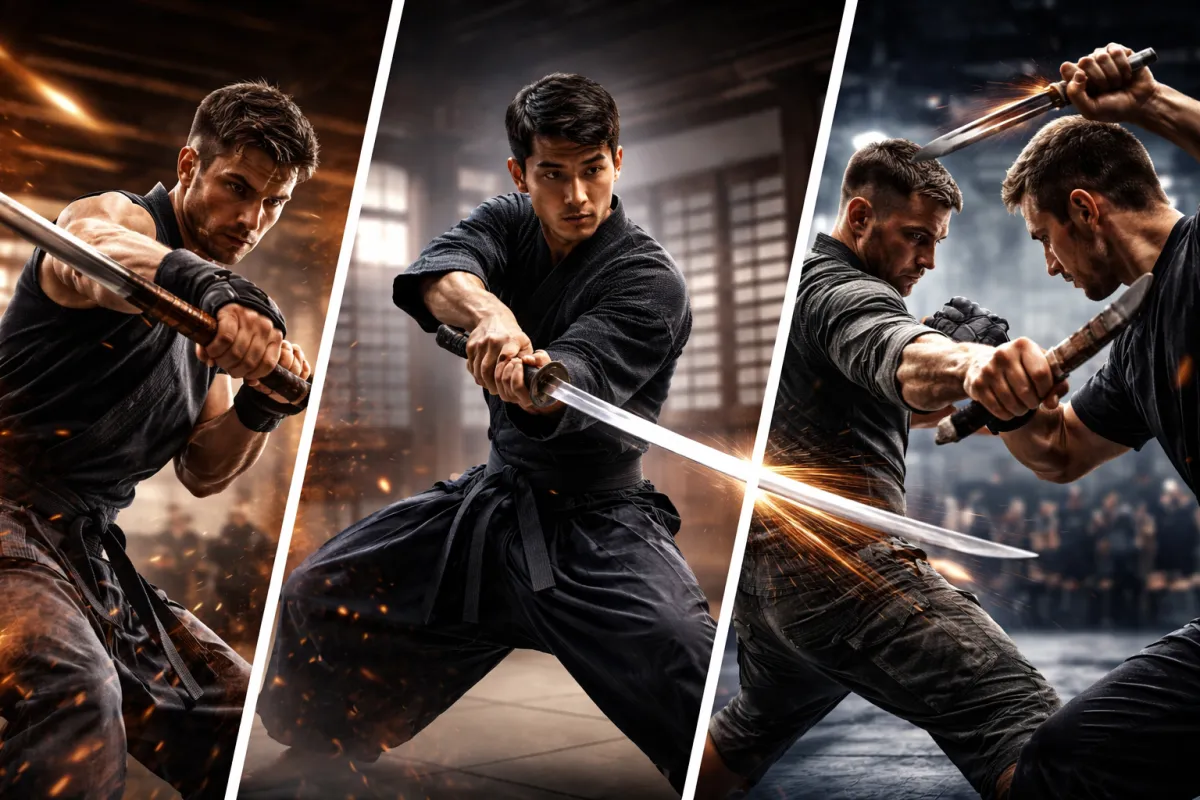
Weapons training is a critical component of many traditional martial arts. Weapons not only teach discipline but also offer insight into the importance of timing, distance, and precision.
Staff Training (Bo Staff): The bo staff is a long weapon used in various martial arts, particularly Kung Fu and Karate. It teaches balance, timing, and spatial awareness.
Sword Techniques: Kendo, Kenjutsu, and Filipino martial arts often involve sword training. Mastering a sword requires precision, speed, and strong technique.
Knife Fighting: Techniques involve using a knife for defense or offense. Understanding how to use and defend against knives is essential in some combat-focused martial arts like Kali and Krav Maga.
Martial Arts Training Essentials
3.1 Consistent Practice
Consistency is key in martial arts training. Whether you’re practicing at home or in the dojo, building muscle memory and mental focus requires dedication. Break down your training into manageable sessions, focusing on fundamental techniques, form, and conditioning.
3.2 Strength, Flexibility, and Endurance
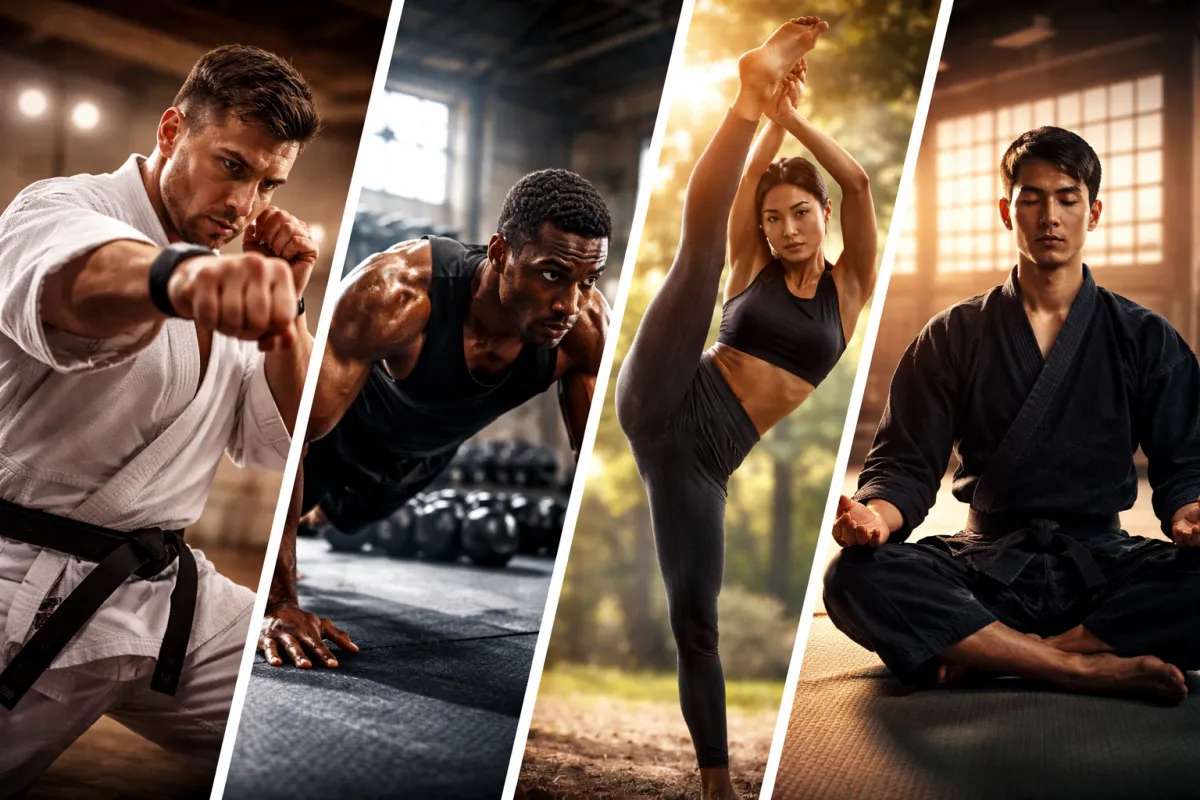
Physical fitness is essential for martial artists. Strength training, cardio, and flexibility work will help you maintain peak performance.
Strength Training: Focus on building core strength and upper/lower body strength with exercises like push-ups, pull-ups, and squats.
Flexibility: Regular stretching is crucial for increasing your range of motion and preventing injuries. Incorporate yoga or specific martial arts stretches into your routine.
Endurance: Martial arts require stamina for prolonged sparring or competition. Train with HIIT workouts and running to build cardiovascular endurance.
3.3 Mental Training
Mental focus is just as important as physical fitness. Visualization, meditation, and concentration drills can enhance your decision-making, timing, and composure during both training and competition.
How Martial Arts Fit into Film and TV
4.1 Martial Arts as Performance
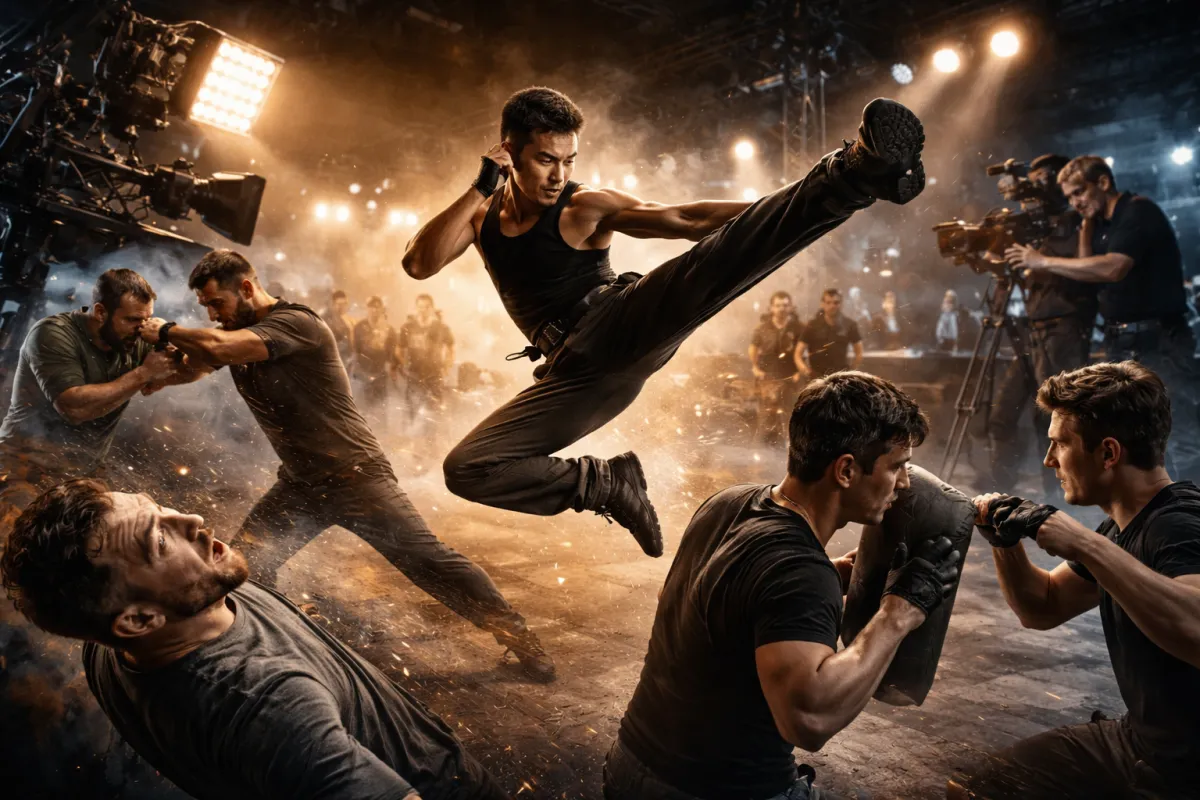
Film and television martial arts often emphasize entertainment value over practical application. However, training for screen combat involves not just technical proficiency but also performance skills such as timing, expression, and on-screen chemistry with fellow performers.
Fighting for the Camera: Techniques like exaggerated movements, faster-than-normal execution, and choreographed sequences are designed to be visually stunning on screen.
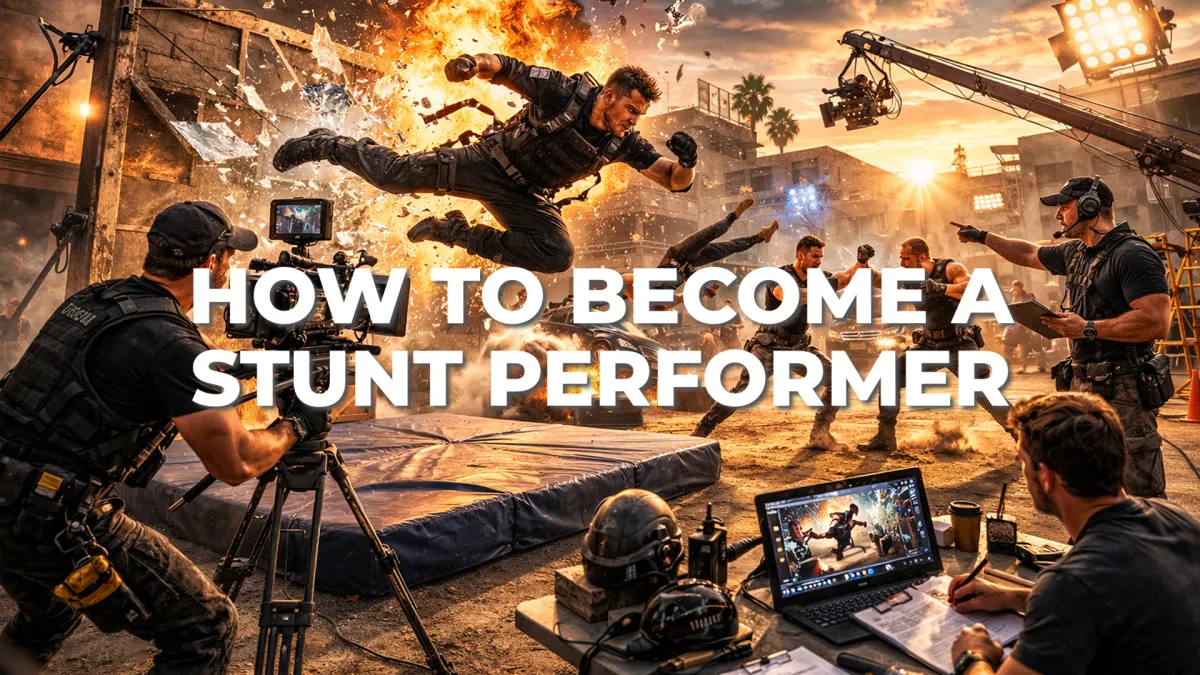
Martial Arts Stunts: Professional stunt performers are trained to execute realistic fight scenes with precision and safety, often performing complex moves like falling, jumping, or fighting multiple opponents.
4.2 Training for Film Combat
Actors in action roles need to train in choreographed fight sequences, often working with stunt coordinators and fight directors to craft realistic combat for the camera. Precision is important, but so is emotional intensity, as the actor must convey the stakes of the fight.
Getting Started with Martial Arts
5.1 Choosing the Right Martial Art
Selecting the right martial art depends on your goals. Whether you want to compete, learn self-defense, or train for film, there’s a style that suits your needs.
Self-Defense: Krav Maga, Brazilian Jiu-Jitsu, and Boxing are excellent for practical self-defense.
Competition: Wrestling, Taekwondo, and Muay Thai are top choices for athletes interested in competing.
Film: If your goal is film combat, focusing on fight choreography and weapons training through Kung Fu, Judo, and MMA is beneficial.
5.2 Finding the Right School
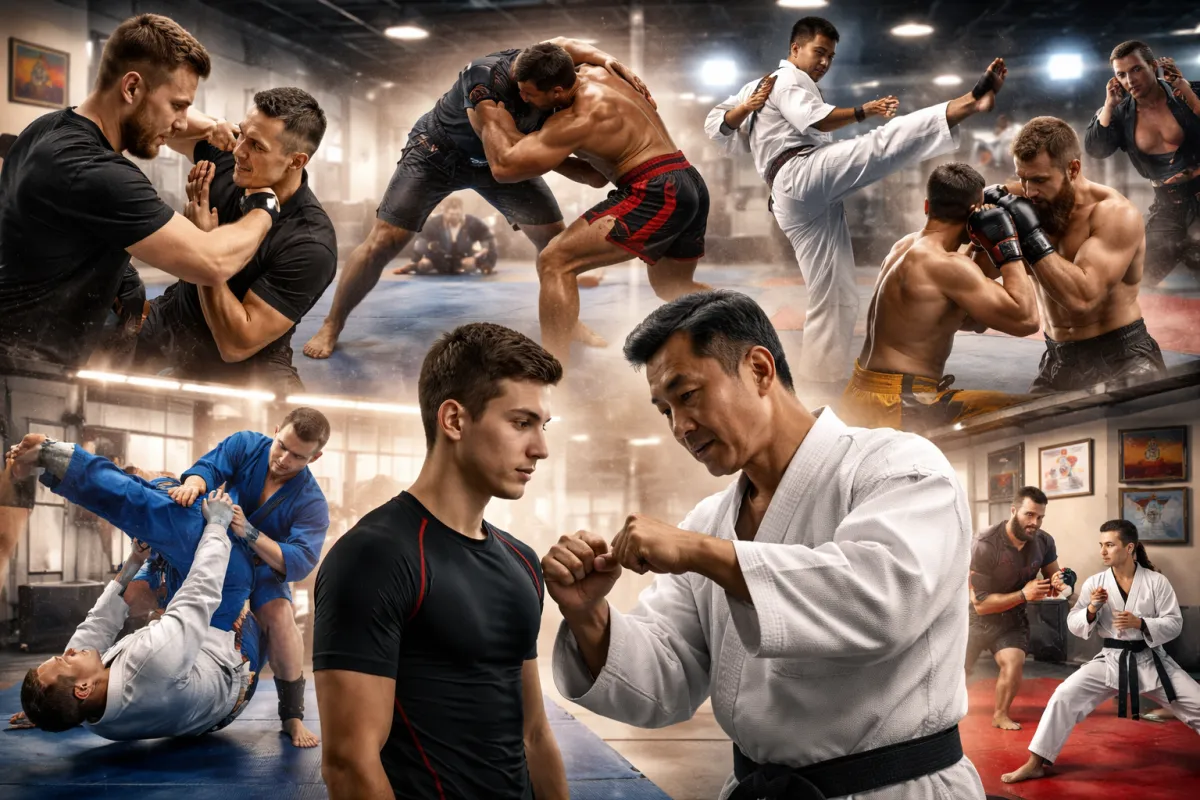
Look for reputable schools or instructors who emphasize proper technique, safety, and discipline. Ask about their certifications, teaching experience, and whether they offer classes aligned with your specific goals.
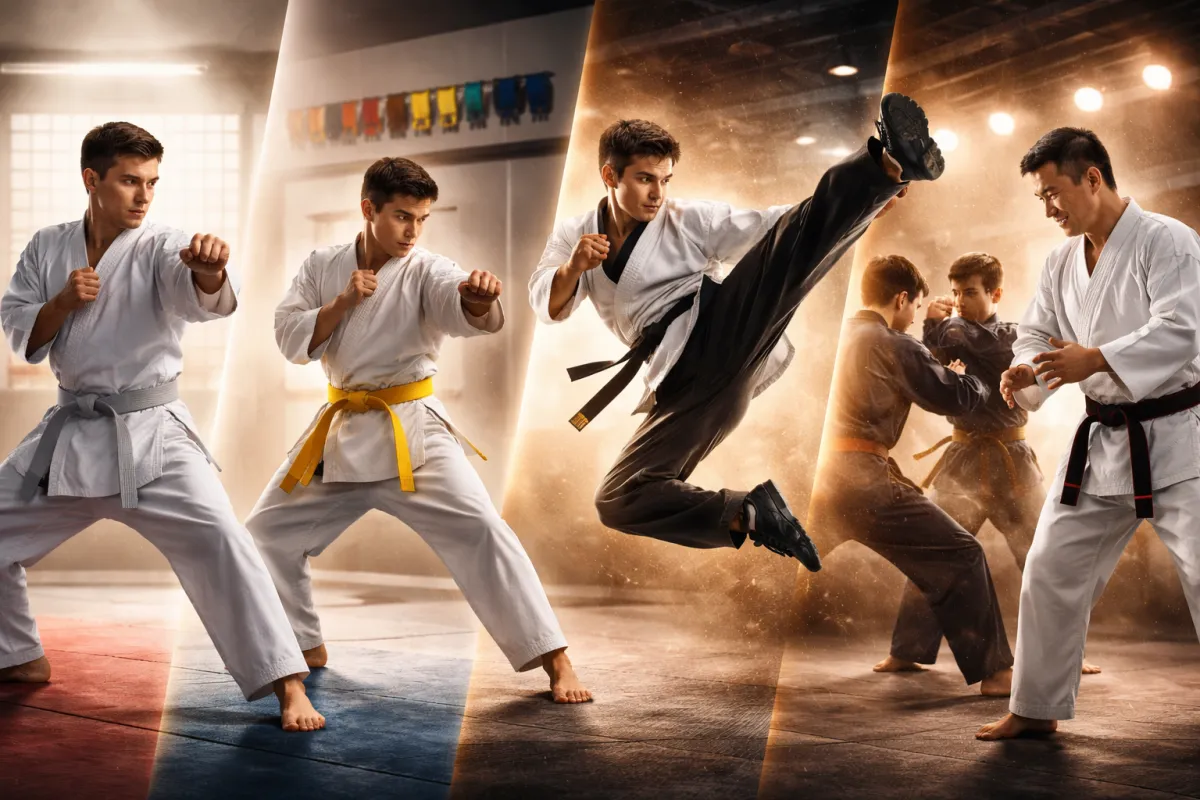
The Journey Ahead – From White Belt to Black Belt and Beyond
6.1 The Belt System
The belt system, common in many martial arts like Karate and Judo, represents your progress. From white belt to black belt, each stage marks a milestone in your technical and mental development.
6.2 Becoming a Professional
If your goal is to pursue a career in film, martial arts training can transition into stunt work or acting. A strong martial arts foundation combined with acting skills opens doors to professional stunt roles and film appearances.
6.3. The Dan Ranking System
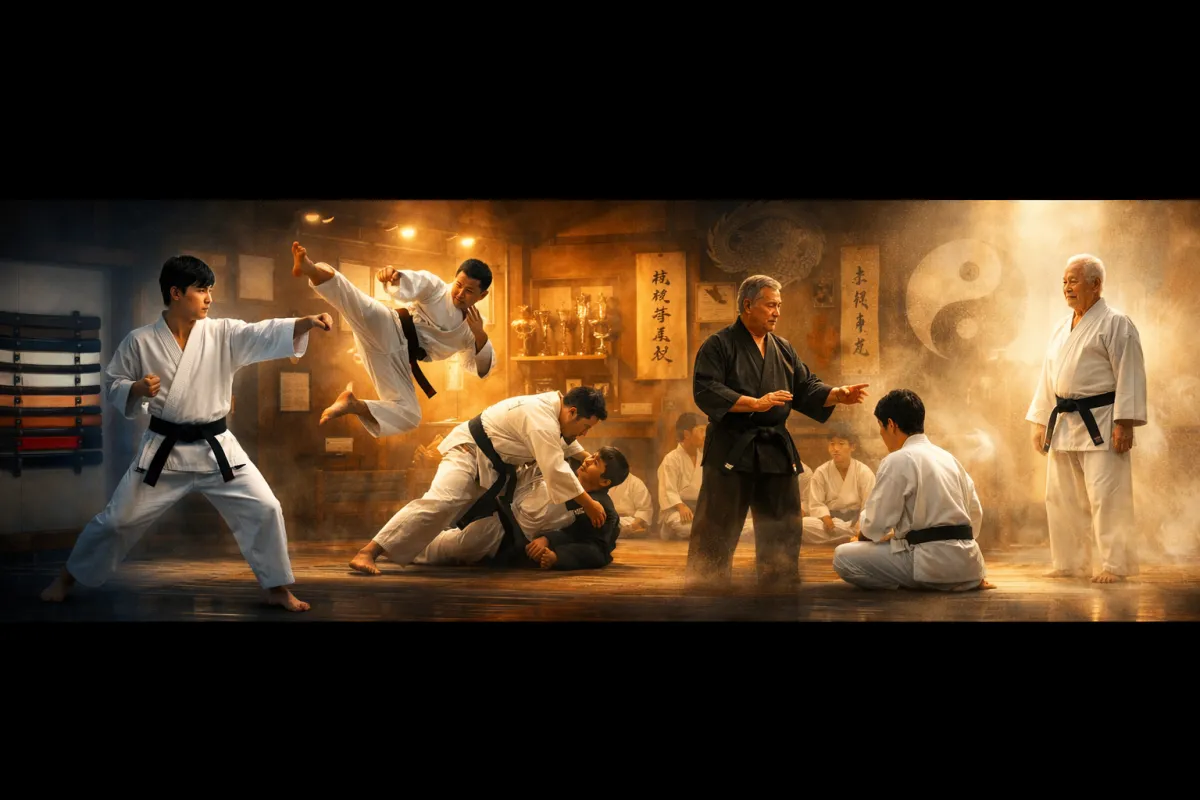
In many martial arts like Karate, Judo, Aikido, Kendo, and Jujutsu, the Dan ranking system is used to denote levels of expertise after the black belt. The first Dan is often awarded after achieving proficiency in basic techniques, while subsequent Dans indicate greater mastery and deeper knowledge.
The most common system is as follows:
1st to 5th Dan: These are usually awarded after years of practice and testing. The journey between these levels can take several years, depending on the martial art.
6th to 8th Dan: At these ranks, the individual is typically seen as an expert practitioner, and the focus often shifts to teaching and contributing to the martial art rather than personal practice.
9th and 10th Dan: These are usually grandmasters and are often rarely awarded. These practitioners are generally considered the most senior and revered figures in their respective martial arts, with decades of experience and a lifetime of dedication.
What’s Beyond Black Belt?
The Dan System
Black Belt (1st Dan): This is often the beginning of a martial artist’s serious journey. It represents a solid foundation in the martial art's principles and techniques.
2nd to 5th Dan: As a martial artist progresses through these levels, they gain deeper understanding and mastery of the art. These levels are often awarded based on time spent training, teaching others, and contributing to the martial art’s growth.
6th to 8th Dan: Often, martial artists at these levels are deeply involved in teaching and leading dojos, and they might start to focus on philosophical aspects of the martial art. They are generally seen as grandmasters.
9th and 10th Dan: The highest ranks in most martial arts. These ranks are extremely rare, often awarded only to the most respected and influential figures in the martial arts community.
10th Dan is the epitome of mastery, often synonymous with living legends. Few martial artists reach this level, and it is generally given to those who have spent their life devoted to the martial art, impacting its development and preservation.
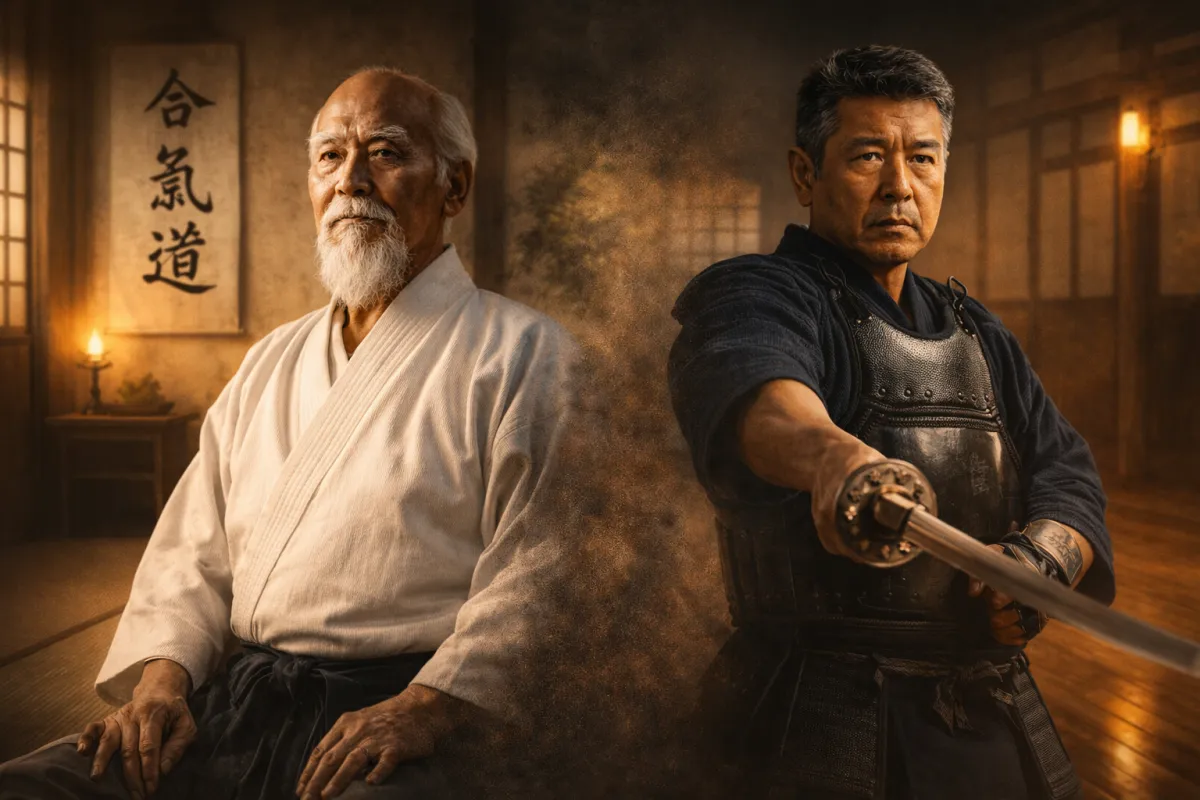
Notable Martial Artists Who Reached 10th Dan
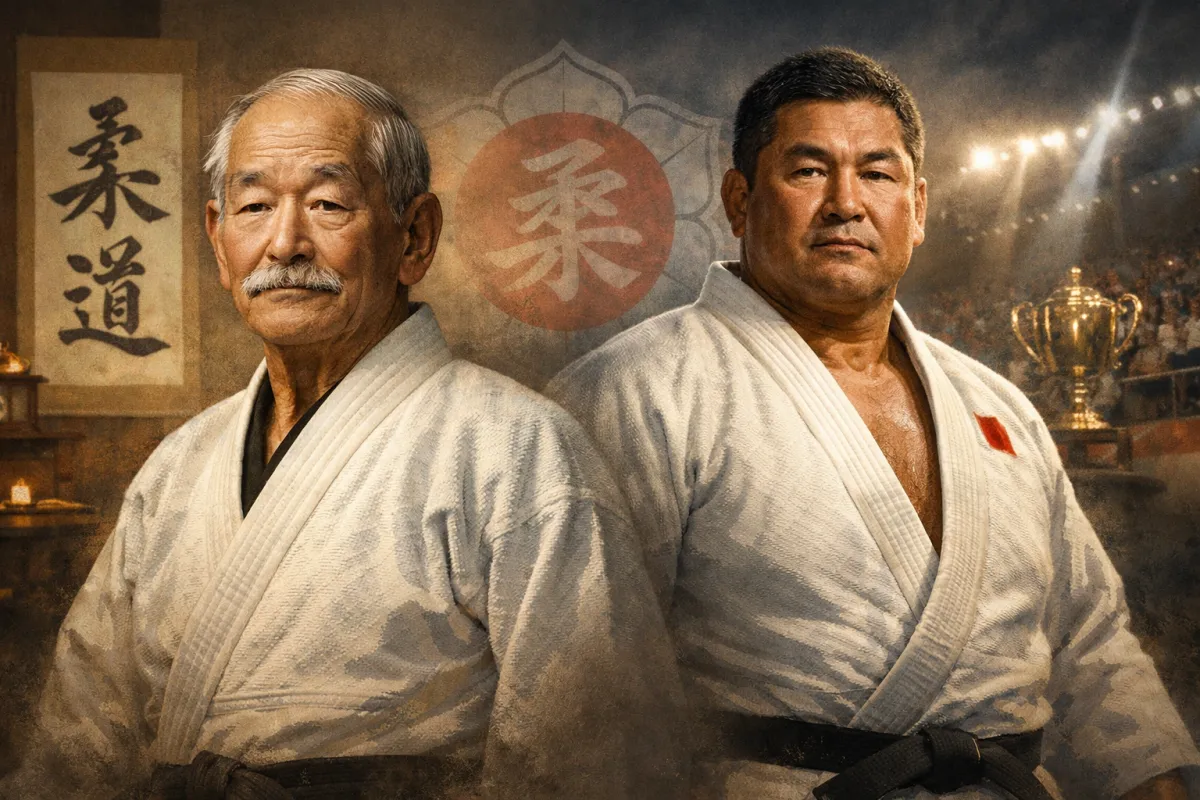
Judo
Jigoro Kano (1860-1938) – Founder of Judo and first person to receive the 10th Dan. Kano was a visionary who adapted traditional Japanese jujutsu techniques into Judo, and his contribution to modern martial arts is monumental. His philosophy of "maximum efficiency with minimum effort" is the basis for Judo’s principles.
Yasuhiro Yamashita (Japan) – While Yamashita didn’t officially receive a 10th Dan, his status as a legendary Judoka is unparalleled. Yamashita has a near-mythical status in the Judo community, having won all major international competitions and contributing heavily to Judo’s development.
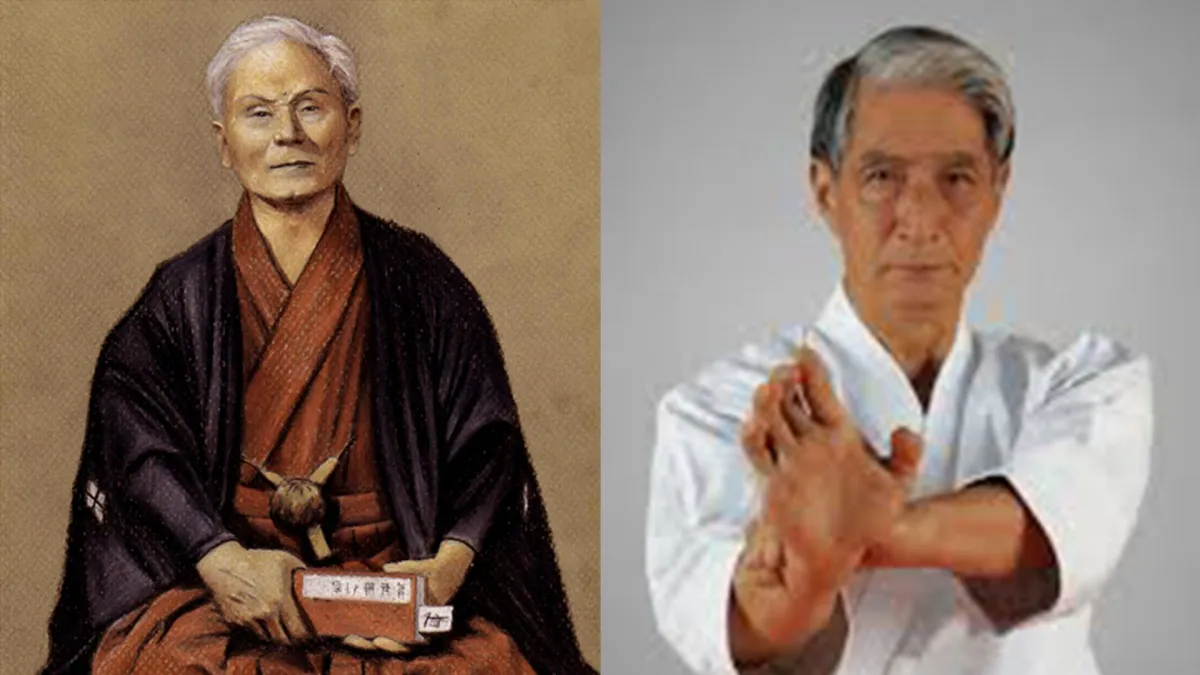
Karate
Gichin Funakoshi (1868-1957) – Considered the father of modern Karate, Funakoshi promoted the art from Okinawa to mainland Japan and helped popularize it worldwide. He was posthumously awarded the 10th Dan in recognition of his contributions.
Hidetaka Nishiyama (1931-2008) – A prominent figure in Shotokan Karate, Nishiyama was awarded the 10th Dan for his lifelong dedication to Karate and its international expansion. His expertise was pivotal in spreading Shotokan Karate to the United States and other countries.
Aikido
Morihei Ueshiba (1883-1969) – The founder of Aikido, Ueshiba is often regarded as one of the greatest martial artists of all time. He is credited with creating a martial art based on blending with and redirecting an opponent’s movements, and he was awarded the 10th Dan posthumously.
Kendo
Kenji Tokitsu – A master in the art of Kendo (Japanese fencing), Tokitsu is one of the rare martial artists to hold a 10th Dan in the sport.
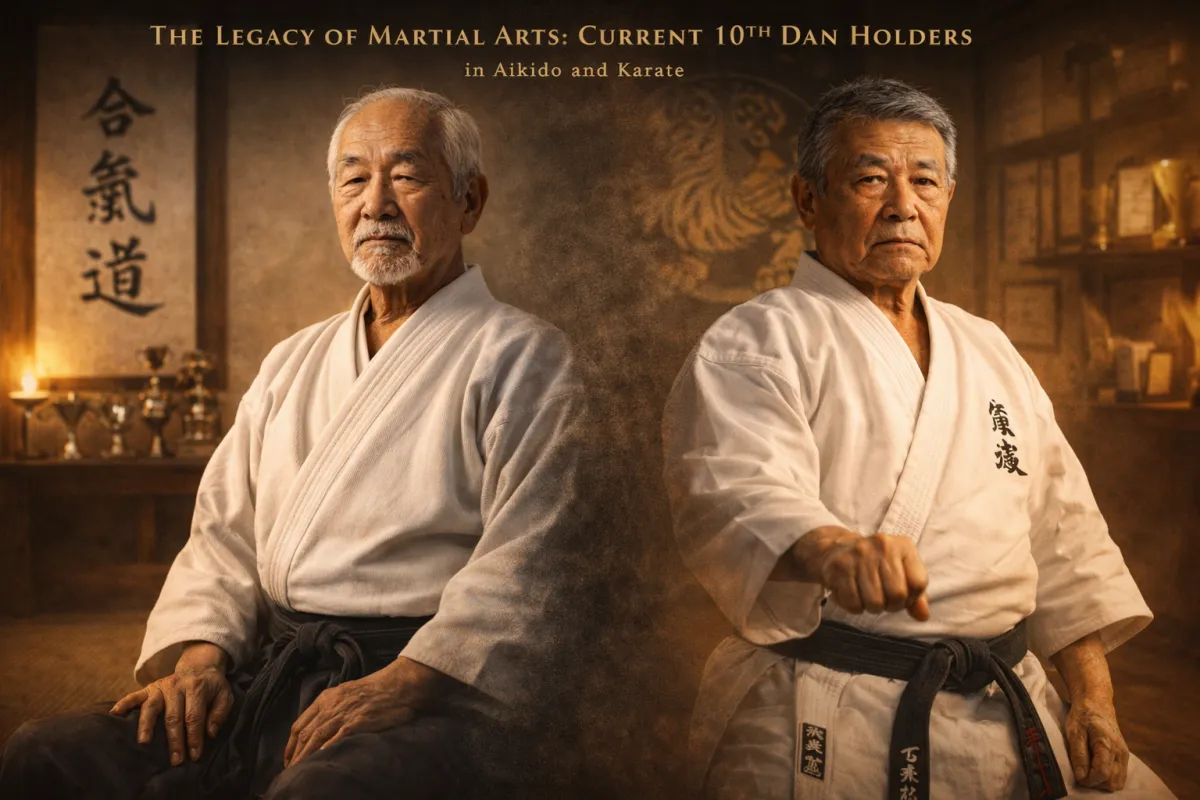
Current 10th Dan Holders
Some martial arts, especially in the modern era, have begun awarding 10th Dan ranks more selectively. Currently, there are a handful of 10th Dan holders in various martial arts, each one a living legend within their respective disciplines.
Keiichiro Hara (Japan) – An influential figure in Aikido, Hara has made significant contributions to the study of Aikido’s philosophy and application.
Hiroshi Shirai (Italy/Japan) – Awarded the 10th Dan in Shotokan Karate, Shirai is known for his teaching prowess and work in spreading Karate across the globe.
Reaching 10th Dan in any martial art is not only a testament to technical skill but also to dedication, philosophy, and the long-term impact a practitioner has had on the art form and community. Achieving such a rank signifies a lifetime commitment to martial arts, where mastery is no longer just about the techniques but also about the personal journey and contributions to the martial art's legacy.
In a world where martial arts evolve and adapt, those who reach the highest levels serve as guardians of tradition, ensuring the art is passed on to future generations. The 10th Dan is a symbol of mastery not just in fighting but in life — a lifetime devoted to honor, discipline, and continuous self-improvement.
Final Thoughts
Martial arts offer more than just physical training. They provide valuable life lessons in discipline, respect, confidence, and self-defense. Whether you train for fitness, competition, or film, the skills you develop in martial arts will stay with you for life. The key to success in martial arts is to stay consistent, humble, and always be ready to learn.

Are You Ready to Take Your Career to the Next Level?
Join Movie Martial Arts
Get access to exclusive training, tutorials, and resources that will transform your career.
CONTINUE LEARNING
If you’re eager to learn more about martial arts training for film, check out these related INSIGHTS articles:
Wirework & Aerial Techniques for Cinematic Action – Discover the art of using wirework and aerial stunts to create dynamic fight sequences.
The Evolution of Martial Arts: From Ancient Combat to Modern Cinema – Trace the history of martial arts and how it’s evolved in cinema over time.
High Kicks & Tricks for Screen Combat – Learn about the techniques and choreography behind high-flying kicks and stunts in film.
Martial Arts Training and Techniques: The Ultimate Guide for Beginners and Beyond – A complete guide to the essential martial arts techniques for film.
The Art of Cinematic Martial Arts – Understand how choreography, camera work, and performance combine to create stunning martial arts scenes.
How to Become a Stunt Performer in Film and Television – Your step-by-step guide to starting your career as a stunt performer in film and TV.