1 June 2026 MOVIE MARTIAL ARTS
Wirework & Aerial Techniques
for Cinematic Action
WIREWORK & AERIAL TECHNIQUES
FOR CINEMATIC ACTION
Wirework has transformed modern action cinema. From gravity-defying martial arts to explosive aerial combat, it allows performers to create movements that would otherwise be impossible.
But wirework isn’t about flying.
It’s about control.
When used correctly, it enhances performance. When misunderstood, it exposes inexperience instantly.
Let’s break it down.
What Is Wirework in Film?
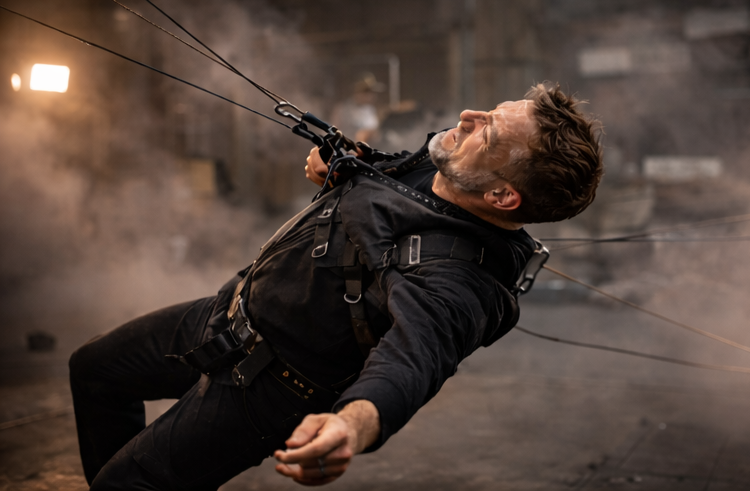
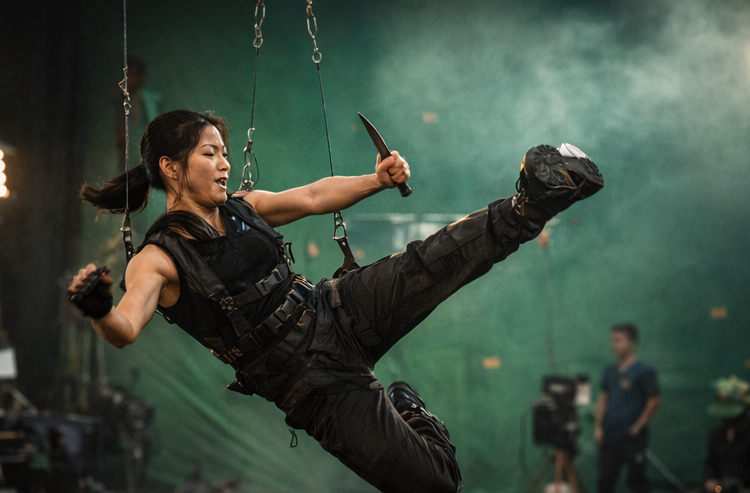
Wirework involves harness systems, rigging, and coordinated stunt teams that assist performers in achieving elevated, suspended, or exaggerated movements safely.
It’s commonly used in:
Martial arts cinema
Superhero films
Fantasy combat
High-impact stunt sequences
The key difference between athletic wire training and cinematic wirework?
Camera awareness.
You’re not performing for the room.
You’re performing for the lens.
The Purpose of Wirework in Martial Arts Cinema
Wirework enhances:
Jump height
Hang time
Spin control
Reaction exaggeration
Impact amplification
In cinematic martial arts, wires don’t replace technique - they amplify it.
If your base mechanics are weak, wires will expose it.
If your base mechanics are strong, wires make you look extraordinary.
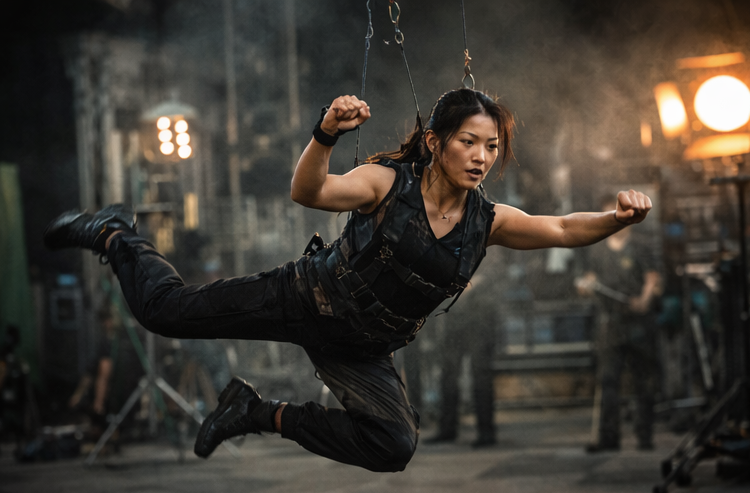
Core Wirework Movement Categories
1. Assisted Jumps
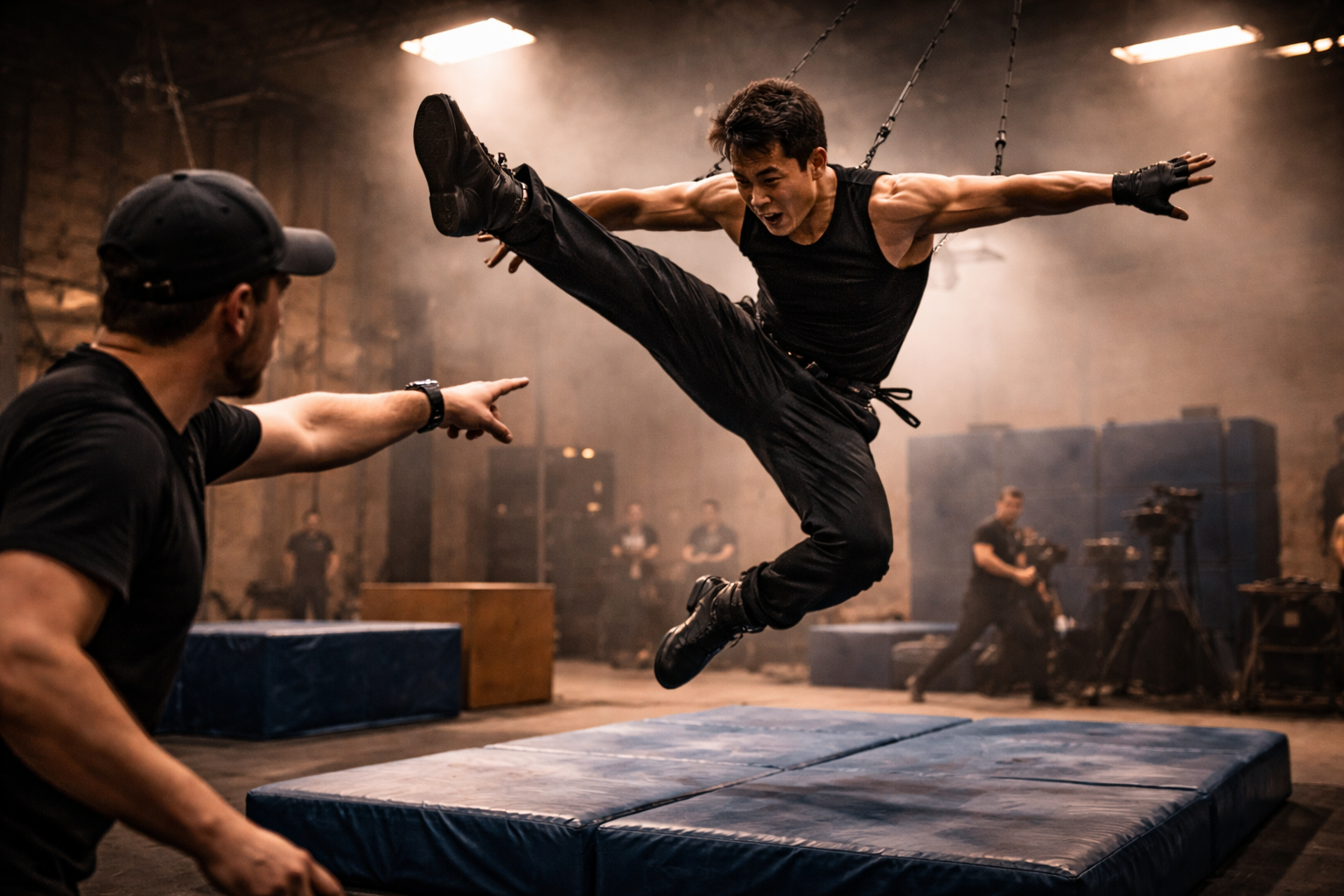
Used to increase elevation and slow descent for dramatic timing.
2. Horizontal Pulls
Simulating knockbacks, throws, or explosive impacts.
3. Rotational Suspensions
Controlled spins, flips, and mid-air directional changes.
4. Vertical Drops
High falls with controlled deceleration.
Each requires timing with:
Stunt riggers
Fight choreographer
Camera operator
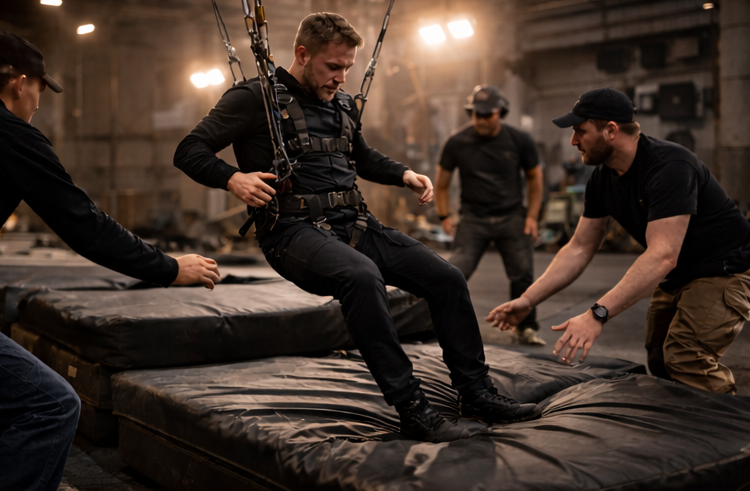
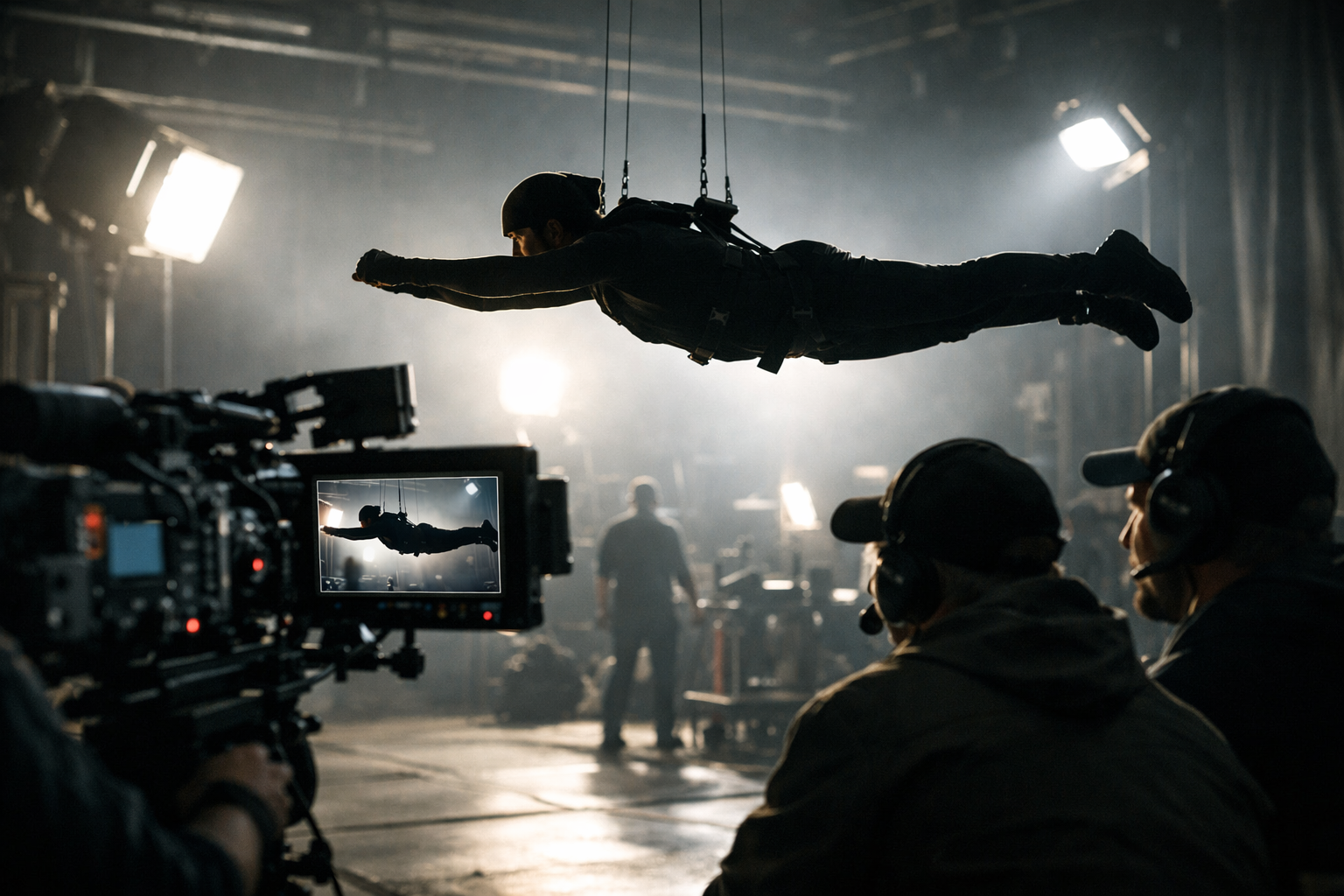
Wirework is team choreography, not solo performance.
Safety First: The Non-Negotiables
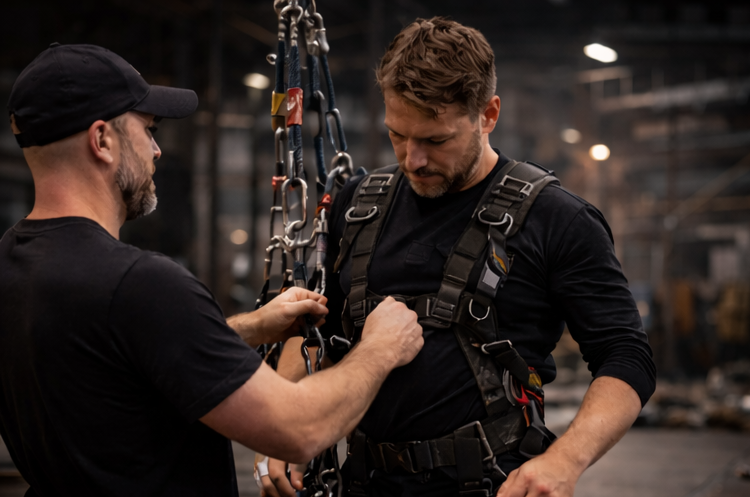
Professional wirework always involves:
Certified rigging teams
Proper harness fitting
Pre-visualisation and rehearsal
Clear communication cues
Never attempt wire techniques without professional supervision.
The industry standard is layered safety:
Harness check
Anchor check
Cue confirmation
Camera rehearsal
Confidence comes from preparation, not bravado.
Performance Adjustments for Wirework
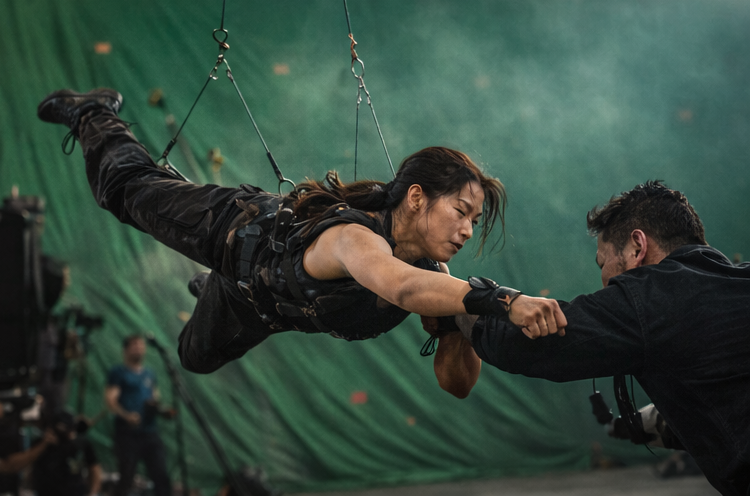
Here’s where most martial artists struggle:
They fight the wire.
Instead of relaxing into the support system, they tense up and lose fluidity.
Performance adjustments include:
Relaxing the hips during lift
Extending lines fully for camera
Maintaining character expression mid-air
Controlling landing transitions
You must act while airborne.
Your face cannot freeze just because you’re suspended.
Training for Aerial Performance
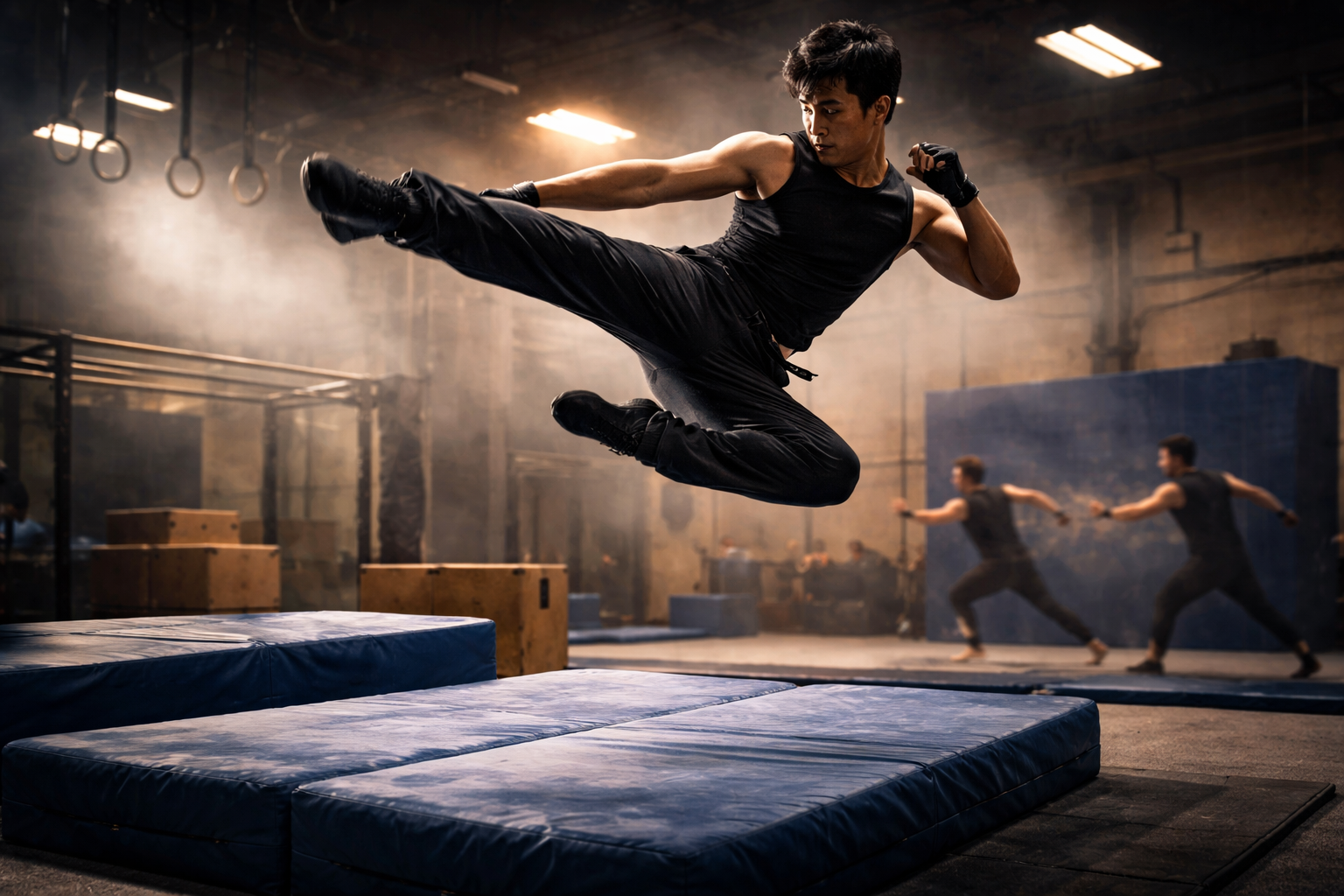
You can prepare for wirework without wires.
Focus on:
Core stability
Explosive leg power
Balance training
Landing mechanics
Controlled spins
Supplement with:
Trampoline basics
Gymnastics fundamentals
Reaction drills
The stronger your body awareness, the smoother your wire performance.
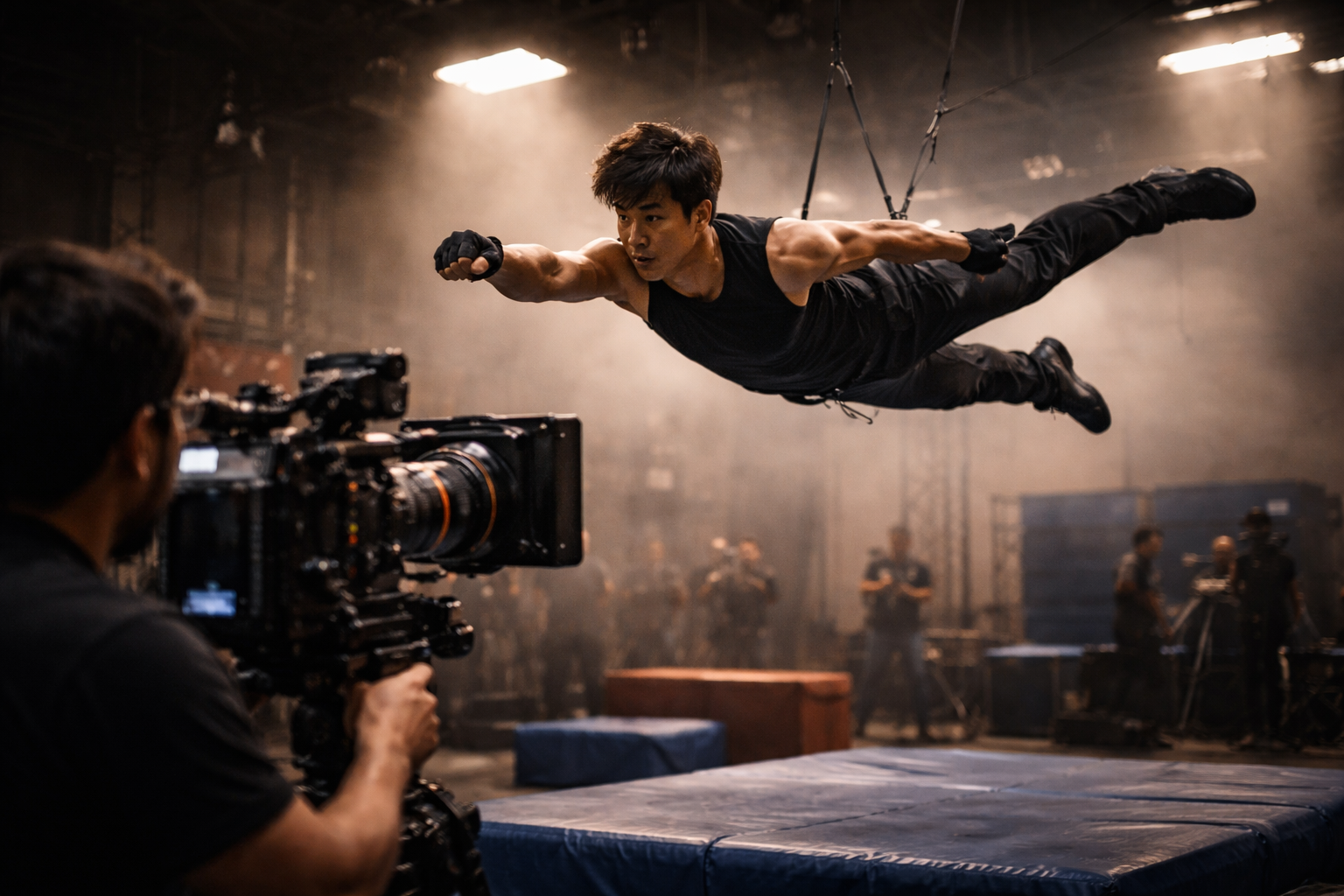
Camera Considerations
Wirework only works when it reads well on camera.
Key considerations:
Body line extension
Silhouette clarity
Timing pauses for dramatic beats
Direction of force in relation to lens
Sometimes a smaller movement reads bigger on screen.
Cinematic action is about illusion, not athletic ego.
Common Mistakes Performers Make
Over-kicking mid-air
Flailing arms unintentionally
Losing facial character
Landing stiffly
Rushing beats
Wirework demands precision.
It rewards discipline.
The Career Advantage
Wirework only works when it reads well on camera.
Key considerations:
Body line extension
Silhouette clarity
Timing pauses for dramatic beats
Direction of force in relation to lens
Sometimes a smaller movement reads bigger on screen.
Cinematic action is about illusion, not athletic ego.
Professional Development CTA
Wirework is a specialist skill - but cinematic performance principles apply everywhere.
At Movie Martial Arts Membership, we train:
Screen combat fundamentals
Camera-conscious movement
Controlled reaction work
Professional performance standards
If you want to move like a cinematic action performer - not just a martial artist - your training must evolve.
Join Today and Transform Your Performance.

FAQ
How do actors train for wirework?
Actors train with professional stunt riggers, focusing on core stability, balance, and aerial awareness before performing on set.
Is wirework dangerous?
Wirework can be risky without professional supervision. Certified rigging teams and proper safety protocols make it controlled and safe.
Do martial artists need wire training?
Not always - but understanding aerial mechanics increases versatility and casting opportunities.
Can beginners learn wirework?
Only under professional supervision. Foundational strength and body awareness are essential before attempting aerial work.
Ready to take your aerial and wirework knowledge further?
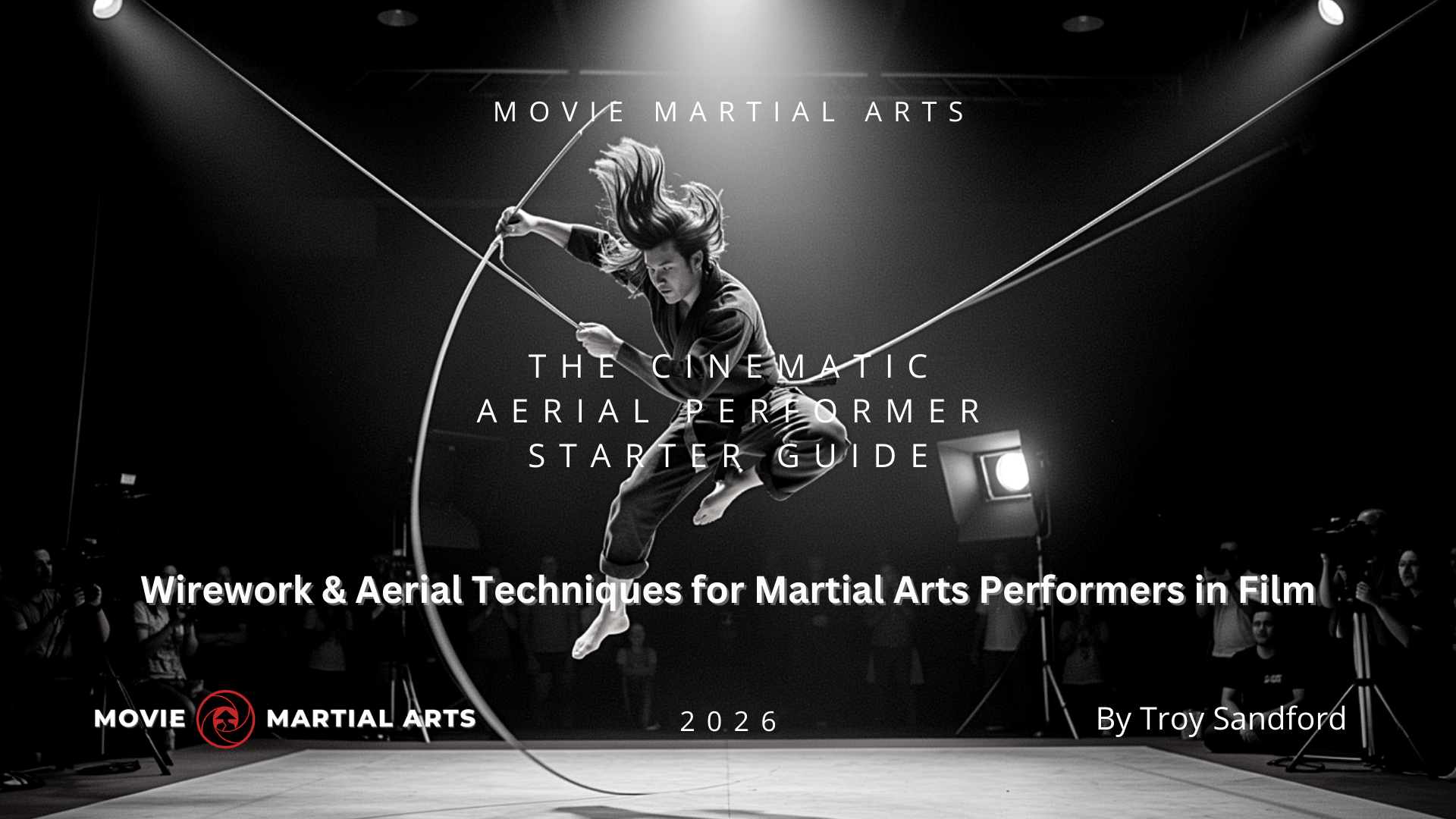
Download “The Cinematic Aerial Performer Starter Guide” from the Chapters – Downloads section in your Members Area.
This exclusive guide gives you a practical introduction to the core principles of aerial performance, including safety awareness, movement control, and on-set fundamentals used in cinematic action.
Build your foundation and start approaching aerial work with confidence.

Are You Ready to Take Your Career to the Next Level?
Join Movie Martial Arts
Get access to exclusive training, tutorials, and resources that will transform your career.
CONTINUE LEARNING
If you’re eager to learn more about martial arts training for film, check out these related INSIGHTS articles:
Wirework & Aerial Techniques for Cinematic Action – Discover the art of using wirework and aerial stunts to create dynamic fight sequences.
The Evolution of Martial Arts: From Ancient Combat to Modern Cinema – Trace the history of martial arts and how it’s evolved in cinema over time.
High Kicks & Tricks for Screen Combat – Learn about the techniques and choreography behind high-flying kicks and stunts in film.
Martial Arts Training and Techniques: The Ultimate Guide for Beginners and Beyond – A complete guide to the essential martial arts techniques for film.
How to Become a Stunt Performer in Film and Television – Your step-by-step guide to starting your career as a stunt performer in film and TV.